
穷困潦倒?新冠疫情对印度劳动力市场的性别影响。
Down and out? The gendered impact of the Covid-19 pandemic on India's labour market.
作者信息
Abraham Rosa, Basole Amit, Kesar Surbhi
机构信息
Azim Premji University, Bengaluru, Karnataka India.
出版信息
Econ Polit (Bologna). 2022;39(1):101-128. doi: 10.1007/s40888-021-00234-8. Epub 2021 Jul 14.
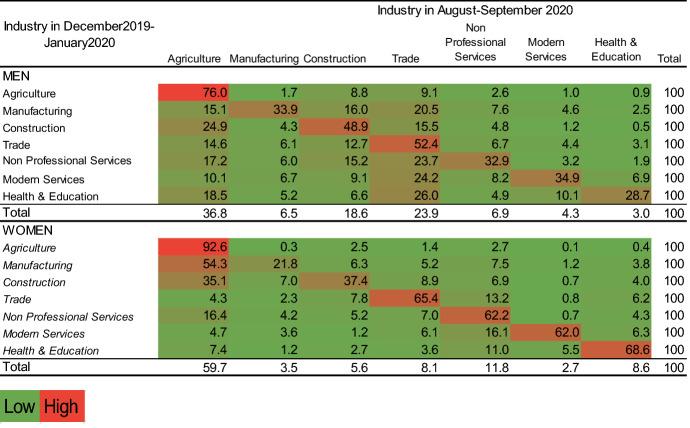
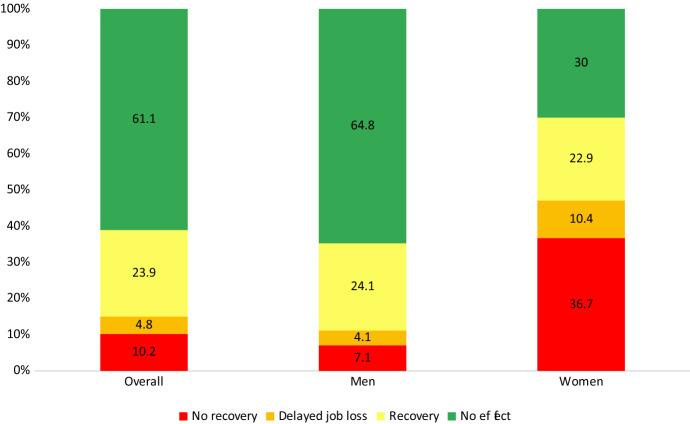
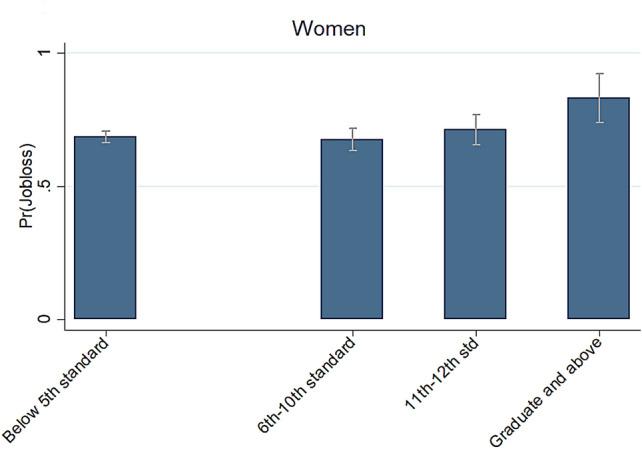
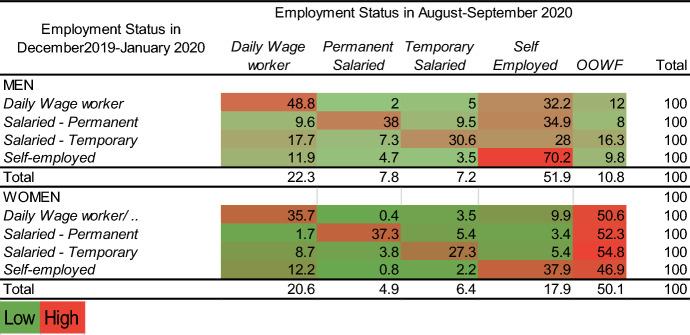
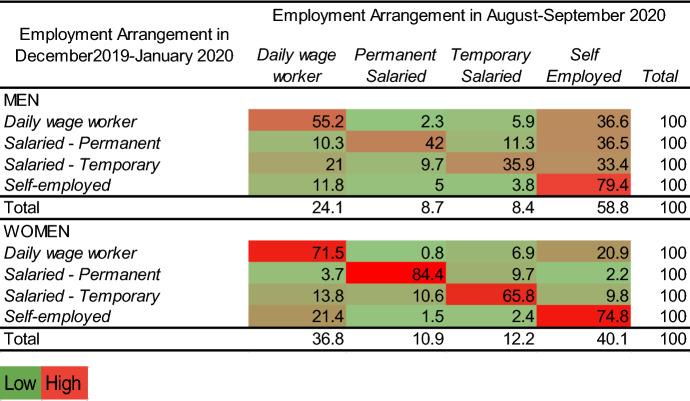
The Covid-19 pandemic has created unprecedented disruptions in labour markets across the world including loss of employment and decline in incomes. Using panel data from India, we investigate the differential impact of the shock on labour market outcomes for male and female workers. We find that, conditional on being in the workforce prior to the pandemic, women were seven times more likely to lose work during the nationwide lockdown, and conditional on losing work, eleven times more likely to return to work subsequently, compared to men. Using logit regressions on a sample stratified by gender, we find that daily wage and young workers, whether men or women, were more likely to face job loss. Education shielded male workers from job loss, whereas highly educated female workers were vulnerable to job loss. Marriage had contrasting effects for men and women, with married women less likely to return to work and married men more likely to return to work. Religion and gender intersect to exacerbate the disproportionate impact, with Muslim women more likely to not return to work, unlike Muslim men for whom we find religion having no significant impact. Finally, for those workers who did return to work, we find that a large share of men in the workforce moved to self-employment or daily wage work, in agriculture, trade or construction. For women, on the other hand, there is limited movement into alternate employment arrangements or industries. This suggests that typical 'fallback' options for employment do not exist for women. During such a shock, women are forced to exit the workforce whereas men negotiate across industries and employment arrangements.
新冠疫情给全球劳动力市场带来了前所未有的干扰,包括失业和收入下降。利用印度的面板数据,我们研究了这一冲击对男性和女性工人劳动力市场结果的不同影响。我们发现,在疫情之前就已就业的条件下,在全国封锁期间,女性失去工作的可能性是男性的七倍;而在失去工作的条件下,女性随后重返工作岗位的可能性是男性的11倍。通过对按性别分层的样本进行逻辑回归分析,我们发现,日薪工人和年轻工人,无论男女,都更有可能面临失业。教育使男性工人免受失业影响,而受过高等教育的女性工人则容易失业。婚姻对男性和女性有不同的影响,已婚女性重返工作岗位的可能性较小,而已婚男性重返工作岗位的可能性较大。宗教和性别相互交织,加剧了这种不成比例的影响,穆斯林女性比穆斯林男性更有可能不再重返工作岗位,我们发现宗教对穆斯林男性没有显著影响。最后,对于那些确实重返工作岗位的工人,我们发现,劳动力中的很大一部分男性转向了自营职业或日薪工作,从事农业、贸易或建筑行业。另一方面,女性转向其他就业安排或行业的情况有限。这表明女性不存在典型的就业“退路”选择。在这样的冲击下,女性被迫退出劳动力市场,而男性则在不同行业和就业安排之间进行协商。

 Zotero 插件