
全球鱼类摄入塑料特征的荟萃分析。
A Meta-Analysis of the Characterisations of Plastic Ingested by Fish Globally.
作者信息
Lim Kok Ping, Lim Phaik Eem, Yusoff Sumiani, Sun Chengjun, Ding Jinfeng, Loh Kar Hoe
机构信息
Institute for Advanced Studies, Universiti Malaya, Kuala Lumpur 50603, Malaysia.
Institute of Ocean and Earth Science, Universiti Malaya, Kuala Lumpur 50603, Malaysia.
出版信息
Toxics. 2022 Apr 11;10(4):186. doi: 10.3390/toxics10040186.
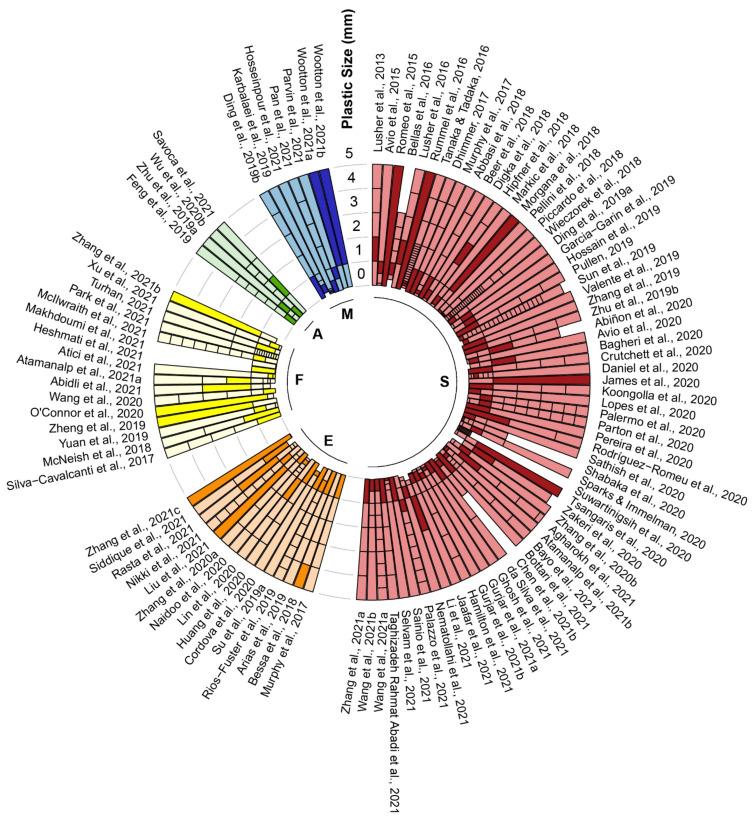
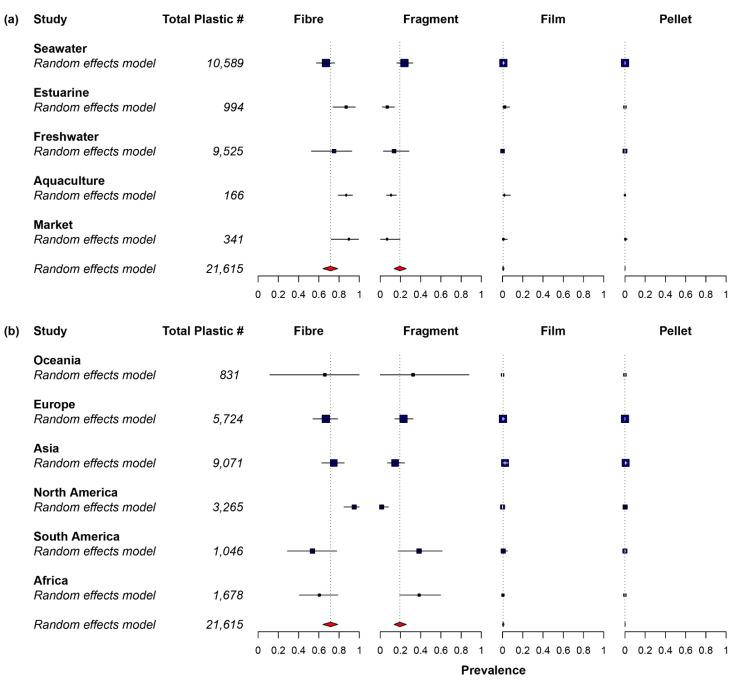
Plastic contamination in the environment is common but the characterisation of plastic ingested by fish in different environments is lacking. Hence, a meta-analysis was conducted to identify the prevalence of plastic ingested by fish globally. Based on a qualitative analysis of plastic size, it was determined that small microplastics (<1 mm) are predominantly ingested by fish globally. Furthermore, our meta-analysis revealed that plastic fibres (70.6%) and fragments (19.3%) were the most prevalent plastic components ingested by fish, while blue (24.2%) and black (18.0%) coloured plastic were the most abundant. Polyethylene (15.7%) and polyester (11.6%) were the most abundant polymers. Mixed-effect models were employed to identify the effects of the moderators (sampling environment, plastic size, digestive organs examined, and sampling continents) on the prevalence of plastic shape, colour, and polymer type. Among the moderators, only the sampling environment and continent contributed to a significant difference between subgroups in plastic shape and polymer type.
环境中的塑料污染很常见,但缺乏对不同环境中鱼类摄入塑料的特征描述。因此,进行了一项荟萃分析,以确定全球鱼类摄入塑料的普遍程度。基于对塑料大小的定性分析,确定全球鱼类主要摄入的是小的微塑料(<1毫米)。此外,我们的荟萃分析表明,塑料纤维(70.6%)和碎片(19.3%)是鱼类摄入的最普遍的塑料成分,而蓝色(24.2%)和黑色(18.0%)塑料是最常见的颜色。聚乙烯(15.7%)和聚酯(11.6%)是最常见的聚合物。采用混合效应模型来确定调节因素(采样环境、塑料大小、检查的消化器官和采样大陆)对塑料形状、颜色和聚合物类型普遍程度的影响。在这些调节因素中,只有采样环境和大陆导致了塑料形状和聚合物类型亚组之间的显著差异。



 Zotero 插件