
根据运动功能测量量表评估杜氏肌营养不良症患者的运动能力:磁共振成像研究。
MRI Assessment of Motor Capabilities in Patients with Duchenne Muscular Dystrophy According to the Motor Function Measure Scale.
机构信息
Department of Rehabilitation, Saint Petersburg State Pediatric Medical University, 194100 Saint Petersburg, Russia.
Department of Normal Physiology, Saint Petersburg State Pediatric Medical University, 194100 Saint Petersburg, Russia.
出版信息
Tomography. 2022 Apr 1;8(2):948-960. doi: 10.3390/tomography8020076.
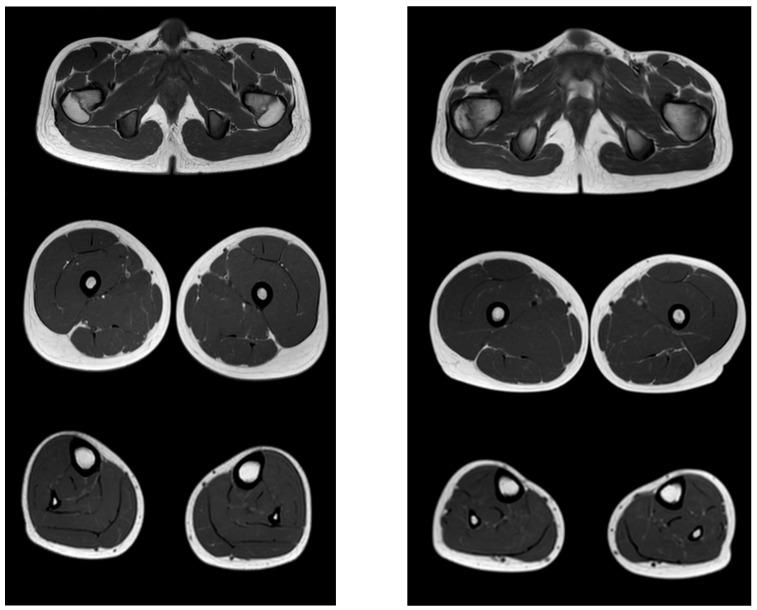
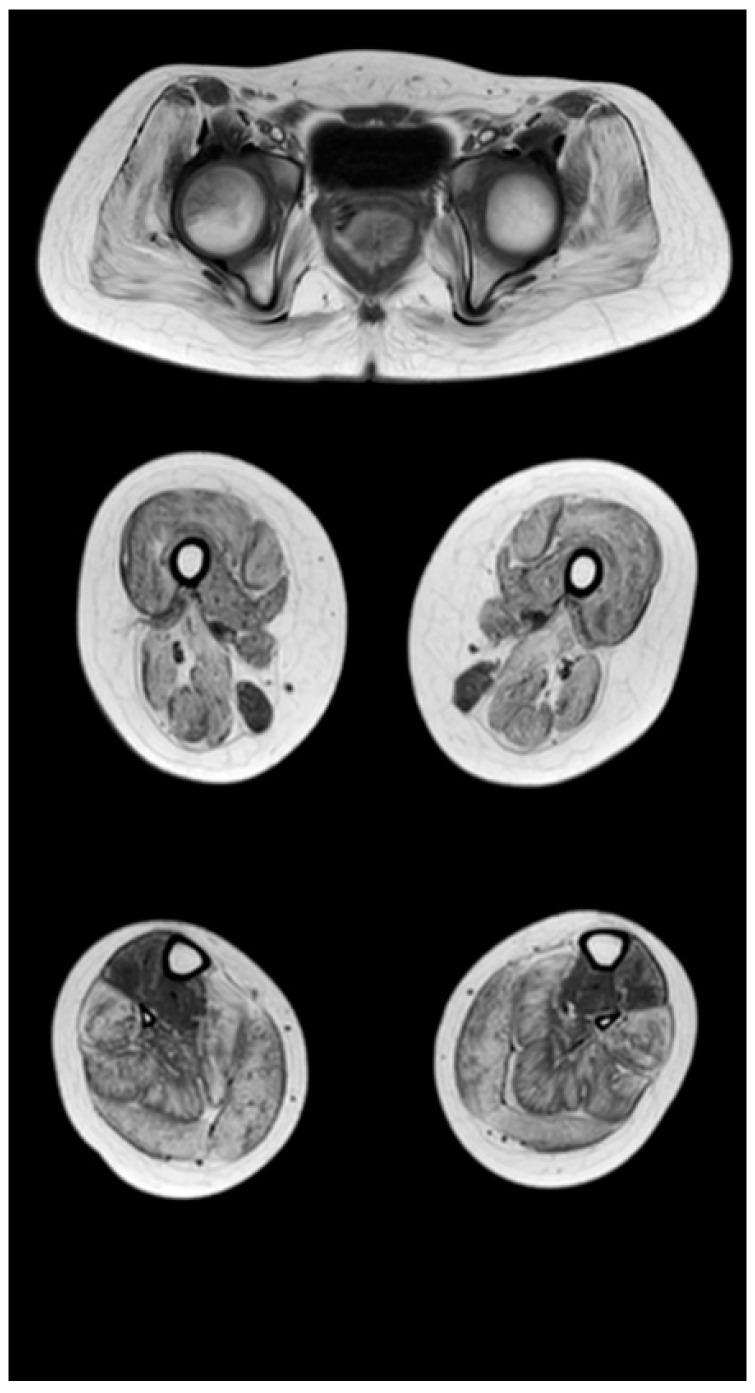
The research was aimed on the study of motor capabilities on the Motor Function Measure (MFM) scale in ambulant and non-ambulant patients with Duchenne muscular dystrophy, and to conduct a correlation analysis between the results of the MFM scale and Magnetic Resonance Imaging (MRI) data. A total of 46 boys who had genetically confirmed Duchenne muscular dystrophy (age from 2.1 to 16.7 years) and were in clinical rehabilitation were investigated. An assessment was performed according to the Motor Function Measure scale (subsections D1, D2, D3, and the total score), an MRI obtaining T1-VI of the muscles of the pelvic girdle was conducted, and the thighs and lower legs were further assessed in terms of the severity of fibrous-fat degeneration according to the Mercuri scale. In ambulant patients, the ability to stand up and move (D1) was 74.4%, axial and proximal motor functions (D2)—97.6%, distal motor functions (D3)—96.2%, and total score was 87.9%. In non-ambulant patients, the ability to stand up and move (D1) was 1.7%, axial and proximal motor functions (D2)—47%, distal motor functions (D3)—67.5%, and the total score—33.1%. A high inverse correlation (r = −0.7, p < 0.05) of the MRI data of the pelvic girdle and thighs with tasks D1, as well as a noticeable inverse correlation with tasks D2 (r = −0.6, p < 0.05) of the scale MFM, were revealed in the ambulant group of patients. In the non-ambulant group of patients, the MRI data of the lower legs muscles were characterized by a high inverse correlation (r = −0.7, p < 0.05) with tasks D3 and a noticeable inverse correlation (r = −0.6, p < 0.05) with tasks D1 of the MFM scale. Conclusion: The Motor Function Measure scale allows effective assessment of the motor capabilities of patients with Duchenne muscular dystrophy at different stages of the disease, which is confirmed by visualization of fibro-fatty muscle replacement.
本研究旨在研究肌营养不良症(Duchenne muscular dystrophy,DMD)患者的运动功能,使用运动功能测量(Motor Function Measure,MFM)量表评估其在活动和非活动患者中的表现,并对 MFM 量表的结果与磁共振成像(Magnetic Resonance Imaging,MRI)数据进行相关性分析。本研究共纳入了 46 名经基因确诊的 DMD 男孩(年龄为 2.1-16.7 岁),他们均处于临床康复阶段。研究人员对这些患者进行了 MFM 量表(D1、D2、D3 亚组和总分)评估,并进行了骨盆带肌肉的 T1-VI MRI 检查,根据 Mercuri 量表对大腿和小腿的纤维脂肪变性严重程度进行了进一步评估。在活动患者中,站立和移动能力(D1)为 74.4%,轴向和近端运动功能(D2)为 97.6%,远端运动功能(D3)为 96.2%,总分为 87.9%。在非活动患者中,站立和移动能力(D1)为 1.7%,轴向和近端运动功能(D2)为 47%,远端运动功能(D3)为 67.5%,总分为 33.1%。在活动患者中,骨盆带和大腿 MRI 数据与任务 D1 之间存在高度负相关(r = -0.7,p < 0.05),与 MFM 量表的任务 D2 之间也存在显著的负相关(r = -0.6,p < 0.05)。在非活动患者中,小腿肌肉的 MRI 数据与任务 D3 之间存在高度负相关(r = -0.7,p < 0.05),与 MFM 量表的任务 D1 之间也存在显著的负相关(r = -0.6,p < 0.05)。结论:MFM 量表能够有效评估不同疾病阶段的 DMD 患者的运动能力,这一结论通过纤维脂肪肌肉替代的可视化得到了证实。


 Zotero 插件