
抗新冠病毒的细胞产品:从以往基于细胞的抗感染药物研究中吸取经验教训
Antiviral Cell Products against COVID-19: Learning Lessons from Previous Research in Anti-Infective Cell-Based Agents.
作者信息
Chikileva Irina, Shubina Irina, Burtseva Anzhelika-Mariia, Kirgizov Kirill, Stepanyan Nara, Varfolomeeva Svetlana, Kiselevskiy Mikhail
机构信息
Research Institute of Experimental Therapy and Diagnostics of Tumor, NN Blokhin National Medical Center of Oncology, 115478 Moscow, Russia.
College of New Materials and Nanotechnologies, National University of Science and Technology "MISiS", 119049 Moscow, Russia.
出版信息
Biomedicines. 2022 Apr 7;10(4):868. doi: 10.3390/biomedicines10040868.
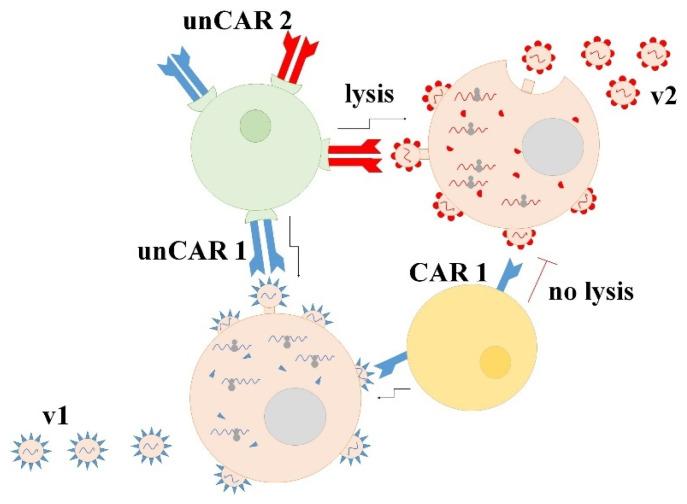
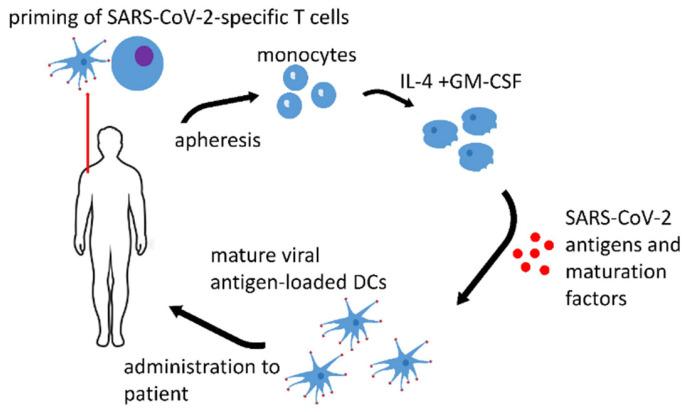
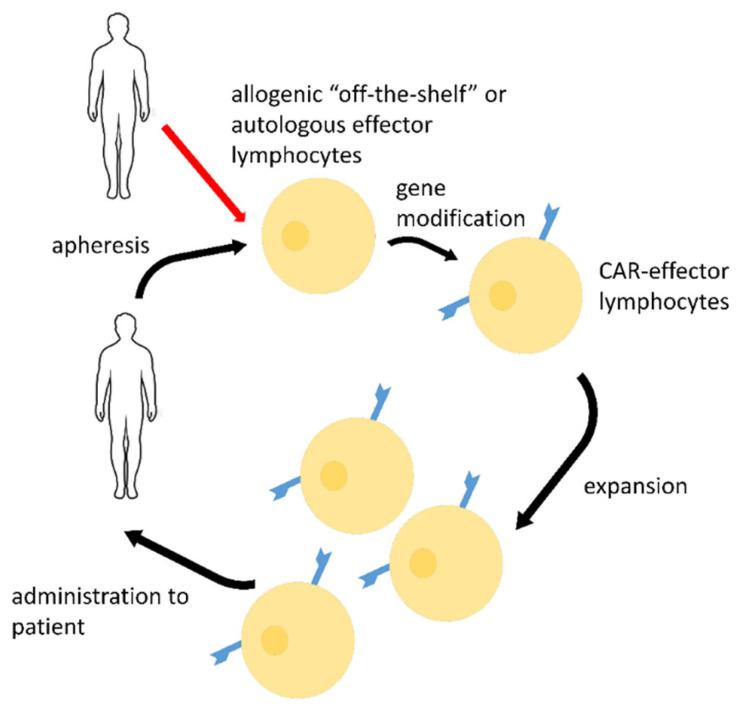
COVID-19 is a real challenge for the protective immunity. Some people do not respond to vaccination by acquiring an appropriate immunological memory. The risk groups for this particular infection such as the elderly and people with compromised immunity (cancer patients, pregnant women, etc.) have the most serious problems in developing an adequate immune response. Therefore, dendritic cell (DC) vaccines that are loaded ex vivo with SARS-CoV-2 antigens in the optimal conditions are promising for immunization. Lymphocyte effector cells with chimeric antigen receptor (CAR lymphocytes) are currently used mainly as anti-tumor treatment. Before 2020, few studies on the antiviral CAR lymphocytes were reported, but since the outbreak of SARS-CoV-2 the number of such studies has increased. The basis for CARs against SARS-CoV-2 were several virus-specific neutralizing monoclonal antibodies. We propose a similar, but basically novel and more universal approach. The extracellular domain of the immunoglobulin G receptors will be used as the CAR receptor domain. The specificity of the CAR will be determined by the antibodies, which it has bound. Therefore, such CAR lymphocytes are highly universal and have functional activity against any infectious agents that have protective antibodies binding to a foreign surface antigen on the infected cells.
新型冠状病毒肺炎(COVID-19)对保护性免疫而言是一项切实的挑战。有些人接种疫苗后无法获得适当的免疫记忆。该特定感染的风险群体,如老年人和免疫功能受损者(癌症患者、孕妇等),在产生充分免疫反应方面存在最严重的问题。因此,在最佳条件下用严重急性呼吸综合征冠状病毒2(SARS-CoV-2)抗原进行体外负载的树突状细胞(DC)疫苗在免疫方面具有前景。嵌合抗原受体淋巴细胞(CAR淋巴细胞)目前主要用作抗肿瘤治疗。在2020年之前,关于抗病毒CAR淋巴细胞的研究报道很少,但自SARS-CoV-2疫情爆发以来,此类研究的数量有所增加。针对SARS-CoV-2的CAR的基础是几种病毒特异性中和单克隆抗体。我们提出一种类似但基本新颖且更具通用性的方法。免疫球蛋白G受体的胞外域将用作CAR受体域。CAR的特异性将由其结合的抗体决定。因此,此类CAR淋巴细胞具有高度通用性,并且对任何具有与感染细胞上的外来表面抗原结合的保护性抗体的感染因子都具有功能活性。
 Zotero 插件