
从精准医学角度分析犬骨肉瘤的转录组学研究揭示了差异基因表达研究的局限性。
Transcriptomic Analysis of Canine Osteosarcoma from a Precision Medicine Perspective Reveals Limitations of Differential Gene Expression Studies.
机构信息
Scott-Ritchey Research Center, College of Veterinary Medicine, Auburn University, Auburn, AL 36849, USA.
Department of Pathobiology, College of Veterinary Medicine, Auburn University, Auburn, AL 36849, USA.
出版信息
Genes (Basel). 2022 Apr 13;13(4):680. doi: 10.3390/genes13040680.
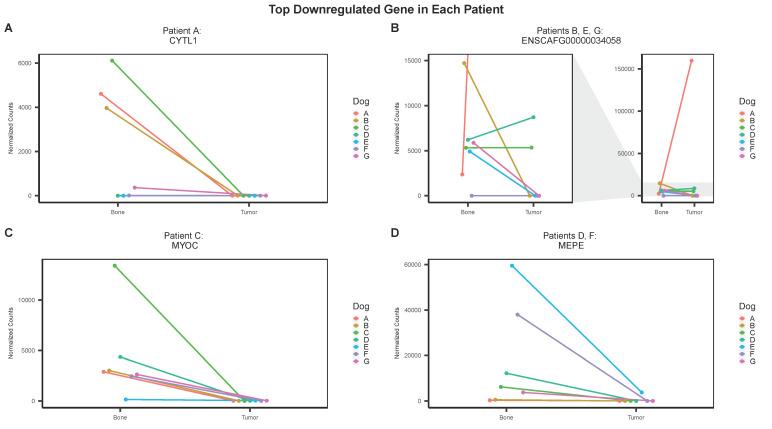
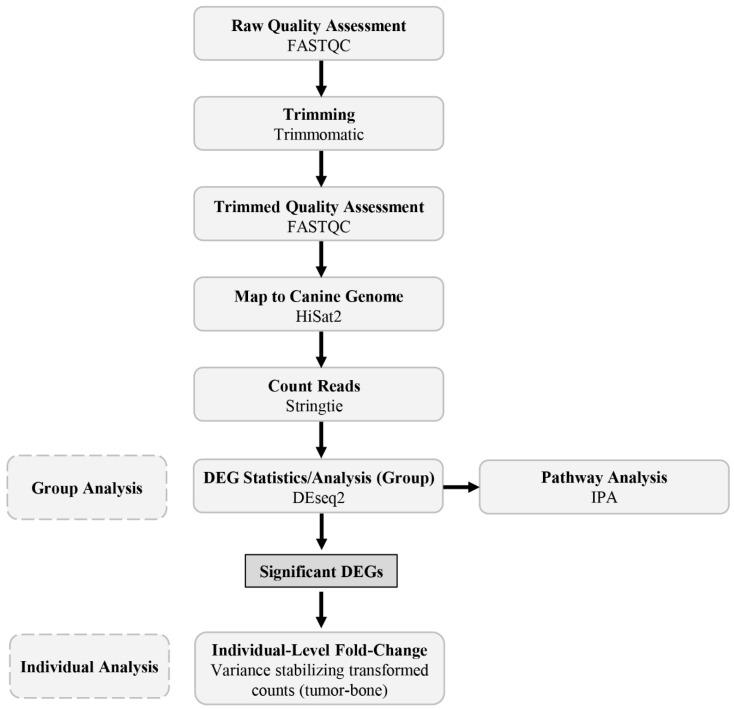
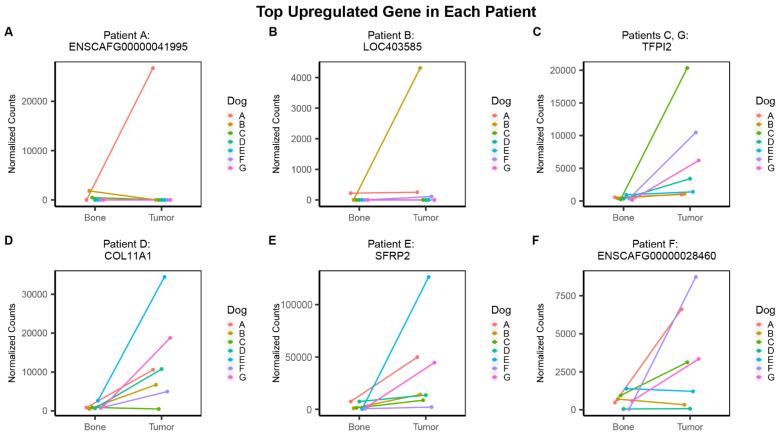
Despite significant advances in cancer diagnosis and treatment, osteosarcoma (OSA), an aggressive primary bone tumor, has eluded attempts at improving patient survival for many decades. The difficulty in managing OSA lies in its extreme genetic complexity, drug resistance, and heterogeneity, making it improbable that a single-target treatment would be beneficial for the majority of affected individuals. Precision medicine seeks to fill this gap by addressing the intra- and inter-tumoral heterogeneity to improve patient outcome and survival. The characterization of differentially expressed genes (DEGs) unique to the tumor provides insight into the phenotype and can be useful for informing appropriate therapies as well as the development of novel treatments. Traditional DEG analysis combines patient data to derive statistically inferred genes that are dysregulated in the group; however, the results from this approach are not necessarily consistent across individual patients, thus contradicting the basis of precision medicine. Spontaneously occurring OSA in the dog shares remarkably similar clinical, histological, and molecular characteristics to the human disease and therefore serves as an excellent model. In this study, we use transcriptomic sequencing of RNA isolated from primary OSA tumor and patient-matched normal bone from seven dogs prior to chemotherapy to identify DEGs in the group. We then evaluate the universality of these changes in transcript levels across patients to identify DEGs at the individual level. These results can be useful for reframing our perspective of transcriptomic analysis from a precision medicine perspective by identifying variations in DEGs among individuals.
尽管在癌症诊断和治疗方面取得了重大进展,但骨肉瘤(OSA)作为一种侵袭性原发性骨肿瘤,几十年来一直未能提高患者的生存率。OSA 之所以难以治疗,是因为其遗传复杂性、耐药性和异质性极高,单一靶向治疗不太可能对大多数患者有益。精准医学旨在通过解决肿瘤内和肿瘤间的异质性来提高患者的治疗效果和生存率,从而填补这一空白。鉴定肿瘤特有的差异表达基因(DEGs)可深入了解肿瘤的表型,并有助于为合适的治疗方法提供信息,以及开发新的治疗方法。传统的 DEG 分析将患者数据结合起来,得出在该组中失调的统计推断基因;然而,这种方法的结果在个体患者之间不一定一致,因此与精准医学的基础相矛盾。狗的自发性 OSA 与人类疾病具有惊人相似的临床、组织学和分子特征,因此是一种极好的模型。在这项研究中,我们使用来自 7 只狗的未经化疗的原发性 OSA 肿瘤和患者匹配的正常骨的 RNA 转录组测序来鉴定组内的 DEGs。然后,我们评估这些转录水平变化在个体患者中的普遍性,以鉴定个体水平的 DEGs。这些结果可用于通过鉴定个体间 DEGs 的变化,从精准医学的角度重新审视转录组分析。


 Zotero 插件