
基于网络药理学、分子对接和实验鉴定研究酸枣仁促进骨髓间充质干细胞成骨分化的潜在机制。
The potential mechanism of Fructus Ligustri Lucidi promoting osteogenetic differentiation of bone marrow mesenchymal stem cells based on network pharmacology, molecular docking and experimental identification.
机构信息
Department of Orthopedic Surgery, The Second Affiliated Hospital of Harbin Medical University, Harbin, Heilongjiang, China.
出版信息
Bioengineered. 2022 Apr;13(4):10640-10653. doi: 10.1080/21655979.2022.2065753.
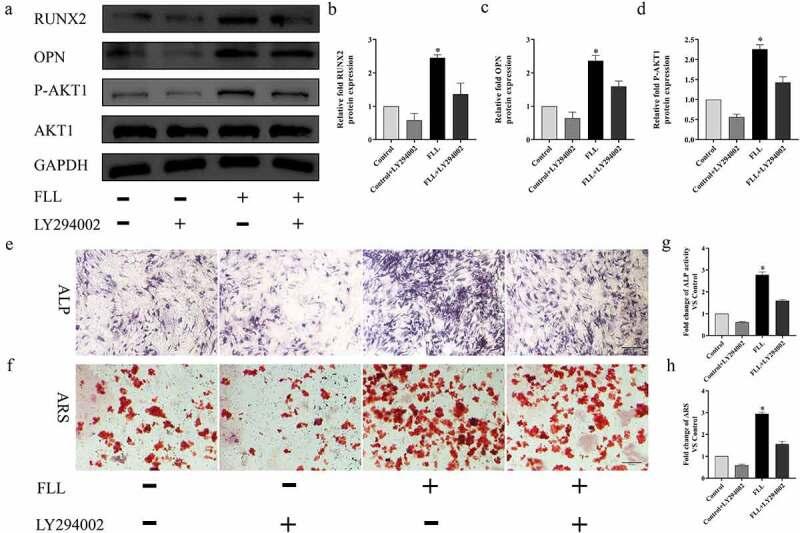
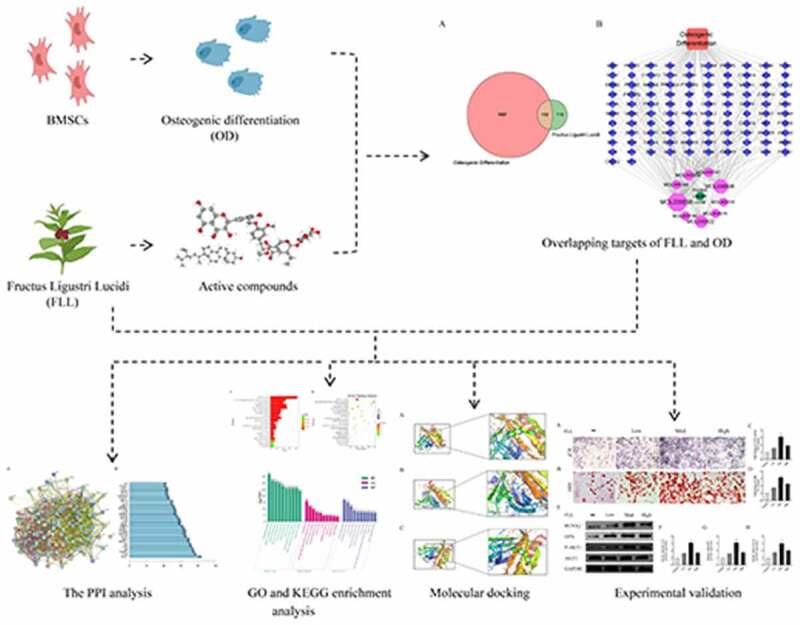
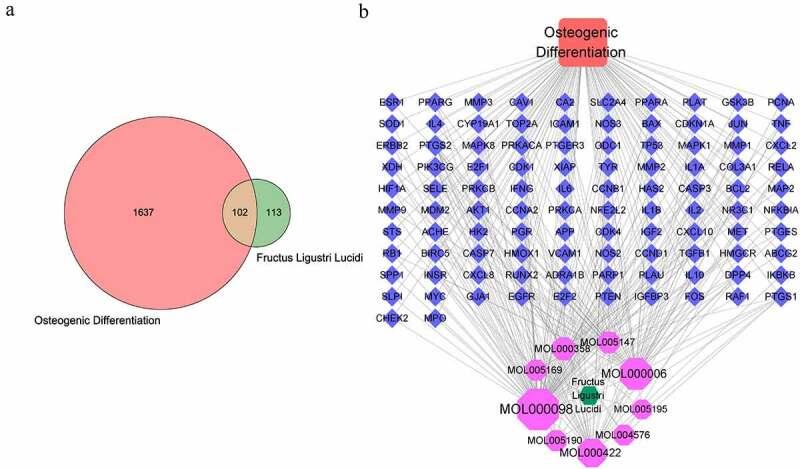
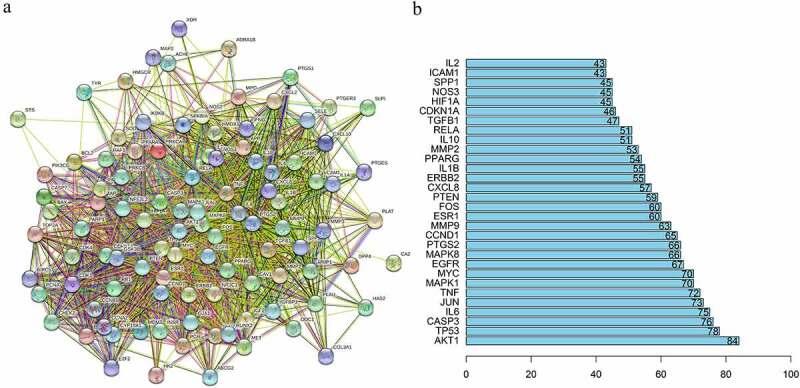
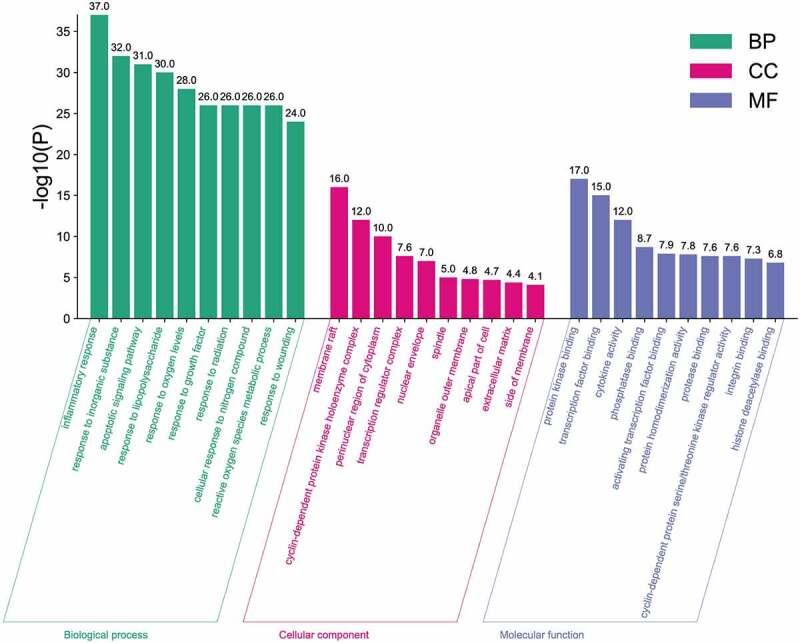
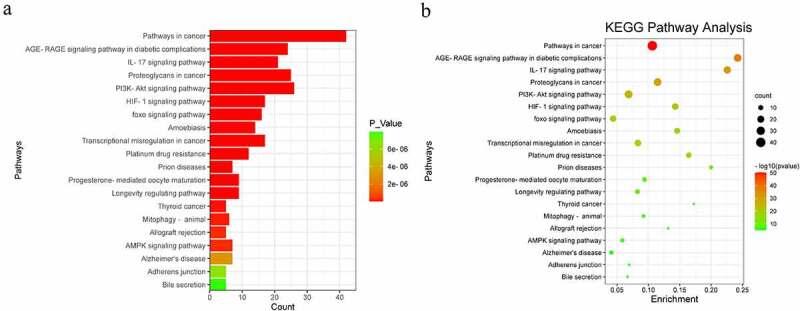
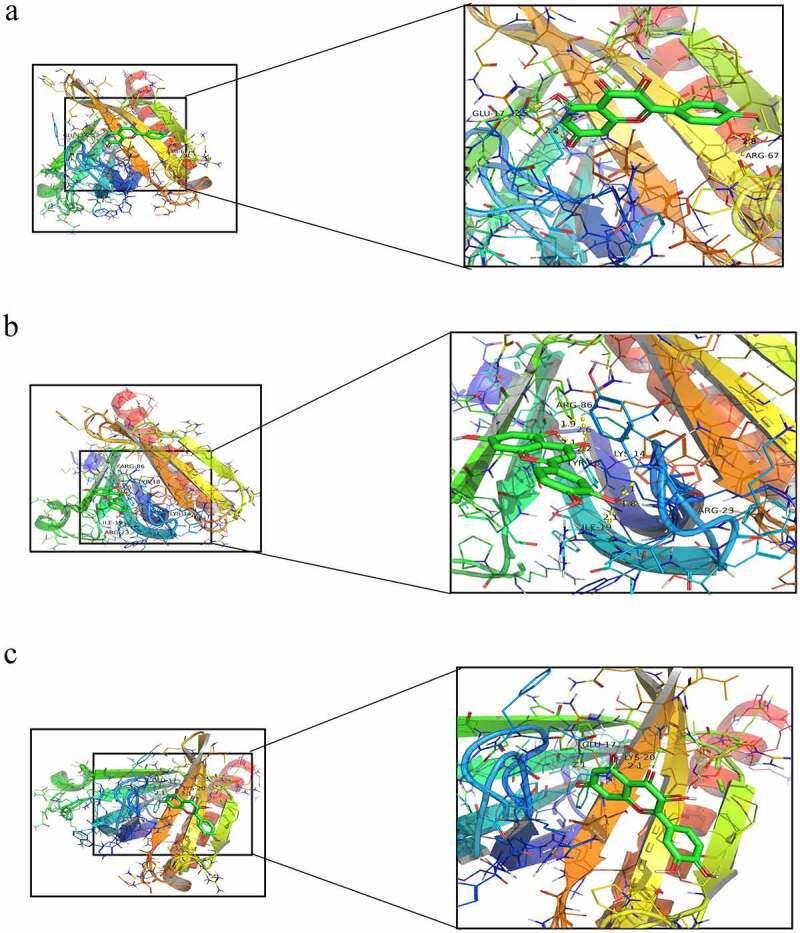
Recent studies have shown that the differentiation of bone marrow mesenchymal stem cells (BMSCs) into osteogenic lineages can promotes bone formation and maintains bone homeostasis, which has become a promising therapeutic strategy for skeletal diseases such as osteoporosis. Fructus Ligustri Lucidi (FLL) has been widely used for the treatment of osteoporosis and other orthopedic diseases for thousands of years. However, whether FLL plays an anti-osteoporosis role in promoting the osteogenic differentiation of BMSCs, as well as its active components, targets, and specific molecular mechanisms, has not been fully elucidated. First, we obtained 13 active ingredients of FLL from the Traditional Chinese Medicine Systems Pharmacology (TCSMP) database, and four active ingredients without any target were excluded. Subsequently, 102 common drug-disease targets were subjected to protein-protein interaction (PPI) analysis, Gene Oncology (GO), and Kyoto Encyclopedia of Genes and Genomes (KEGG) enrichment analyses. The results of the three analyses were highly consistent, indicating that FLL promoted the osteogenic differentiation of BMSCs by activating the PI3K/AKT signaling pathway. Finally, we validated previous predictions using in vitro experiments, such as alkaline phosphatase (ALP) staining, alizarin red staining (ARS), and western blot analysis of osteogenic-related proteins. The organic combination of network pharmacological predictions with in vitro experimental validation comprehensively confirmed the reliability of FLL in promoting osteogenic differentiation of BMSCs. This study provides a strong theoretical support for the specific molecular mechanism and clinical application of FLL in the treatment of bone formation deficiency.
近年来的研究表明,骨髓间充质干细胞(BMSCs)向成骨谱系的分化可以促进骨形成并维持骨内稳态,这已成为治疗骨质疏松症等骨骼疾病的一种有前途的治疗策略。女贞子(FLL)数千年来一直被广泛用于治疗骨质疏松症和其他骨科疾病。然而,FLL 是否通过促进 BMSCs 的成骨分化发挥抗骨质疏松作用,以及其活性成分、靶标和具体的分子机制尚未完全阐明。首先,我们从中药系统药理学(TCSMP)数据库中获得了 FLL 的 13 种活性成分,并排除了没有任何靶标的 4 种活性成分。随后,对 102 个常见的药物-疾病靶标进行蛋白质-蛋白质相互作用(PPI)分析、基因肿瘤学(GO)和京都基因与基因组百科全书(KEGG)富集分析。这三个分析的结果高度一致,表明 FLL 通过激活 PI3K/AKT 信号通路促进 BMSCs 的成骨分化。最后,我们使用体外实验(如碱性磷酸酶(ALP)染色、茜素红染色(ARS)和成骨相关蛋白的 Western blot 分析)验证了之前的预测。网络药理学预测与体外实验验证的有机结合,全面证实了 FLL 促进 BMSCs 成骨分化的可靠性。这项研究为 FLL 在治疗骨形成不足中的具体分子机制和临床应用提供了强有力的理论支持。

 Zotero 插件