
载神经保护剂纳米颗粒和仿生材料在缺血性脑卒中治疗中的研究进展与展望
Progresses and Prospects of Neuroprotective Agents-Loaded Nanoparticles and Biomimetic Material in Ischemic Stroke.
作者信息
Chen Junfa, Jin Jing, Li Kaiqiang, Shi Lin, Wen Xuehua, Fang Fuquan
机构信息
Center for Rehabilitation Medicine, Department of Radiology, Zhejiang Provincial People's Hospital (Affiliated People's Hospital, Hangzhou Medical College), Hangzhou, China.
Laboratory Medicine Center, Zhejiang Center for Clinical Laboratory, Zhejiang Provincial People's Hospital (Affiliated People's Hospital, Hangzhou Medical College), Hangzhou, China.
出版信息
Front Cell Neurosci. 2022 Apr 11;16:868323. doi: 10.3389/fncel.2022.868323. eCollection 2022.
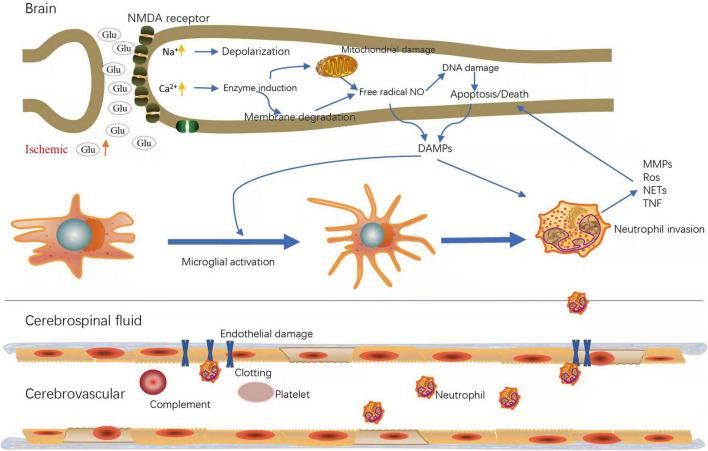
Ischemic stroke remains the leading cause of death and disability, while the main mechanisms of dominant neurological damage in stroke contain excitotoxicity, oxidative stress, and inflammation. The clinical application of many neuroprotective agents is limited mainly due to their inability to cross the blood-brain barrier (BBB), short half-life and low bioavailability. These disadvantages can be better eliminated/reduced by nanoparticle as the carrier of these drugs. This review expounded the currently hot researched nanomedicines from the perspective of the mechanism of ischemic stroke. In addition, this review describes the bionic nanomedicine delivery strategies containing cells, cell membrane vesicles and exosomes that can effectively avoid the risk of clearance by the reticuloendothelial system. The potential challenges and application prospect for clinical translation of these delivery platforms were also discussed.
缺血性中风仍然是死亡和残疾的主要原因,而中风中主要神经损伤的机制包括兴奋性毒性、氧化应激和炎症。许多神经保护剂的临床应用受到限制,主要是因为它们无法穿过血脑屏障(BBB)、半衰期短和生物利用度低。作为这些药物的载体,纳米颗粒可以更好地消除/减少这些缺点。本综述从缺血性中风的机制角度阐述了目前研究热点的纳米药物。此外,本综述还描述了包含细胞、细胞膜囊泡和外泌体的仿生纳米药物递送策略,这些策略可以有效避免被网状内皮系统清除的风险。还讨论了这些递送平台临床转化的潜在挑战和应用前景。


 Zotero 插件