
探讨基于透明质酸的纳米粒子在细菌感染的诊断和治疗中的应用。
Exploring the applications of hyaluronic acid-based nanoparticles for diagnosis and treatment of bacterial infections.
机构信息
Discipline of Pharmaceutical Sciences, College of Health Sciences, University of KwaZulu-Natal, Durban, South Africa.
Faculty of Pharmacy, University of Khartoum, Khartoum, Sudan.
出版信息
Wiley Interdiscip Rev Nanomed Nanobiotechnol. 2022 Jul;14(4):e1799. doi: 10.1002/wnan.1799. Epub 2022 Apr 29.
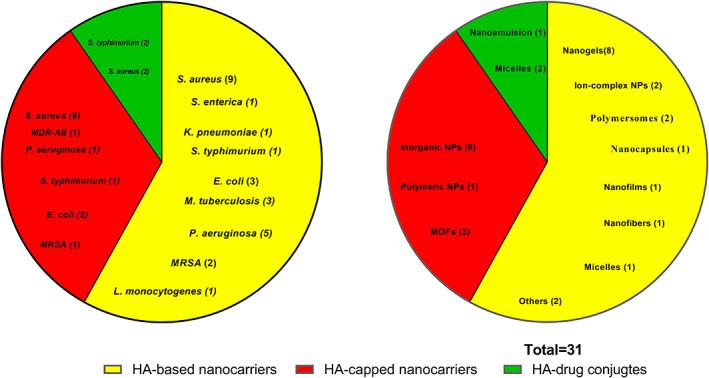
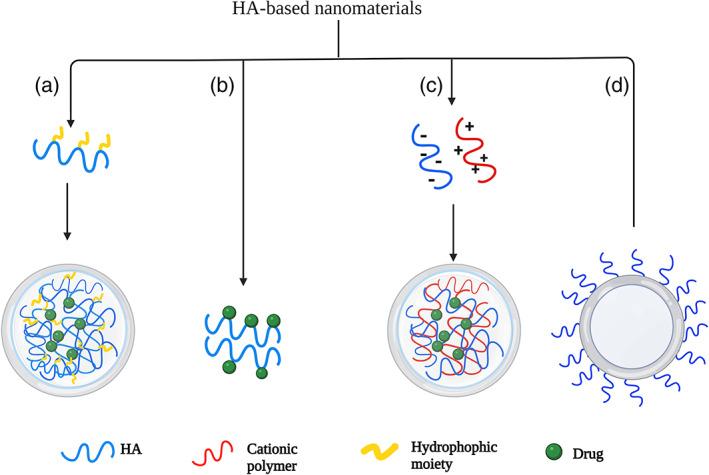
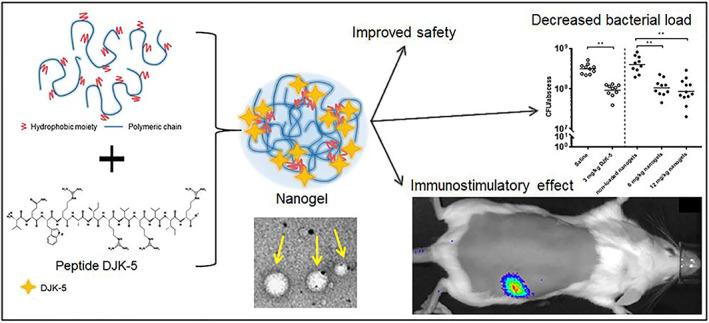
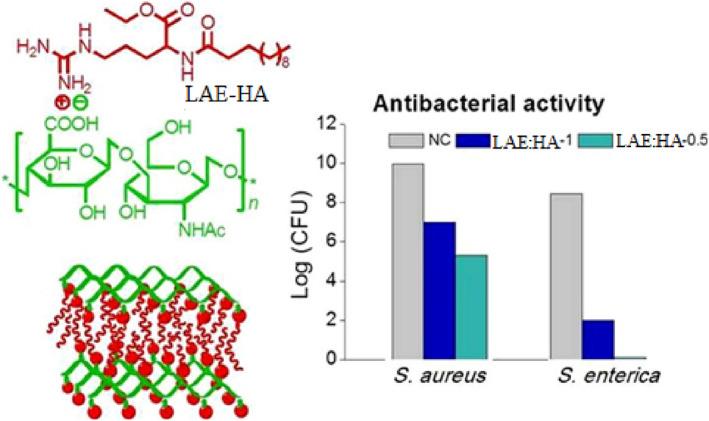
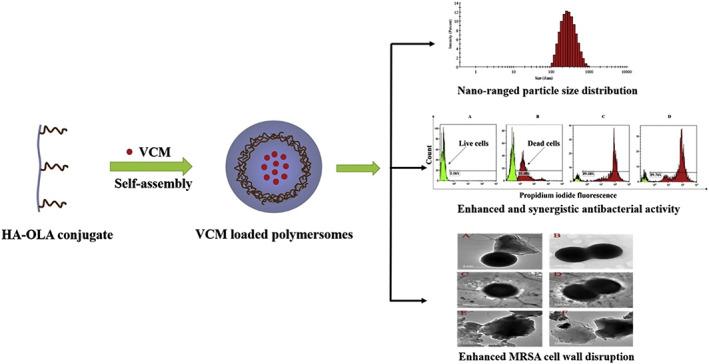
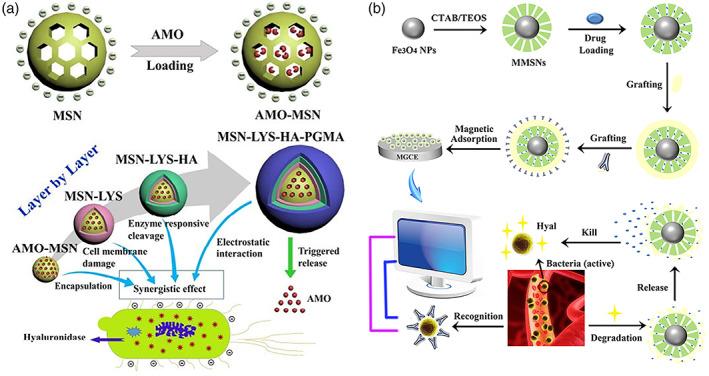
Hyaluronic acid (HA) has become a topic of significant interest in drug delivery research due to its excellent properties, including biosafety, biodegradability, and nonimmunogenicity. Moreover, due to its ease of modification, HA can be used to prepare several HA-based nanosystems using various approaches. These approaches involve conjugating/grafting of hydrophobic moieties, polyelectrolytes complexation with cationic polymers, or surface modification of various nanoparticles using HA. These nanoparticles are able to selectively deliver antibacterial drugs or diagnostic molecules into the site of infections. In addition, HA can bind with overexpressed cluster of differentiation 44 (CD44) receptors in macrophages and also can be degraded by a family of enzymes called hyaluronidase (HAase) to release drugs or molecules. By binding with these receptors or being degraded at the infection site by HAase, HA-based nanoparticles allow enhanced and targeted antibacterial delivery. Herein, we present a comprehensive and up-to-date review that highlights various techniques of preparation of HA-based nanoparticles that have been reported in the literature. Furthermore, we also discuss and critically analyze numerous types of HA-based nanoparticles that have been employed in antibacterial delivery to date. This article offers a critical overview of the potential of HA-based nanoparticles to overcome the challenges of conventional antibiotics in the treatment of bacterial infections. Moreover, this review identifies further avenues of research for developing multifunctional and biomimetic HA-based nanoparticles for the treatment, prevention, and/or detection of pathogenic bacteria. This article is categorized under: Therapeutic Approaches and Drug Discovery > Nanomedicine for Infectious Disease Nanotechnology Approaches to Biology > Nanoscale Systems in Biology Therapeutic Approaches and Drug Discovery > Emerging Technologies.
透明质酸(HA)由于其良好的生物安全性、生物可降解性和非免疫原性等特性,已成为药物输送研究的一个重要课题。此外,由于其易于修饰,HA 可以通过各种方法制备几种基于 HA 的纳米系统。这些方法包括将疏水性基团接枝/共轭、带正电荷的聚合物与聚电解质复合物,或使用 HA 对各种纳米粒子进行表面修饰。这些纳米粒子能够选择性地将抗菌药物或诊断分子递送到感染部位。此外,HA 可以与巨噬细胞中过表达的 CD44 受体结合,也可以被称为透明质酸酶(HAase)的一系列酶降解,从而释放药物或分子。通过与这些受体结合或在感染部位被 HAase 降解,基于 HA 的纳米粒子可以增强和靶向抗菌药物的传递。本文全面综述了文献中报道的基于 HA 的纳米粒子的各种制备技术。此外,我们还讨论并批判性地分析了迄今为止用于抗菌药物传递的多种类型的基于 HA 的纳米粒子。本文对基于 HA 的纳米粒子克服传统抗生素在治疗细菌感染方面的挑战的潜力进行了批判性评估。此外,本文还确定了进一步研究开发多功能和仿生基于 HA 的纳米粒子的研究方向,用于治疗、预防和/或检测致病性细菌。本文属于以下类别: 治疗方法和药物发现 > 用于传染病的纳米医学 纳米技术在生物学中的应用 > 生物学中的纳米级系统 治疗方法和药物发现 > 新兴技术





 Zotero 插件