
转座元件在果蝇 nasuta 种团辐射中的增殖动态及其影响。
Dynamics and Impacts of Transposable Element Proliferation in the Drosophila nasuta Species Group Radiation.
机构信息
Department of Integrative Biology, University of California Berkeley, Berkeley, CA 94720, USA.
出版信息
Mol Biol Evol. 2022 May 3;39(5). doi: 10.1093/molbev/msac080.
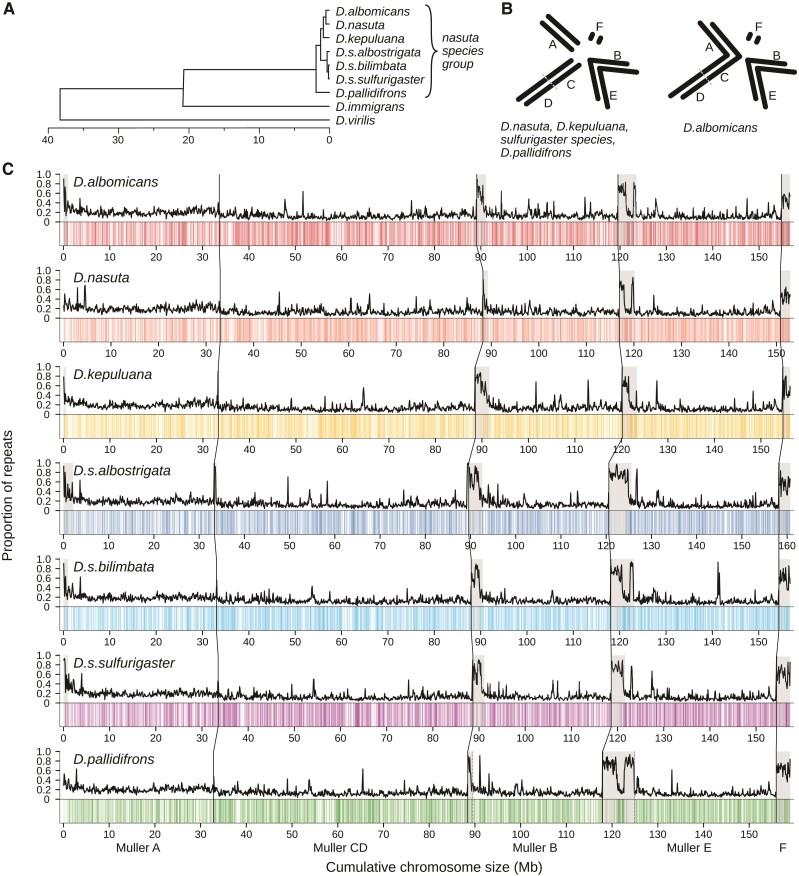
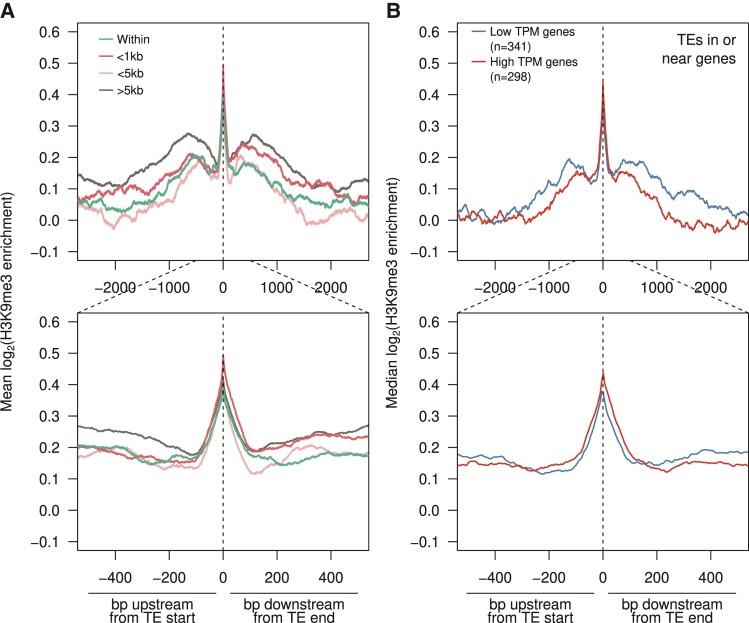
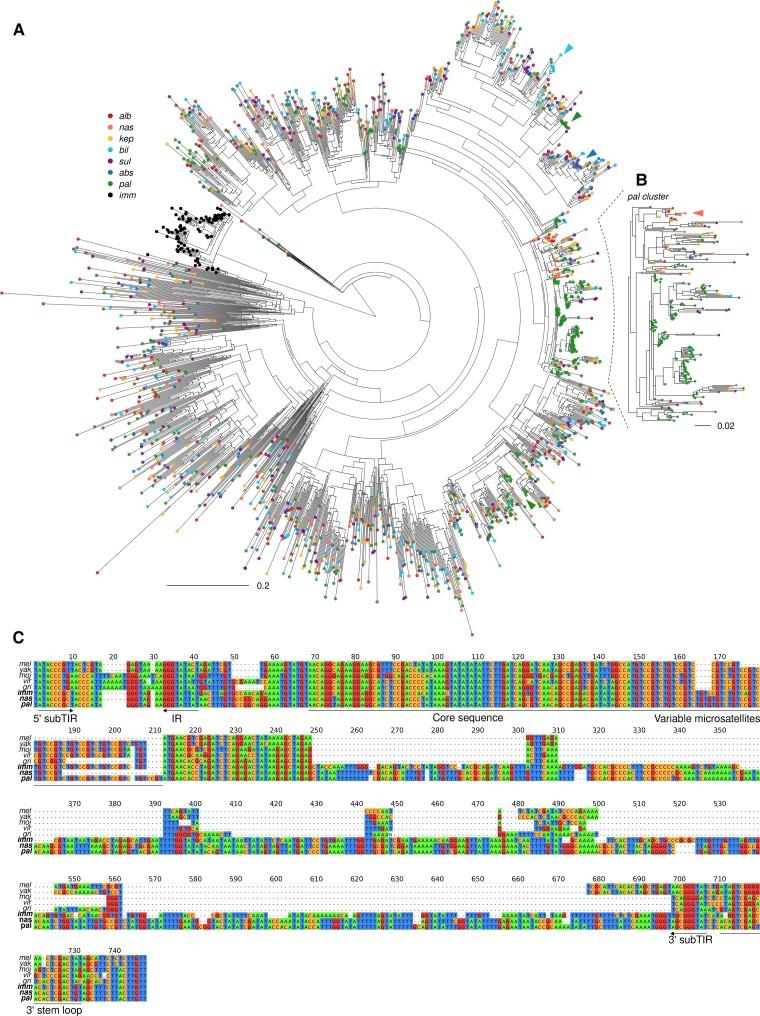
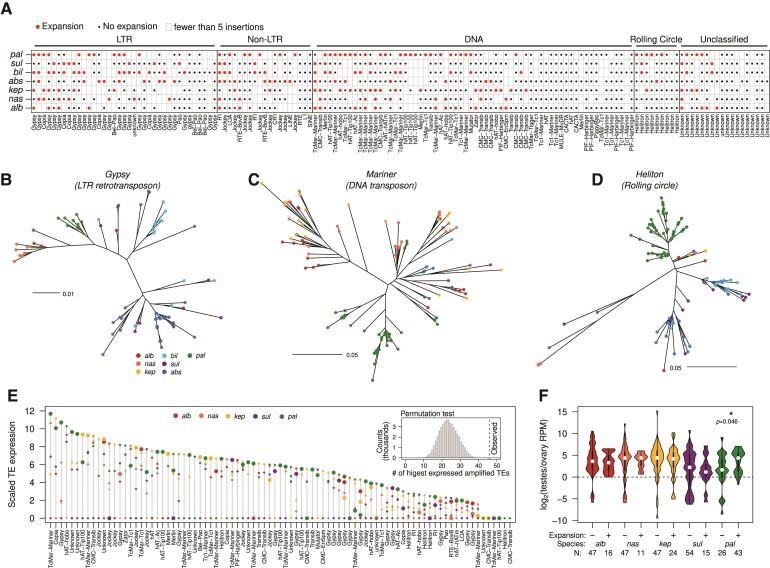
Transposable element (TE) mobilization is a constant threat to genome integrity. Eukaryotic organisms have evolved robust defensive mechanisms to suppress their activity, yet TEs can escape suppression and proliferate, creating strong selective pressure for host defense to adapt. This genomic conflict fuels a never-ending arms race that drives the rapid evolution of TEs and recurrent positive selection of genes involved in host defense; the latter has been shown to contribute to postzygotic hybrid incompatibility. However, how TE proliferation impacts genome and regulatory divergence remains poorly understood. Here, we report the highly complete and contiguous (N50 = 33.8-38.0 Mb) genome assemblies of seven closely related Drosophila species that belong to the nasuta species group-a poorly studied group of flies that radiated in the last 2 My. We constructed a high-quality de novo TE library and gathered germline RNA-seq data, which allowed us to comprehensively annotate and compare TE insertion patterns between the species, and infer the evolutionary forces controlling their spread. We find a strong negative association between TE insertion frequency and expression of genes nearby; this likely reflects survivor bias from reduced fitness impact of TEs inserting near lowly expressed, nonessential genes, with limited TE-induced epigenetic silencing. Phylogenetic analyses of insertions of 147 TE families reveal that 53% of them show recent amplification in at least one species. The most highly amplified TE is a nonautonomous DNA element (Drosophila INterspersed Element; DINE) which has gone through multiple bouts of expansions with thousands of full-length copies littered throughout each genome. Across all TEs, we find that TEs expansions are significantly associated with high expression in the expanded species consistent with suppression escape. Thus, whereas horizontal transfer followed by the invasion of a naïve genome has been highlighted to explain the long-term survival of TEs, our analysis suggests that evasion of host suppression of resident TEs is a major strategy to persist over evolutionary times. Altogether, our results shed light on the heterogenous and context-dependent nature in which TEs affect gene regulation and the dynamics of rampant TE proliferation amidst a recently radiated species group.
转座元件 (TE) 的移动是基因组完整性的持续威胁。真核生物已经进化出强大的防御机制来抑制其活性,但 TE 可以逃脱抑制并增殖,为宿主防御适应创造强大的选择压力。这种基因组冲突引发了一场永无止境的军备竞赛,推动了 TE 的快速进化和参与宿主防御的基因的反复正选择;后者已被证明有助于合子后杂种不育。然而,TE 的增殖如何影响基因组和调控分歧仍知之甚少。在这里,我们报告了七个密切相关的 Drosophila 物种的高度完整和连续的(N50=33.8-38.0 Mb)基因组组装,这些物种属于 nasuta 物种群——一个研究较少的蝇类群体,它们在过去的 200 万年中辐射进化。我们构建了一个高质量的从头 TE 文库,并收集了生殖系 RNA-seq 数据,这使我们能够全面注释和比较物种之间的 TE 插入模式,并推断控制其传播的进化力量。我们发现 TE 插入频率与附近基因的表达之间存在强烈的负相关;这可能反映了由于 TE 插入附近低表达、非必需基因的影响而导致的生存者偏差,这些基因的 TE 诱导的表观遗传沉默有限。147 个 TE 家族的插入物的系统发育分析表明,其中 53%的家族在至少一个物种中显示出最近的扩增。扩增程度最高的 TE 是一种非自主 DNA 元件(果蝇散布元件;DINE),它经历了多次扩增,每个基因组中都散布着数千个全长拷贝。在所有 TE 中,我们发现 TE 扩增与扩展物种中的高表达显著相关,这与逃避抑制一致。因此,尽管水平转移后入侵幼稚基因组已被强调来解释 TE 的长期存活,但我们的分析表明,逃避宿主对驻留 TE 的抑制是在进化过程中持续存在的主要策略。总之,我们的研究结果揭示了 TE 影响基因调控的异质和上下文相关性质,以及在最近辐射的物种群中 TE 猖獗增殖的动态。



 Zotero 插件