
通过与L-缬氨酸烷基酯结合提高布洛芬的溶解度和皮肤渗透性。
Enhancement of ibuprofen solubility and skin permeation by conjugation with l-valine alkyl esters.
作者信息
Janus Ewa, Ossowicz Paula, Klebeko Joanna, Nowak Anna, Duchnik Wiktoria, Kucharski Łukasz, Klimowicz Adam
机构信息
West Pomeranian University of Technology, Szczecin, Faculty of Chemical Technology and Engineering, Department of Chemical Organic Technology and Polymeric Materials Piastów Ave. 42 71-065 Szczecin Poland
Pomeranian Medical University in Szczecin, Department of Cosmetic and Pharmaceutical Chemistry Powstańców Wielkopolskich Ave. 72 70-111 Szczecin Poland.
出版信息
RSC Adv. 2020 Feb 21;10(13):7570-7584. doi: 10.1039/d0ra00100g. eCollection 2020 Feb 18.
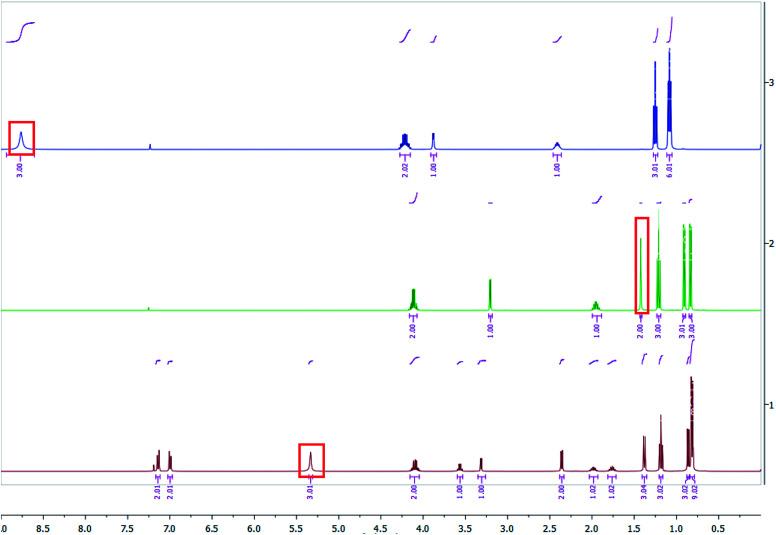
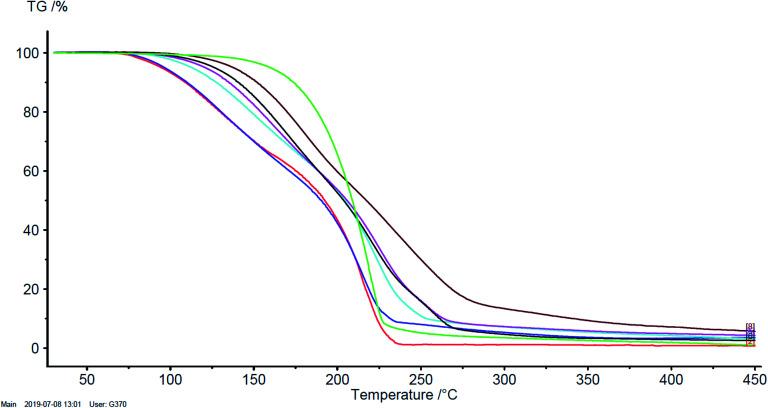
New ibuprofen derivatives were made conjugation with l-valine alkyl esters (ValOR), where was changed from an ethyl to a hexyl group. The ionic structure was confirmed using NMR and FTIR. Specific rotation, solubility in commonly used solvents, thermal properties including phase transitions temperatures, and thermal stability were also determined. The ionic structure with a protonated amine group on an l-valine ester and melting points below 100 °C allowed inclusion of these ibuprofen derivatives into the pharmaceutically active protic ionic liquids. The ibuprofen salt solubility in deionised water and two buffer solutions at pH 5.4 and 7.4 were established and compared with the parent acid solubility. The octanol/water (buffer) partition coefficient, permeation through porcine skin, and accumulation in the skin were also measured. Ibuprofen pairing with l-valine alkyl esters [ValOR][IBU], caused higher solubility and a greater drug molecule absorption through biological membranes. log was lower for ibuprofen salts than for the acid and it increased with a longer l-valine ester cation alkyl chain. porcine skin tests showed that ibuprofen salts with a propyl or isopropyl ester in l-valine are particularly relevant for topical application. They provide transport for ibuprofen through the skin at much higher rate than the unmodified acid and a higher permeated ibuprofen concentration, which can improve efficacy. Thus, synthesised ibuprofen derivatives could be used as drug carriers in transdermal systems to provide better drug bioavailability, and they can be also be the source of exogenous l-valine.
合成了新的布洛芬衍生物,使其与L-缬氨酸烷基酯(ValOR)共轭,其中R从乙基变为己基。利用核磁共振(NMR)和傅里叶变换红外光谱(FTIR)确定了离子结构。还测定了比旋光度、在常用溶剂中的溶解度、包括相变温度在内的热性质以及热稳定性。L-缬氨酸酯上带有质子化胺基团且熔点低于100°C的离子结构,使得这些布洛芬衍生物能够被纳入具有药学活性的质子离子液体中。测定了布洛芬盐在去离子水中以及pH为5.4和7.4的两种缓冲溶液中的溶解度,并与母体酸的溶解度进行了比较。还测量了辛醇/水(缓冲液)分配系数、通过猪皮的渗透率以及在皮肤中的蓄积量。布洛芬与L-缬氨酸烷基酯[ValOR][IBU]形成的盐具有更高的溶解度,并且药物分子通过生物膜的吸收量更大。布洛芬盐的logP值低于其酸的logP值,并且随着L-缬氨酸酯阳离子烷基链变长而增加。猪皮试验表明,L-缬氨酸中带有丙酯或异丙酯的布洛芬盐特别适用于局部应用。它们使布洛芬通过皮肤的转运速率比未修饰的酸高得多,并且渗透的布洛芬浓度更高,这可以提高疗效。因此,合成的布洛芬衍生物可用作透皮系统中的药物载体,以提供更好的药物生物利用度,并且它们也可以作为外源性L-缬氨酸的来源。




 Zotero 插件