
AXL 靶向治疗通过扩增 TCF1+CD8+T 细胞恢复 PD-1 阻断敏感性的 突变型非小细胞肺癌。
AXL targeting restores PD-1 blockade sensitivity of mutant NSCLC through expansion of TCF1 CD8 T cells.
机构信息
Hamon Center for Therapeutic Oncology Research, UT Southwestern Medical Center, 6000 Harry Hines Blvd., Dallas, TX 75390-8593, USA.
Cancer Biology Graduate Program, UT Southwestern Medical Center, Dallas, TX 75390, USA.
出版信息
Cell Rep Med. 2022 Mar 15;3(3):100554. doi: 10.1016/j.xcrm.2022.100554.
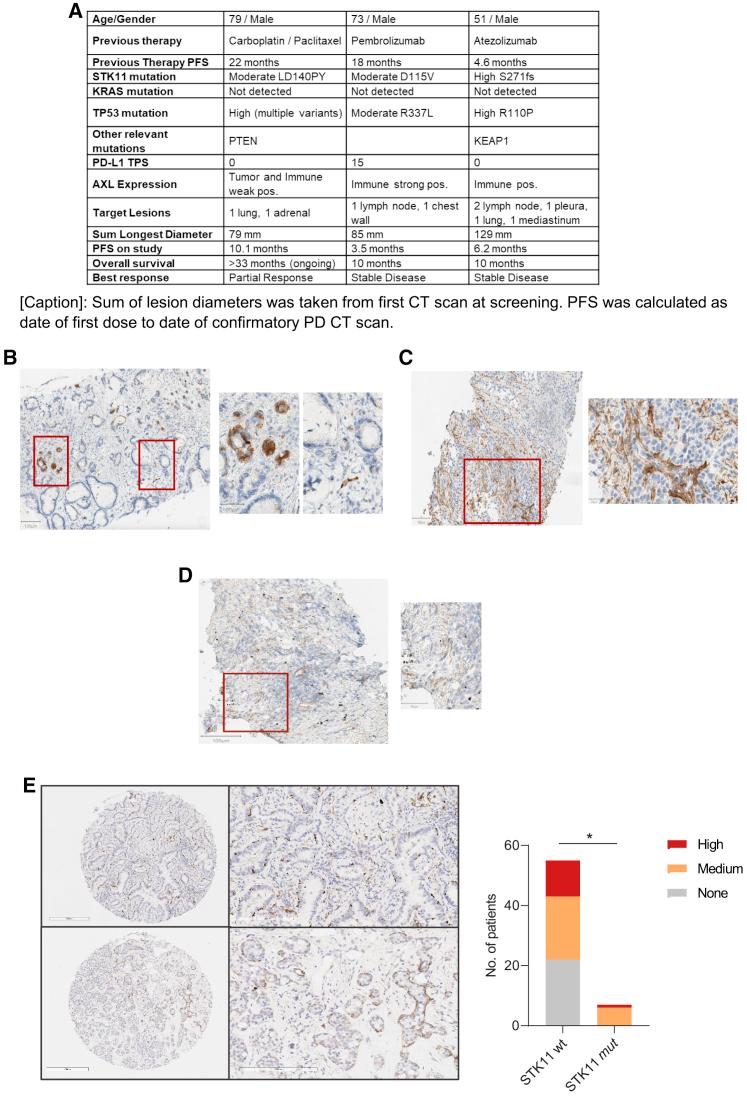
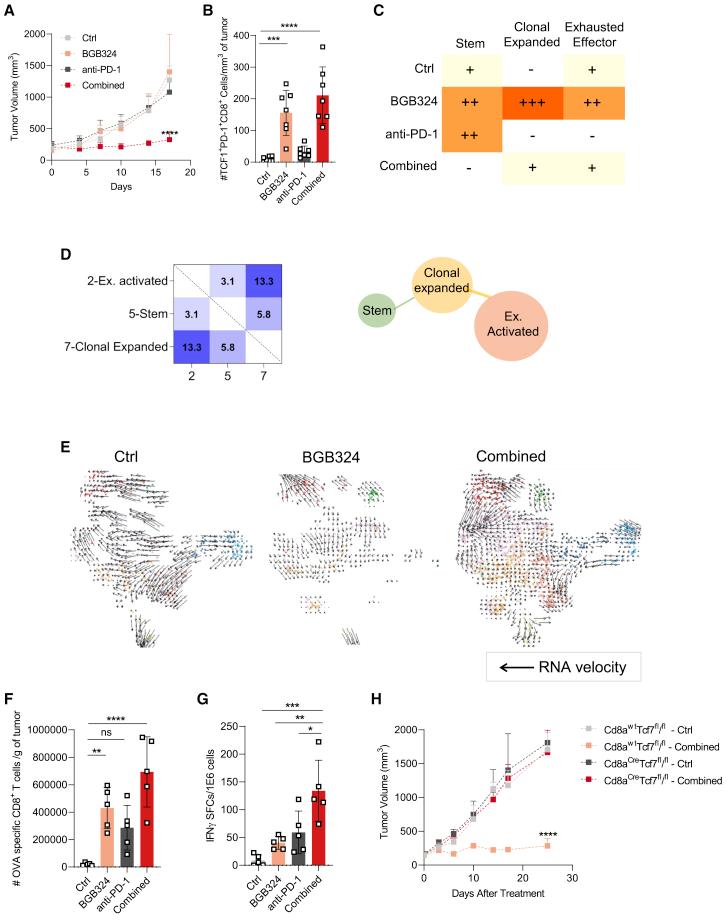
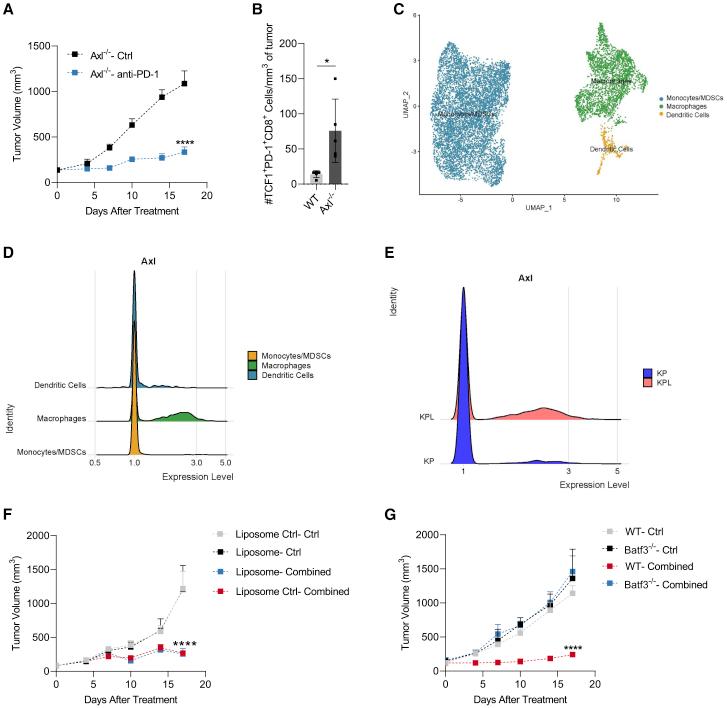
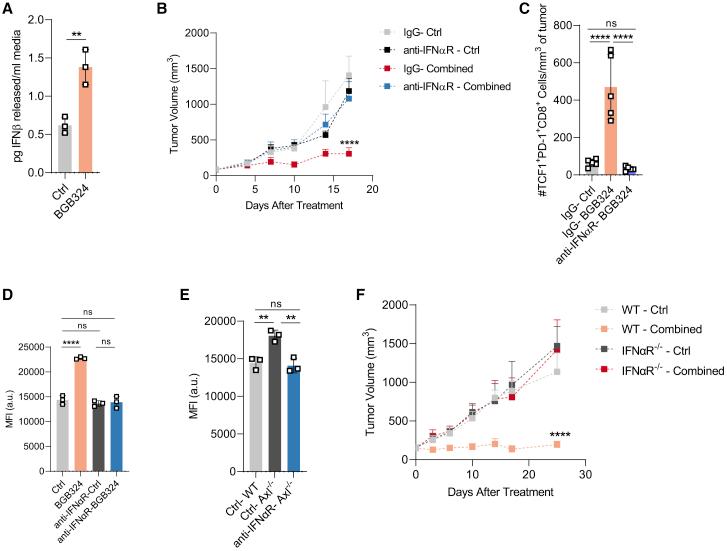
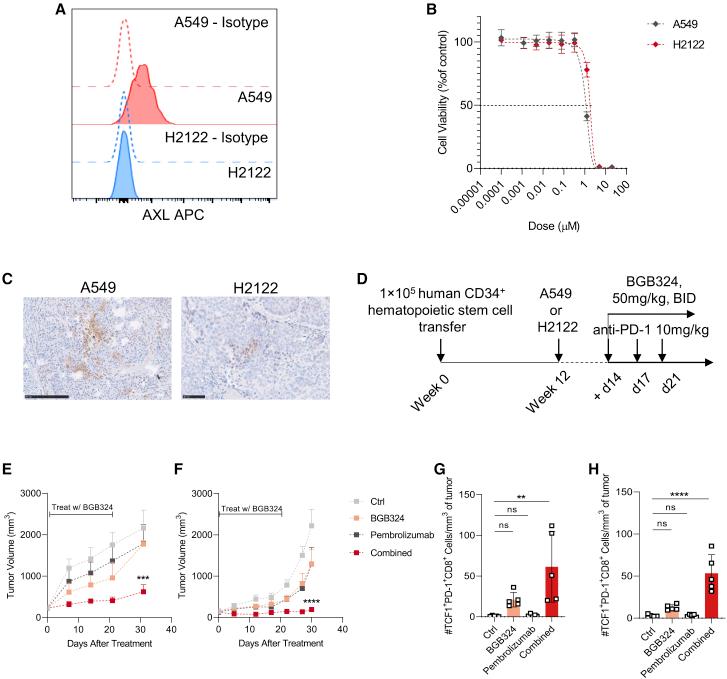
Mutations in in non-small cell lung cancer (NSCLC) are associated with poor patient responses to immune checkpoint blockade (ICB), and introduction of a () mutation into murine lung adenocarcinomas driven by mutant and loss () resulted in an ICB refractory syngeneic tumor. Mechanistically this occurred because mutant NSCLCs lacked TCF1-expressing CD8 T cells, a phenotype recapitulated in human mutant NSCLCs. Systemic inhibition of Axl results in increased type I interferon secretion from dendritic cells that expanded tumor-associated TCF1PD-1CD8 T cells, restoring therapeutic response to PD-1 ICB in tumors. This was observed in syngeneic immunocompetent mouse models and in humanized mice bearing mutant NSCLC human tumor xenografts. NSCLC-affected individuals with identified mutations receiving bemcentinib and pembrolizumab demonstrated objective clinical response to combination therapy. We conclude that AXL is a critical targetable driver of immune suppression in mutant NSCLC.
在非小细胞肺癌(NSCLC)中, 突变与免疫检查点阻断(ICB)治疗的患者反应不佳相关,而在 突变和 缺失()驱动的小鼠肺腺癌中引入 ()突变,则导致了对 ICB 耐药的同基因 肿瘤。从机制上讲,这是因为 突变的 NSCLC 缺乏 TCF1 表达的 CD8 T 细胞,这一表型在人类 突变的 NSCLC 中得到了重现。全身性抑制 Axl 会导致树突状细胞分泌更多的 I 型干扰素,从而扩增与肿瘤相关的 TCF1PD-1CD8 T 细胞,恢复对 PD-1 ICB 的治疗反应。这在同基因免疫功能正常的小鼠模型中以及携带 突变的 NSCLC 人肿瘤异种移植的人源化小鼠中都得到了观察。接受贝美替尼和帕博利珠单抗治疗的已确定存在 突变的 NSCLC 患者,对联合治疗有客观的临床反应。我们得出结论,AXL 是 突变 NSCLC 中免疫抑制的关键可靶向驱动因素。


 Zotero 插件