
合理设计具有增强可见光光催化活性的直接Z型BiOBr/g-CN异质结以消除有机污染物。
Rational design direct Z-scheme BiOBr/g-CN heterojunction with enhanced visible photocatalytic activity for organic pollutants elimination.
作者信息
Li Hongfei, Ma Aiqiong, Zhang Dian, Gao Yunqin, Dong Yonghao
机构信息
College of Materials Science and Engineering, Xi'an University of Architecture and Technology Xi'an Shaanxi 710055 China
出版信息
RSC Adv. 2020 Jan 29;10(8):4681-4689. doi: 10.1039/c9ra10146b. eCollection 2020 Jan 24.
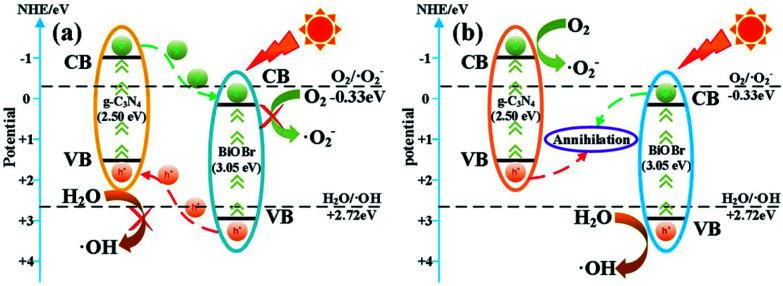
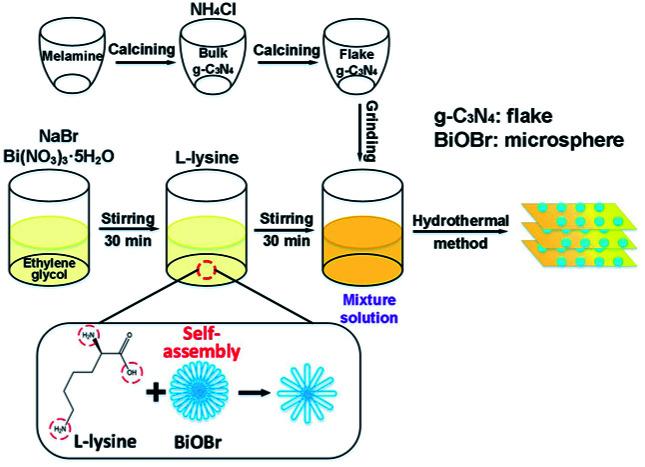
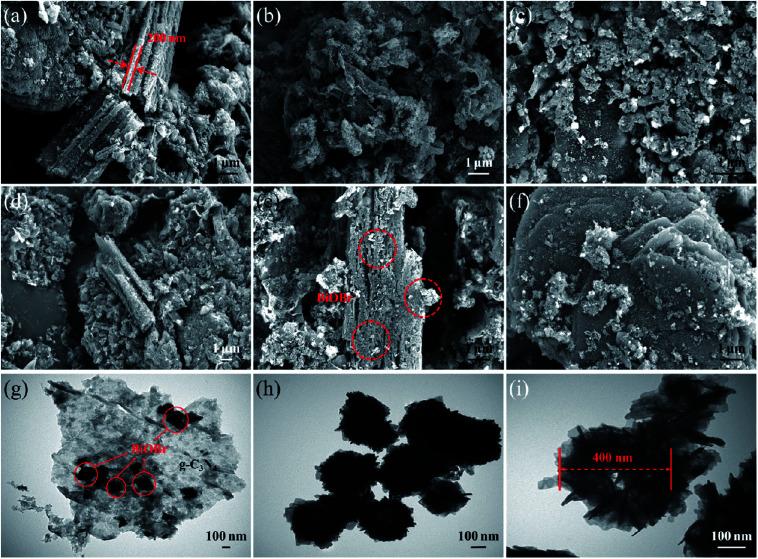
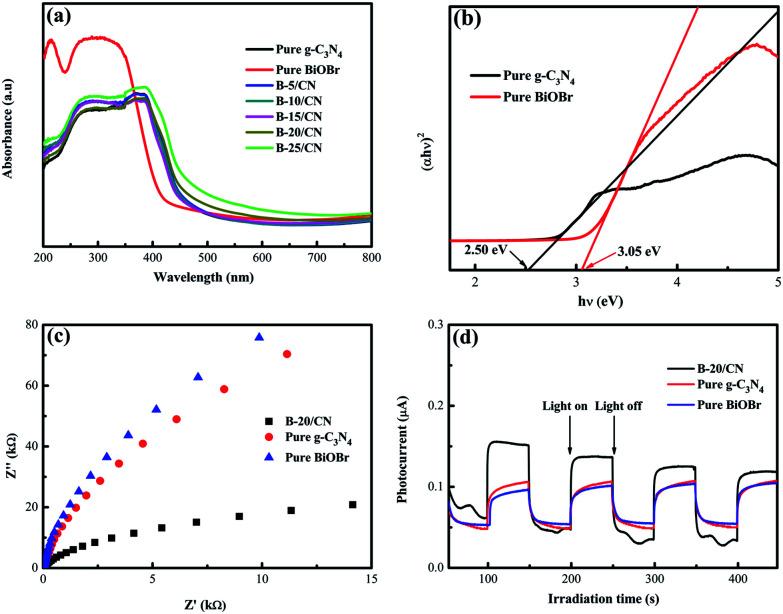
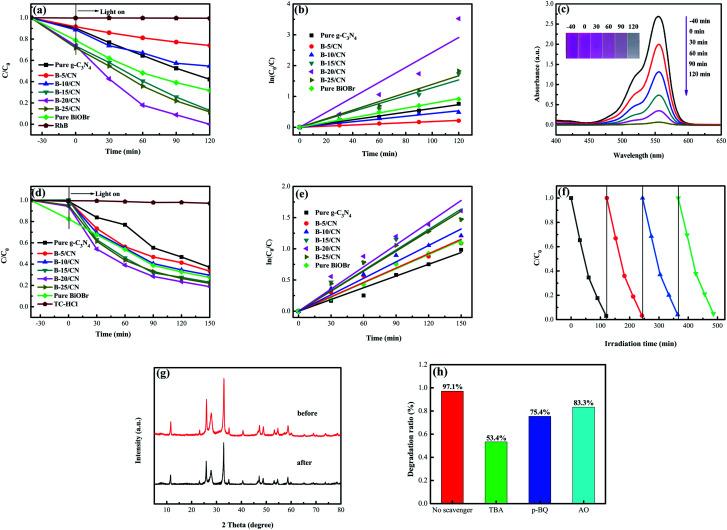
A rapid recombination of photo-generated electrons and holes, as well as a narrow visible light adsorption range are two intrinsic defects in graphitic carbon nitride (g-CN)-based photocatalysts. Inspired by natural photosynthesis, an artificially synthesized Z-scheme photocatalyst can efficaciously restrain the recombination of photogenerated electron-hole pairs and enhance the photoabsorption ability. Hence, to figure out the above problems, BiOBr/g-CN composite photocatalysts with different mass ratios of BiOBr were successfully synthesized a facile template-assisted hydrothermal method which enabled the BiOBr microspheres to grow on the surface of g-CN flakes. Furthermore, to explore the origin of the enhanced photocatalytic activity of BiOBr/g-CN composites, the microstructure, photoabsorption ability and electrochemical property of BiOBr/g-CN composites were investigated by X-ray diffraction (XRD), field emission scanning electron microscopy (FESEM), transmission electron microscopy (TEM), UV-vis diffuse reflectance spectroscopy (DRS), electrochemical impedance spectroscopy (EIS) and photocurrent (PC) response measurements. As a result, the introduction of BiOBr on g-CN to constitute a direct Z-scheme heterojunction system can effectively broaden the light absorption range and promote the separation of photo-generated electron-hole pairs. Hence, compared with pure g-CN and BiOBr, the resultant BiOBr/g-CN composites exhibit the remarkable activity of photodegradated rhodamine B (RhB) and tetracycline hydrochloride (TC-HCl) under visible light irradiation. Simultaneously, the optimal BiOBr content of the BiOBr/g-CN composites was obtained. The BiOBr/g-CN composites exhibit an excellent photostability and reusability after four recycling runs for degradation RhB. Moreover, the active-group-trapping experiment confirmed that ·OH, ·O and h were the primary active groups in the degradation process. Based on the above research results, a rational direct Z-scheme heterojunction system is contrastively analyzed and proposed to account for the photocatalytic degradation process of BiOBr/g-CN composites.
光生电子和空穴的快速复合以及较窄的可见光吸收范围是石墨相氮化碳(g-CN)基光催化剂的两个固有缺陷。受自然光合作用的启发,人工合成的Z型光催化剂可以有效地抑制光生电子 - 空穴对的复合并增强光吸收能力。因此,为了解决上述问题,采用简便的模板辅助水热法成功合成了具有不同质量比BiOBr的BiOBr/g-CN复合光催化剂,该方法使BiOBr微球生长在g-CN薄片表面。此外,为了探究BiOBr/g-CN复合材料光催化活性增强的原因,通过X射线衍射(XRD)、场发射扫描电子显微镜(FESEM)、透射电子显微镜(TEM)、紫外 - 可见漫反射光谱(DRS)、电化学阻抗谱(EIS)和光电流(PC)响应测量研究了BiOBr/g-CN复合材料的微观结构、光吸收能力和电化学性质。结果表明,在g-CN上引入BiOBr构成直接Z型异质结体系可以有效地拓宽光吸收范围并促进光生电子 - 空穴对的分离。因此,与纯g-CN和BiOBr相比,所得的BiOBr/g-CN复合材料在可见光照射下表现出显著的光降解罗丹明B(RhB)和盐酸四环素(TC-HCl)的活性。同时,得到了BiOBr/g-CN复合材料的最佳BiOBr含量。BiOBr/g-CN复合材料在降解RhB的四次循环运行后表现出优异的光稳定性和可重复使用性。此外,活性基团捕获实验证实·OH、·O 和h是降解过程中的主要活性基团。基于上述研究结果,对合理的直接Z型异质结体系进行了对比分析,并提出该体系用于解释BiOBr/g-CN复合材料的光催化降解过程。

 Zotero 插件