
HMGCS2 沉默通过增加细胞活力,抑制细胞凋亡、炎症和氧化应激,减轻高糖诱导的体外糖尿病心肌病。
HMGCS2 silencing attenuates high glucose-induced in vitro diabetic cardiomyopathy by increasing cell viability, and inhibiting apoptosis, inflammation, and oxidative stress.
机构信息
Department of General Geriatrics Division, The First Affiliated Hospital of Guangxi Medical University, Nanning, Guangxi, China.
Department of Cardiology, The People's Hospital of Guangxi Zhuang Autonomous Region, Guangxi Academy of Medical Sciences, Nanning, Guangxi, China.
出版信息
Bioengineered. 2022 May;13(5):11417-11429. doi: 10.1080/21655979.2022.2063222.
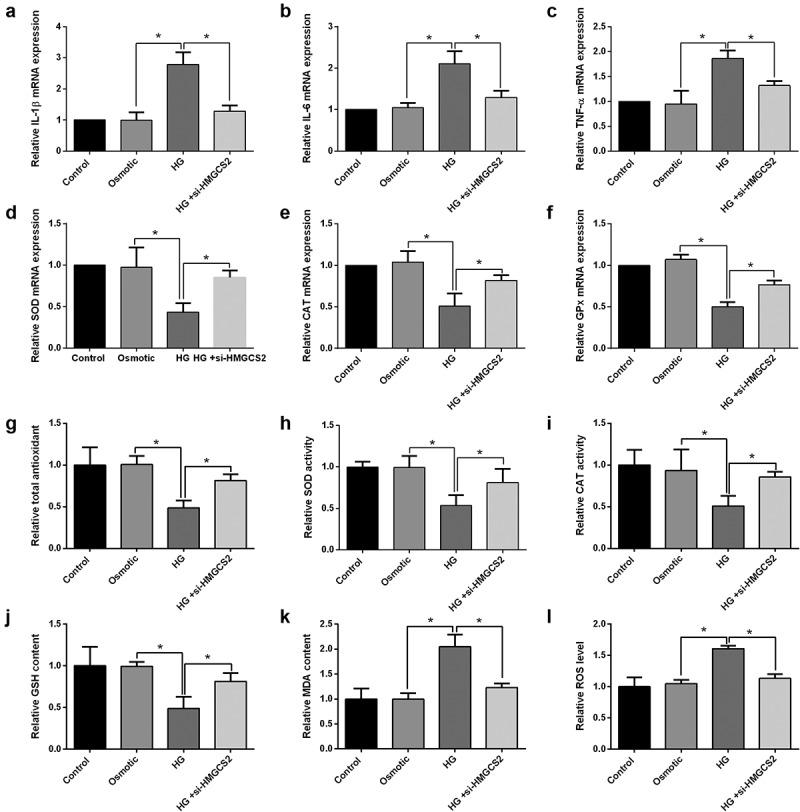
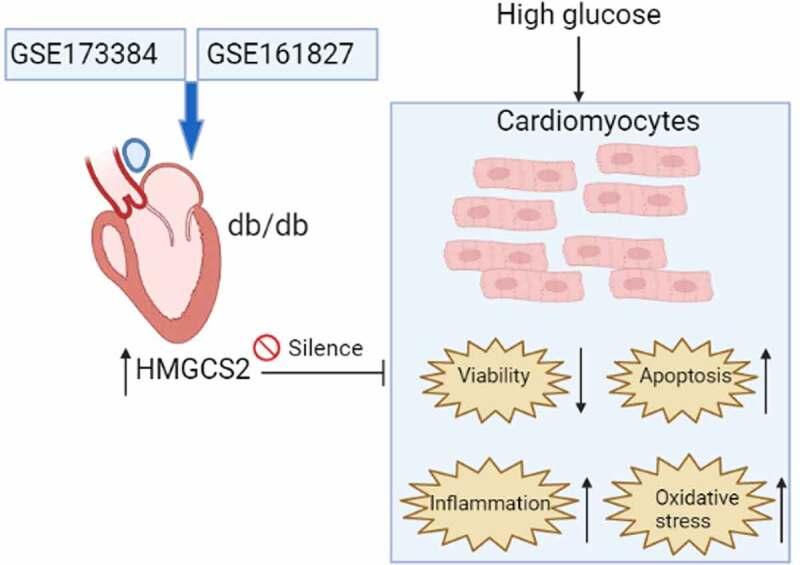
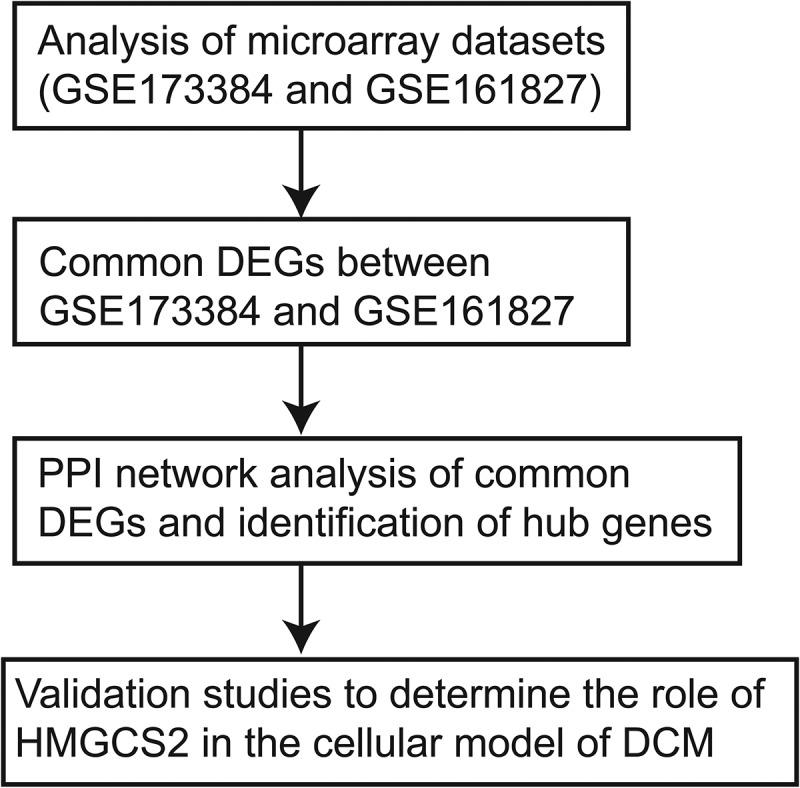
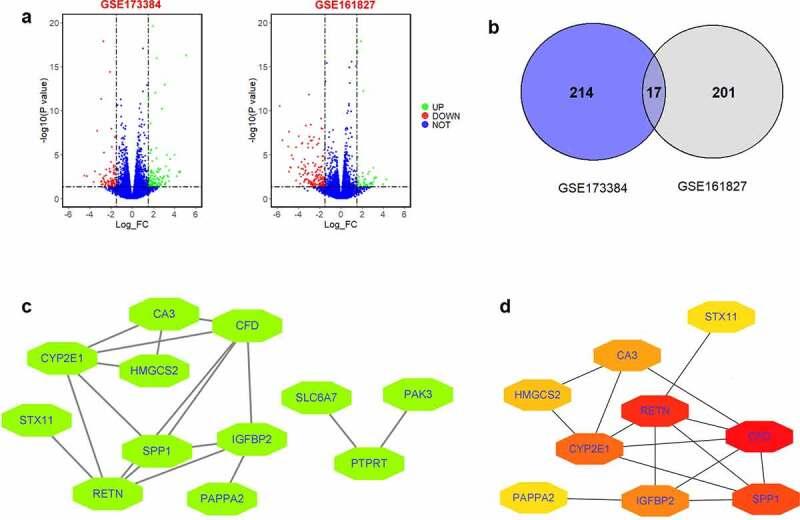
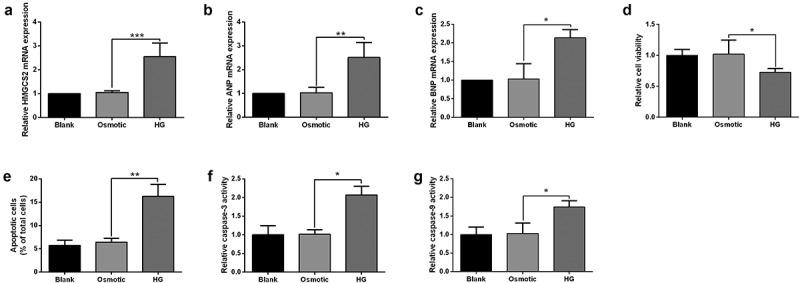
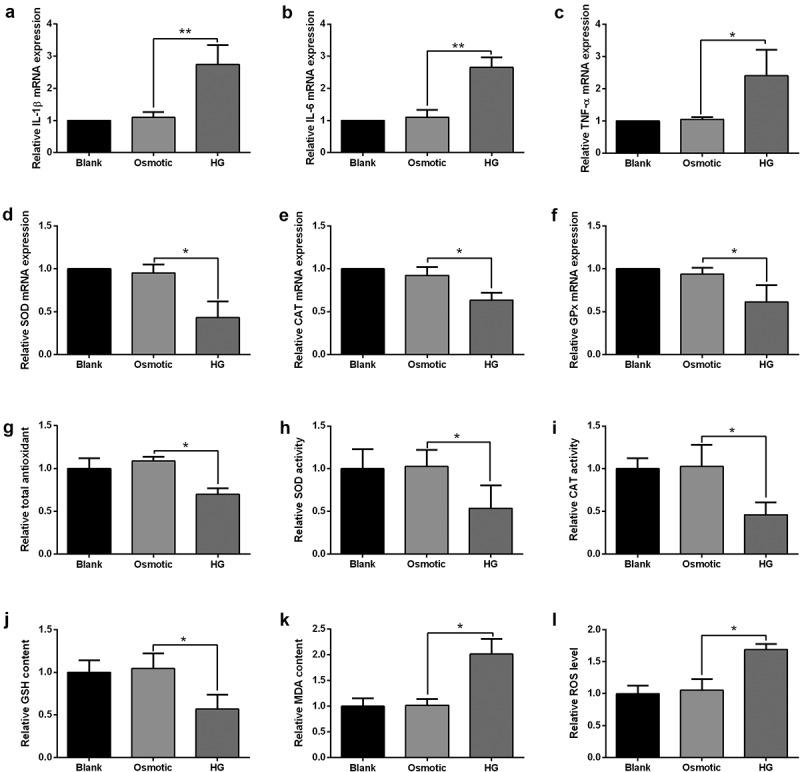
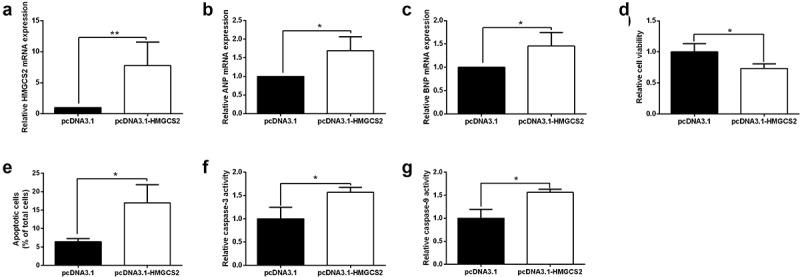
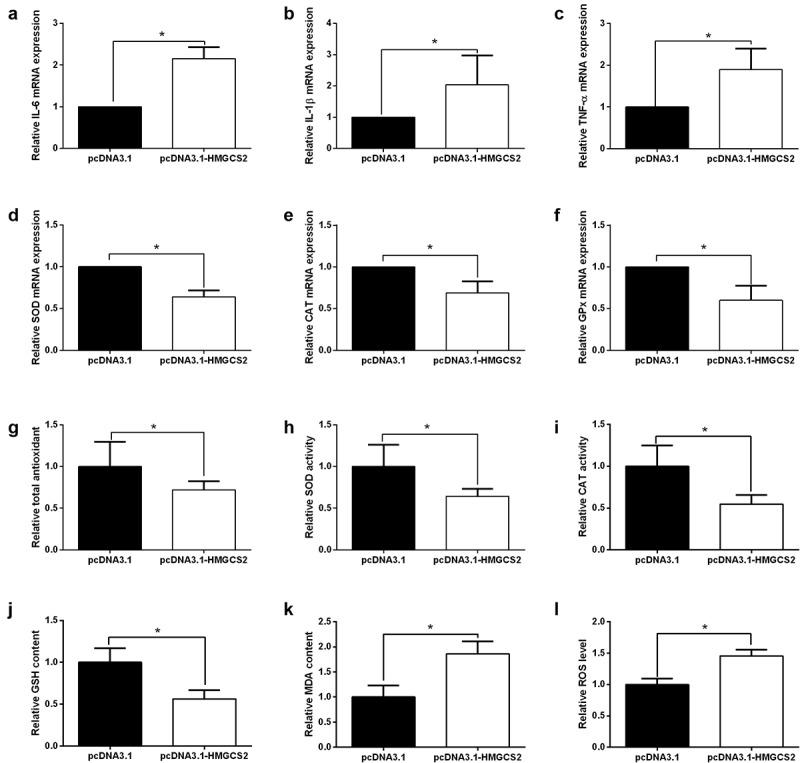
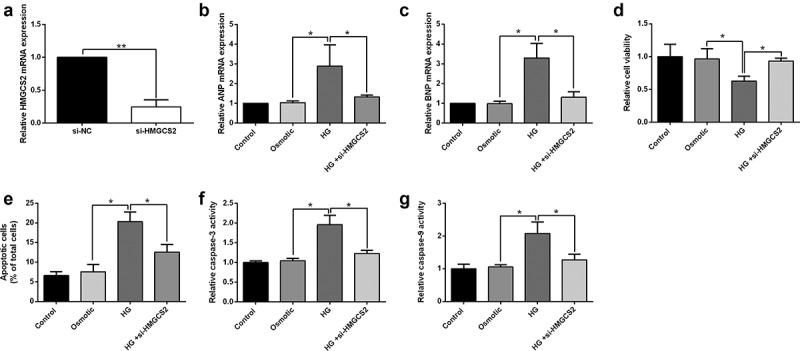
Diabetic cardiomyopathy (DCM) is a diabetic mellitus-related complications and progression of DCM may eventually lead to heart failure, while mechanisms related to DCM pathophysiology remain unclear. The study was undertaken to identify possible hub genes associated with DCM progression through bioinformatics analysis and to validate the role of 3-hydroxy-3-methylglutaryl-CoA synthase 2 (HMGCS2) in DCM progression using a cellular model of high glucose (HG)-induced DCM. The common differentially expressed genes (DEGs) between GSE173884 and GSE161827 were used for PPI network analysis. Our results identified 17 common DEGs between GSE173384 and GSE161827. Further analysis of the protein-protein interaction network identified nine hub genes and HMGCS2. The in vitro functional assays showed that HG induced up-regulation of HMGCS2, suppressed cardiomyocyte viability, enhanced apoptosis, inflammation, and oxidative stress of cardiomyocytes. Gain-of-function assays showed that HMGCS2 overexpression reduced cell viability, increased apoptosis, caspase-3/-9 activity, up-regulated interleukin (IL)-1β, IL-6 and tumor necrosis factor-α (TNF-α) expression, decreased superoxide dismutase (SOD), catalase (CAT) and glutathione peroxidase expression, increased malondialdehyde (MDA) content, and reactive oxygen species (ROS) level but inhibited total antioxidant activity, SOD activity, CAT activity, and glutathione content in cardiomyocytes. Rescue experiments demonstrated HMGCS2 silence attenuated HG-induced decrease in cardiomyocyte viability and increase in cardiomyocyte apoptosis, inflammation, and oxidative stress. All in all, our study identified HMGCS2 as a hub gene in DCM pathophysiology and further functional studies indicated that HMGCS2 may aggravate DCM progression by reducing cardiomyocyte viability, increasing cardiomyocyte apoptosis, and promoting inflammation and oxidative stress in cardiomyocytes.
糖尿病心肌病(DCM)是一种与糖尿病有关的并发症,DCM 的进展最终可能导致心力衰竭,而与 DCM 病理生理学相关的机制仍不清楚。本研究通过生物信息学分析,旨在确定与 DCM 进展相关的可能的枢纽基因,并通过高糖(HG)诱导的 DCM 细胞模型验证 3-羟-3-甲基戊二酰辅酶 A 合酶 2(HMGCS2)在 DCM 进展中的作用。使用 GSE173884 和 GSE161827 之间的常见差异表达基因(DEG)进行 PPI 网络分析。我们的结果在 GSE173384 和 GSE161827 之间确定了 17 个常见的 DEG。进一步分析蛋白质-蛋白质相互作用网络确定了 9 个枢纽基因和 HMGCS2。体外功能测定表明,HG 诱导 HMGCS2 的上调,抑制心肌细胞活力,增强心肌细胞的凋亡、炎症和氧化应激。功能获得测定表明,HMGCS2 的过表达降低了细胞活力,增加了细胞凋亡、半胱天冬酶-3/-9 活性,上调了白细胞介素(IL)-1β、IL-6 和肿瘤坏死因子-α(TNF-α)的表达,降低了超氧化物歧化酶(SOD)、过氧化氢酶(CAT)和谷胱甘肽过氧化物酶的表达,增加了丙二醛(MDA)含量和活性氧(ROS)水平,但抑制了总抗氧化活性、SOD 活性、CAT 活性和谷胱甘肽含量在心肌细胞中。挽救实验表明,HMGCS2 沉默减弱了 HG 诱导的心肌细胞活力降低和心肌细胞凋亡增加、炎症和氧化应激。总之,我们的研究确定了 HMGCS2 是 DCM 病理生理学中的一个枢纽基因,进一步的功能研究表明,HMGCS2 可能通过降低心肌细胞活力、增加心肌细胞凋亡以及促进心肌细胞炎症和氧化应激来加重 DCM 的进展。
 Zotero 插件