
癌症中的 3D 染色质结构和转录调控。
3D chromatin architecture and transcription regulation in cancer.
机构信息
Nuffield Department of Orthopaedics, Rheumatology and Musculoskeletal Sciences, Botnar Research Centre, University of Oxford, Old Road, Headington, Oxford, OX3 7LD, UK.
出版信息
J Hematol Oncol. 2022 May 4;15(1):49. doi: 10.1186/s13045-022-01271-x.
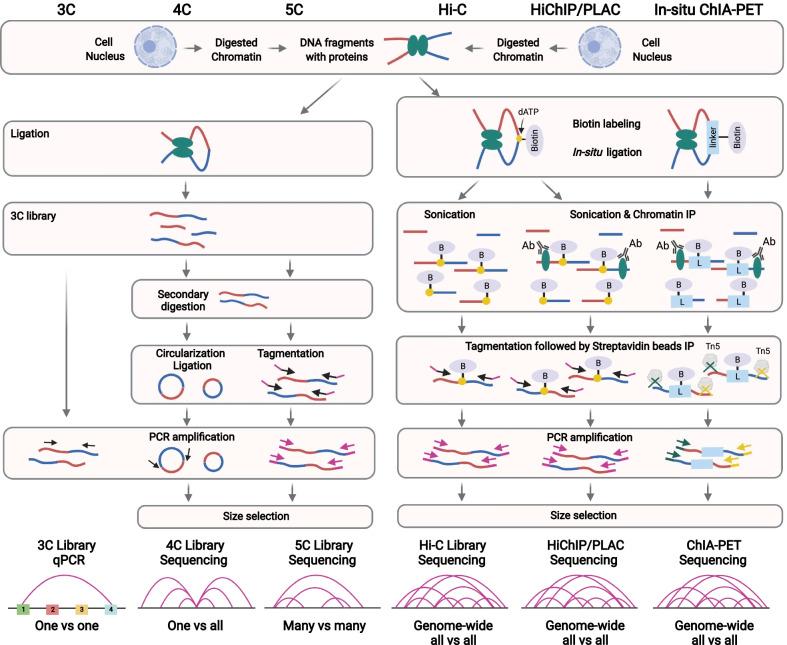
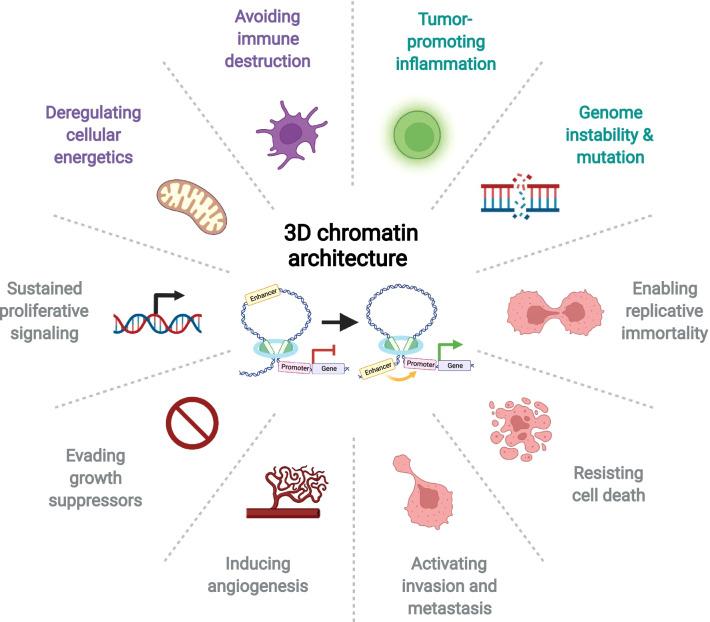
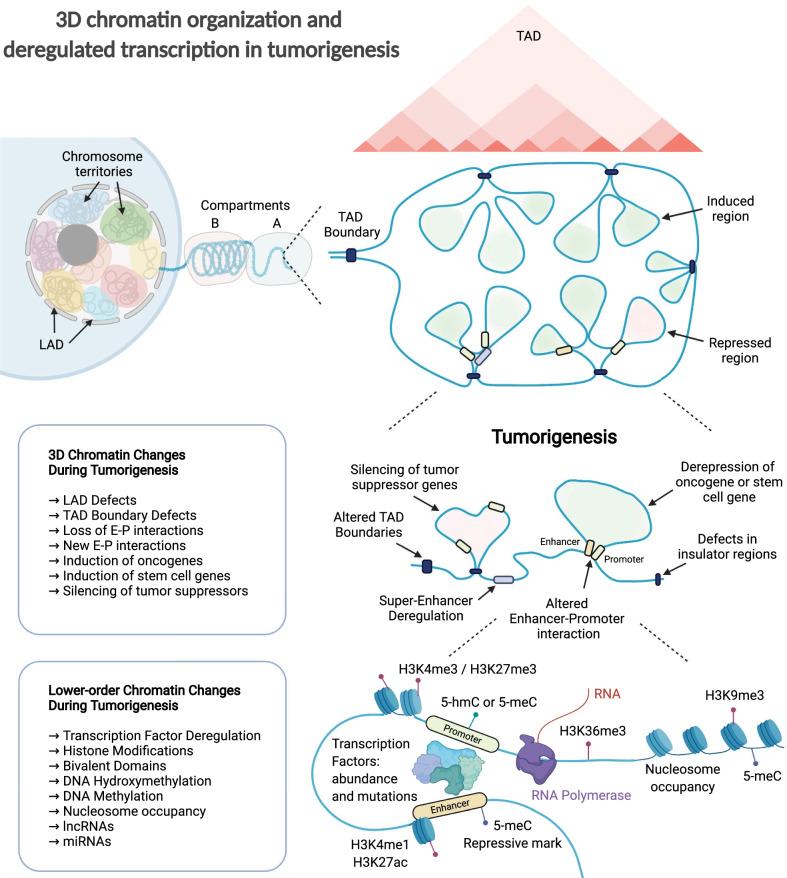
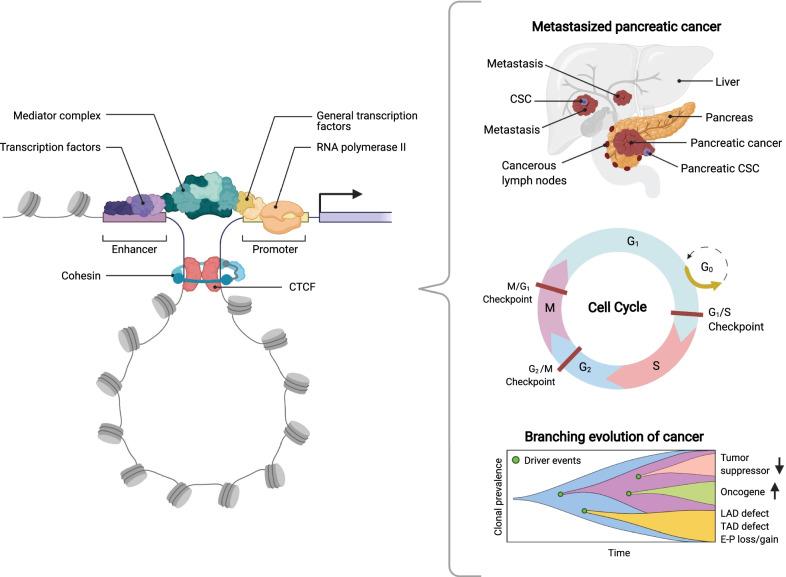
Chromatin has distinct three-dimensional (3D) architectures important in key biological processes, such as cell cycle, replication, differentiation, and transcription regulation. In turn, aberrant 3D structures play a vital role in developing abnormalities and diseases such as cancer. This review discusses key 3D chromatin structures (topologically associating domain, lamina-associated domain, and enhancer-promoter interactions) and corresponding structural protein elements mediating 3D chromatin interactions [CCCTC-binding factor, polycomb group protein, cohesin, and Brother of the Regulator of Imprinted Sites (BORIS) protein] with a highlight of their associations with cancer. We also summarise the recent development of technologies and bioinformatics approaches to study the 3D chromatin interactions in gene expression regulation, including crosslinking and proximity ligation methods in the bulk cell population (ChIA-PET and HiChIP) or single-molecule resolution (ChIA-drop), and methods other than proximity ligation, such as GAM, SPRITE, and super-resolution microscopy techniques.
染色质具有独特的三维(3D)结构,这些结构在细胞周期、复制、分化和转录调控等关键生物学过程中发挥重要作用。反过来,异常的 3D 结构在发育异常和疾病(如癌症)的发生中起着至关重要的作用。本综述讨论了关键的 3D 染色质结构(拓扑关联域、核纤层相关域和增强子-启动子相互作用)以及介导 3D 染色质相互作用的相应结构蛋白元件[结合因子 CCCTC(CCCTC-binding factor)、多梳组蛋白、黏合蛋白和印记位点调控因子(Brother of the Regulator of Imprinted Sites,BORIS)蛋白],并重点介绍了它们与癌症的关联。我们还总结了研究 3D 染色质相互作用在基因表达调控中的最新技术和生物信息学方法,包括在细胞群体中进行交联和邻近连接的方法(ChIA-PET 和 HiChIP)或单分子分辨率(ChIA-drop),以及除邻近连接以外的方法,如 GAM、SPRITE 和超分辨率显微镜技术。
 Zotero 插件