
慢波同步和睡眠状态转变。
Slow wave synchronization and sleep state transitions.
机构信息
Center for Dynamical Biomarkers, MA, 02067, Sharon, USA.
Division of Pulmonary, Critical Care & Sleep, Department of Medicine, Beth Israel Deaconess Medical Center, Harvard Medical School, Boston, MA, 02215, USA.
出版信息
Sci Rep. 2022 May 6;12(1):7467. doi: 10.1038/s41598-022-11513-0.
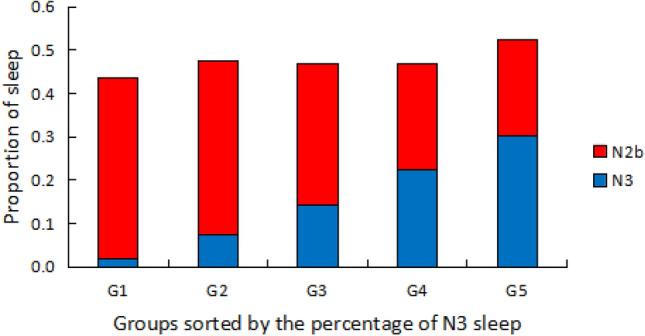
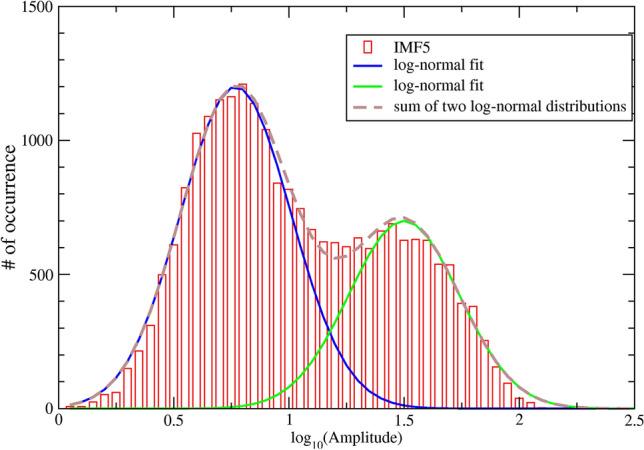
Spontaneous synchronization over large networks is ubiquitous in nature, ranging from inanimate to biological systems. In the human brain, neuronal synchronization and de-synchronization occur during sleep, with the greatest degree of neuronal synchronization during slow wave sleep (SWS). The current sleep classification schema is based on electroencephalography and provides common criteria for clinicians and researchers to describe stages of non-rapid eye movement (NREM) sleep as well as rapid eye movement (REM) sleep. These sleep stage classifications have been based on convenient heuristic criteria, with little consideration of the accompanying normal physiological changes across those same sleep stages. To begin to resolve those inconsistencies, first focusing only on NREM sleep, we propose a simple cluster synchronization model to explain the emergence of SWS in healthy people without sleep disorders. We apply the empirical mode decomposition (EMD) analysis to quantify slow wave activity in electroencephalograms, and provide quantitative evidence to support our model. Based on this synchronization model, NREM sleep can be classified as SWS and non-SWS, such that NREM sleep can be considered as an intrinsically bistable process. Finally, we develop an automated algorithm for SWS classification. We show that this new approach can unify brain wave dynamics and their corresponding physiologic changes.
自发性同步在自然界中无处不在,从无生命系统到生物系统都有体现。在人类大脑中,神经元在睡眠期间会发生同步和去同步现象,其中慢波睡眠(SWS)期间的神经元同步程度最大。目前的睡眠分类方案基于脑电图,并为临床医生和研究人员提供了描述非快速眼动(NREM)睡眠和快速眼动(REM)睡眠阶段的共同标准。这些睡眠阶段分类是基于方便的启发式标准,几乎没有考虑到同一睡眠阶段中伴随的正常生理变化。为了解决这些不一致性,我们首先仅关注 NREM 睡眠,并提出了一个简单的簇同步模型,以解释没有睡眠障碍的健康人出现 SWS 的原因。我们应用经验模态分解(EMD)分析来量化脑电图中的慢波活动,并提供定量证据来支持我们的模型。基于这个同步模型,NREM 睡眠可以分为 SWS 和非 SWS,使得 NREM 睡眠可以被视为一个内在的双稳态过程。最后,我们开发了一种用于 SWS 分类的自动化算法。我们表明,这种新方法可以统一脑波动力学及其相应的生理变化。



 Zotero 插件