
新冠病毒患者体内发现的刺突蛋白和类毒素肽对正在分化的人类 3D 神经元/神经胶质模型的影响:对 SARS-CoV-2 对大脑发育影响的可能意义。
Effects of spike protein and toxin-like peptides found in COVID-19 patients on human 3D neuronal/glial model undergoing differentiation: Possible implications for SARS-CoV-2 impact on brain development.
机构信息
European Commission, Joint Research Centre (JRC), Ispra, Italy.
Seidor Italy srl, European Commission, Joint Research Centre (JRC), Ispra, Italy.
出版信息
Reprod Toxicol. 2022 Aug;111:34-48. doi: 10.1016/j.reprotox.2022.04.011. Epub 2022 May 5.
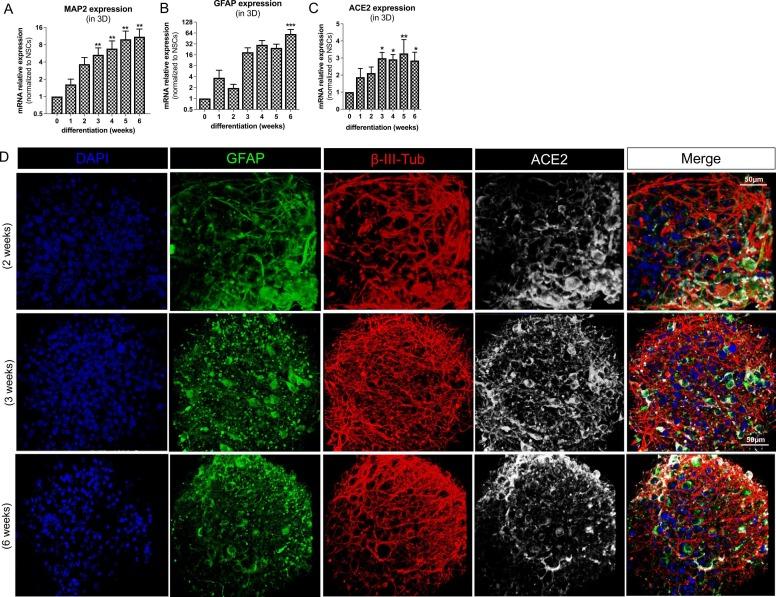
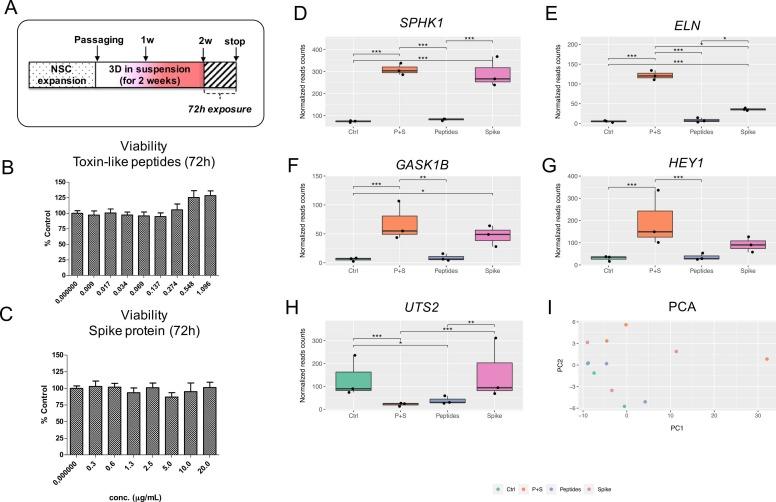
The possible neurodevelopmental consequences of SARS-CoV-2 infection are presently unknown. In utero exposure to SARS-CoV-2 has been hypothesized to affect the developing brain, possibly disrupting neurodevelopment of children. Spike protein interactors, such as ACE2, have been found expressed in the fetal brain, and could play a role in potential SARS-CoV-2 fetal brain pathogenesis. Apart from the possible direct involvement of SARS-CoV-2 or its specific viral components in the occurrence of neurological and neurodevelopmental manifestations, we recently reported the presence of toxin-like peptides in plasma, urine and fecal samples specifically from COVID-19 patients. In this study, we investigated the possible neurotoxic effects elicited upon 72-hour exposure to human relevant levels of recombinant spike protein, toxin-like peptides found in COVID-19 patients, as well as a combination of both in 3D human iPSC-derived neural stem cells differentiated for either 2 weeks (short-term) or 8 weeks (long-term, 2 weeks in suspension + 6 weeks on MEA) towards neurons/glia. Whole transcriptome and qPCR analysis revealed that spike protein and toxin-like peptides at non-cytotoxic concentrations differentially perturb the expression of SPHK1, ELN, GASK1B, HEY1, UTS2, ACE2 and some neuronal-, glia- and NSC-related genes critical during brain development. Additionally, exposure to spike protein caused a decrease of spontaneous electrical activity after two days in long-term differentiated cultures. The perturbations of these neurodevelopmental endpoints are discussed in the context of recent knowledge about the key events described in Adverse Outcome Pathways relevant to COVID-19, gathered in the context of the CIAO project (https://www.ciao-covid.net/).
目前尚不清楚 SARS-CoV-2 感染可能对神经发育造成的后果。有假说认为,胎儿在子宫内暴露于 SARS-CoV-2 会影响大脑发育,从而可能破坏儿童的神经发育。刺突蛋白相互作用物,如 ACE2,已在胎儿大脑中被发现表达,可能在 SARS-CoV-2 对胎儿大脑发病机制中发挥作用。除了 SARS-CoV-2 或其特定病毒成分可能直接参与神经和神经发育表现的发生之外,我们最近报道了在 COVID-19 患者的血浆、尿液和粪便样本中存在毒素样肽。在这项研究中,我们研究了在 3D 人 iPSC 衍生的神经干细胞中,在 72 小时内暴露于人类相关水平的重组刺突蛋白、COVID-19 患者中发现的毒素样肽以及两者的组合后,可能引起的神经毒性作用。全转录组和 qPCR 分析表明,在非细胞毒性浓度下,刺突蛋白和毒素样肽会以不同的方式干扰 SPHK1、ELN、GASK1B、HEY1、UTS2、ACE2 和一些在大脑发育过程中至关重要的神经元、神经胶质和 NSC 相关基因的表达。此外,在长期分化培养中,刺突蛋白在两天后导致自发电活动减少。这些神经发育终点的改变将在 CIAO 项目(https://www.ciao-covid.net/)背景下,结合最近关于与 COVID-19 相关的不良结局途径中描述的关键事件的知识进行讨论。



 Zotero 插件