
SARS-CoV-2 感染的男性生殖系统影响:系统评价和荟萃分析。
Andrological effects of SARS-Cov-2 infection: a systematic review and meta-analysis.
机构信息
Endocrinology Unit, Medical Department, Azienda Usl, Maggiore-Bellaria Hospital, Bologna, Italy.
Unit of Endocrinology, Diabetology and Medical Andrology, IRCSS, Humanitas Research Hospital, Rozzano, Milan, Italy.
出版信息
J Endocrinol Invest. 2022 Dec;45(12):2207-2219. doi: 10.1007/s40618-022-01801-x. Epub 2022 May 9.
PURPOSE
The short- and long-term andrological effects of coronavirus disease 2019 (COVID-19) have not been clarified. Our aim is to evaluate the available evidence regarding possible andrological consequences of COVID-19 either on seminal or hormonal parameters. The safety of the COVID-19 vaccines in terms of sperm quality was also investigated.
METHODS
All prospective and retrospective observational studies reporting information on severe acute respiratory syndrome coronavirus 2 (SARS-Cov-2) mRNA semen and male genitalia tract detection (n = 19), as well as those reporting data on semen analysis (n = 5) and hormonal parameters (n = 11) in infected/recovered patients without any arbitrary restriction were included.
RESULTS
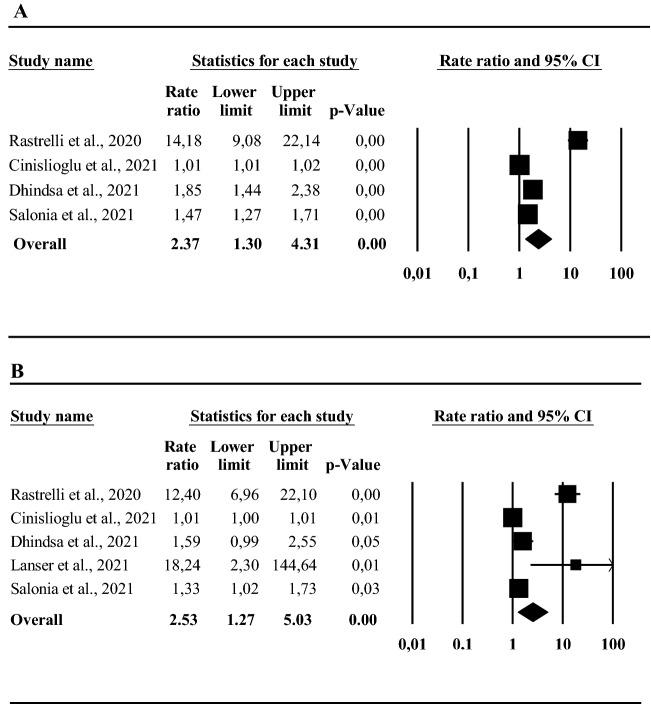
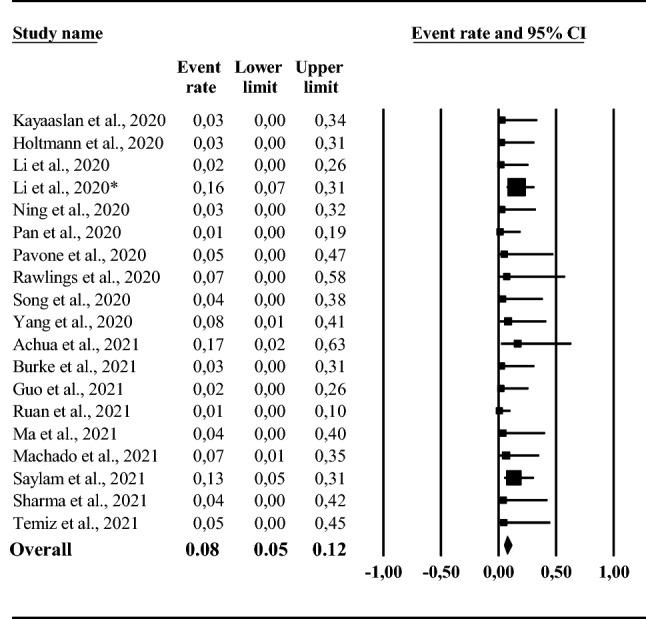
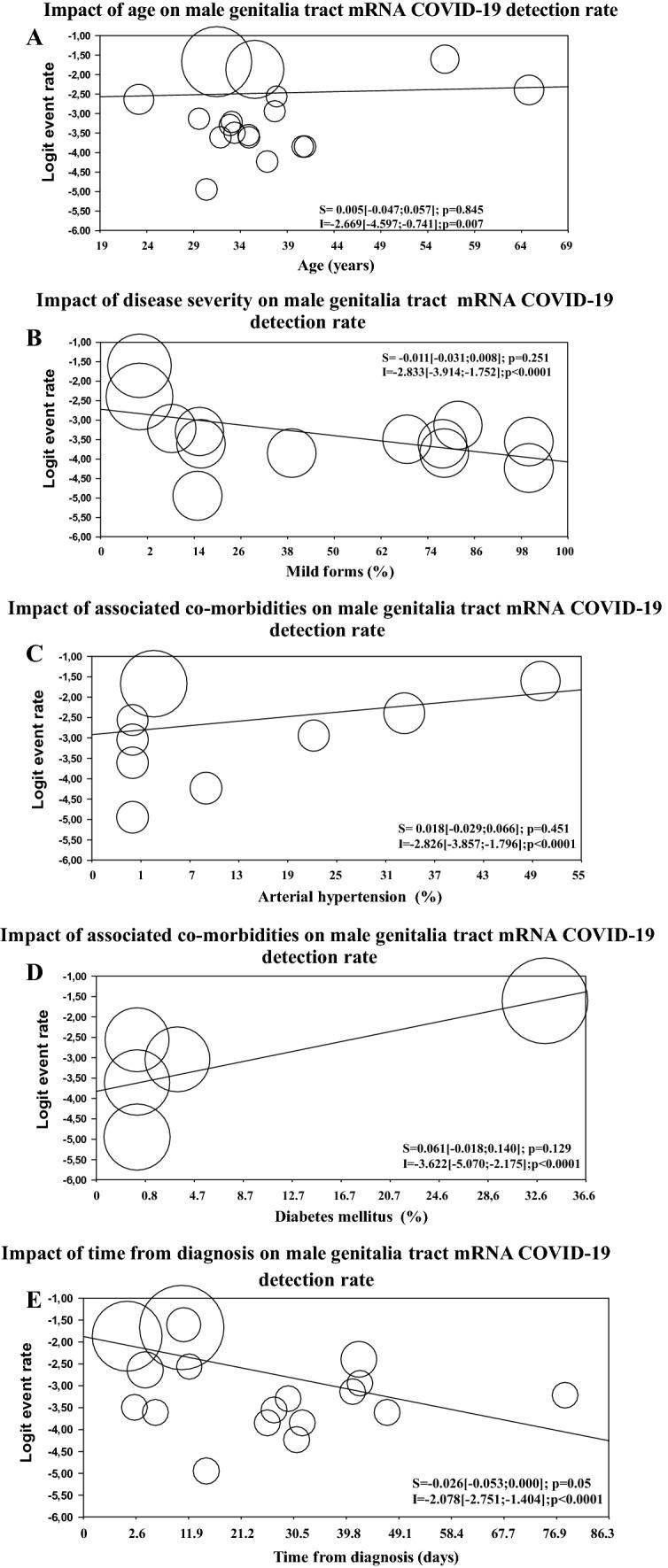
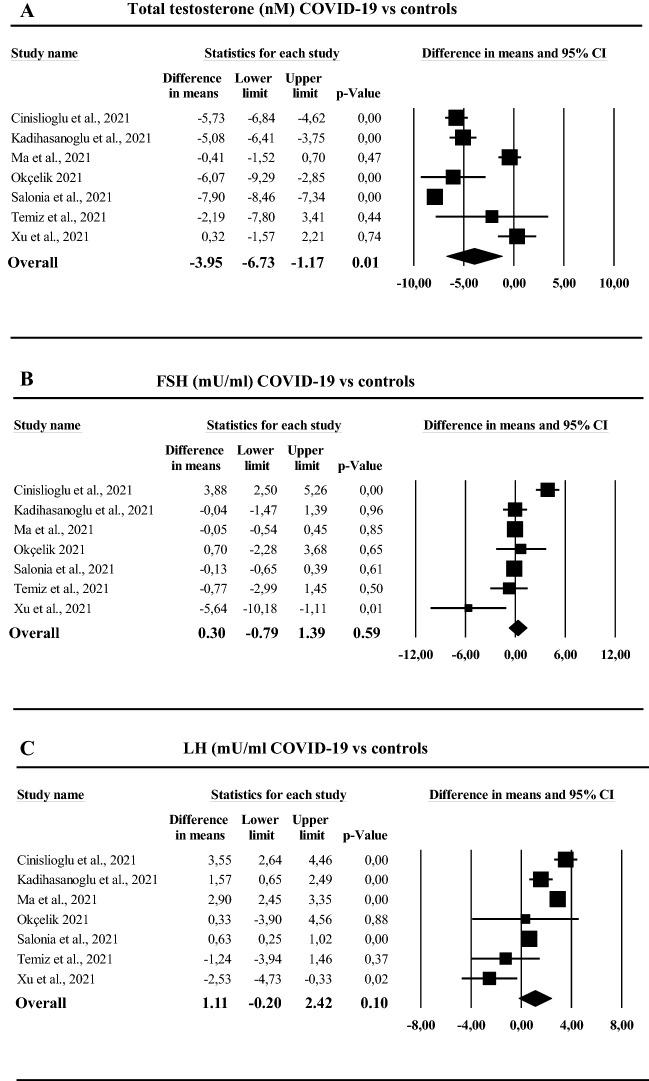
Out of 204 retrieved articles, 35 were considered, including 2092 patients and 1138 controls with a mean age of 44.1 ± 12.6 years, and mean follow-up 24.3 ± 18.9 days. SARS-CoV-2 mRNA can be localized in male genitalia tracts during the acute phase of the disease. COVID-19 can result in short-term impaired sperm and T production. Available data cannot clarify long-term andrological effects. Low T observed in the acute phase of the disease is associated with an increased risk of being admitted to the Intensive Care Unit or death. The two available studies showed that the use of mRNA COVID-19 vaccines does not affect sperm quality.
CONCLUSIONS
The results of our analysis clearly suggest that each patient recovering from COVID-19 should be monitored to rule out sperm and T abnormalities. The specific contribution of reduced T levels during the acute phase of the infection needs to be better clarified.
目的
2019 年冠状病毒病(COVID-19)的短期和长期男科影响尚未明确。我们的目的是评估 COVID-19 对精液或激素参数可能产生的男科后果的现有证据。还研究了 COVID-19 疫苗在精子质量方面的安全性。
方法
所有报告有关严重急性呼吸综合征冠状病毒 2(SARS-CoV-2)mRNA 精液和男性生殖器官检测信息的前瞻性和回顾性观察性研究(n=19),以及报告感染/康复患者精液分析数据(n=5)和激素参数数据(n=11)的研究均不受任何限制地被纳入。
结果
在检索到的 204 篇文章中,考虑了 35 篇,包括 2092 名患者和 1138 名对照,平均年龄为 44.1±12.6 岁,平均随访时间为 24.3±18.9 天。SARS-CoV-2 mRNA 可在疾病急性期定位于男性生殖器官。COVID-19 可导致短期精子和 T 生成受损。现有数据无法阐明长期男科影响。疾病急性期观察到的低 T 与入住重症监护病房或死亡的风险增加相关。两项现有研究表明,使用 mRNA COVID-19 疫苗不会影响精子质量。
结论
我们分析的结果清楚地表明,应监测每位从 COVID-19 中康复的患者,以排除精子和 T 异常。感染急性期 T 水平降低的具体贡献需要进一步阐明。

 Zotero 插件