
表没食子儿茶素-3-没食子酸酯通过抑制群体感应相关毒力因子改善急性肺损伤 。 (原文结尾不完整,翻译可能存在一定局限性)
Epigallocatechin-3-Gallate Ameliorates Acute Lung Damage by Inhibiting Quorum-Sensing-Related Virulence Factors of .
作者信息
Tang Huaqiao, Hao Suqi, Khan Muhammad Faraz, Zhao Ling, Shi Fei, Li Yinglun, Guo Hongrui, Zou Yuanfeng, Lv Cheng, Luo Jie, Zeng Ze, Wu Qiang, Ye Gang
机构信息
Department of Pharmacy, College of Veterinary Medicine, Sichuan Agricultural University, Chengdu, China.
Department of Botany, Faculty of Basic and Applied Sciences, University of Poonch Rawalakot, Rawalakot, Pakistan.
出版信息
Front Microbiol. 2022 Apr 25;13:874354. doi: 10.3389/fmicb.2022.874354. eCollection 2022.
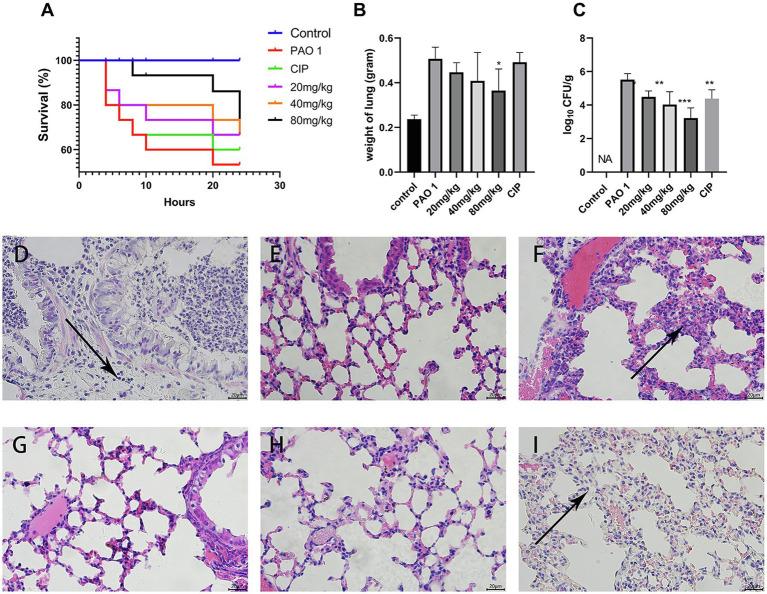
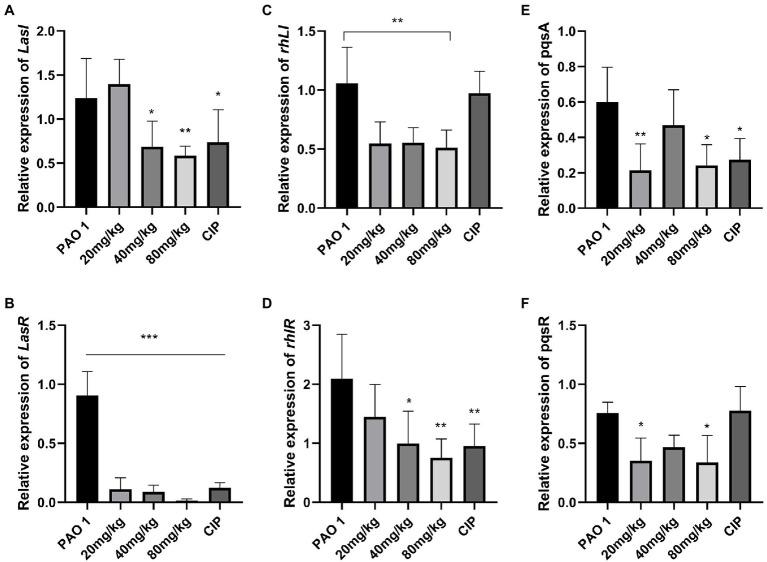
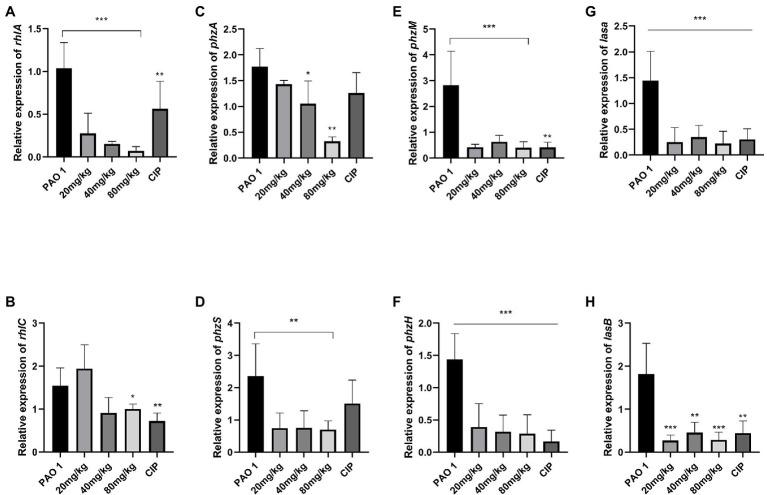
The superbug is among the most formidable antibiotic-resistant pathogens. With declining options for antibiotic-resistant infections, new medicines are of utmost importance to combat with . In our previous study, we demonstrated that Epigallocatechin-3-gallate (EGCG) can inhibit the production of quorum sensing (QS)-regulated virulence factors . Accordingly, the protective effect and molecular mechanisms of EGCG against -induced pneumonia were studied in a mouse model. The results indicated that EGCG significantly lessened histopathological changes and increased the survival rates of mice infected with . EGCG effectively alleviated lung injury by reducing the expression of virulence factors and bacterial burden. In addition, EGCG downregulated the production of pro-inflammatory cytokines, such as TNF-α, IL-1, IL-6, and IL-17, and increased the expression of anti-inflammatory cytokines IL-4 and IL-10. Thus, the experimental results supported for the first time that EGCG improved lung damage in infection by inhibiting the production of QS-related virulence factors .
超级细菌是最可怕的抗生素耐药病原体之一。随着抗生素耐药性感染的应对选择日益减少,新型药物对于对抗此类感染至关重要。在我们之前的研究中,我们证明表没食子儿茶素-3-没食子酸酯(EGCG)能够抑制群体感应(QS)调控的毒力因子的产生。因此,我们在小鼠模型中研究了EGCG对[病原体名称]诱导的肺炎的保护作用及其分子机制。结果表明,EGCG显著减轻了组织病理学变化,并提高了感染[病原体名称]小鼠的存活率。EGCG通过降低毒力因子的表达和细菌载量有效减轻了肺损伤。此外,EGCG下调了促炎细胞因子如TNF-α、IL-1、IL-6和IL-17的产生,并增加了抗炎细胞因子IL-4和IL-10的表达。因此,实验结果首次证实EGCG通过抑制QS相关毒力因子的产生改善了[病原体名称]感染中的肺损伤。


 Zotero 插件