
通过混凝气浮工艺有效处理乳化油废水。
Effective treatment of emulsified oil wastewater by the coagulation-flotation process.
作者信息
You Zhaoyang, Xu Haiyang, Sun Yongjun, Zhang Shujuan, Zhang Li
机构信息
Jiangsu Key Laboratory of Industrial Water-Conservation & Emission Reduction, College of Urban Construction, Nanjing Tech University Nanjing 211800 China
出版信息
RSC Adv. 2018 Dec 5;8(71):40639-40646. doi: 10.1039/c8ra06565a. eCollection 2018 Dec 4.
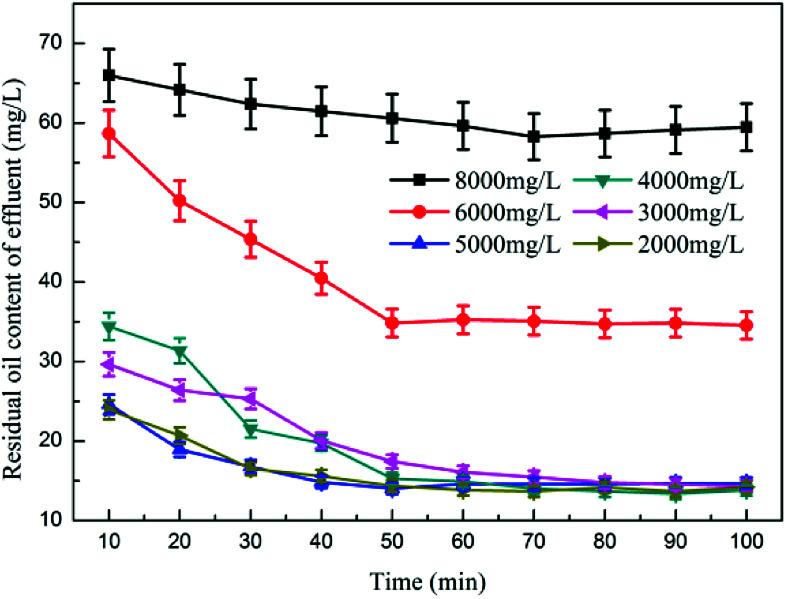
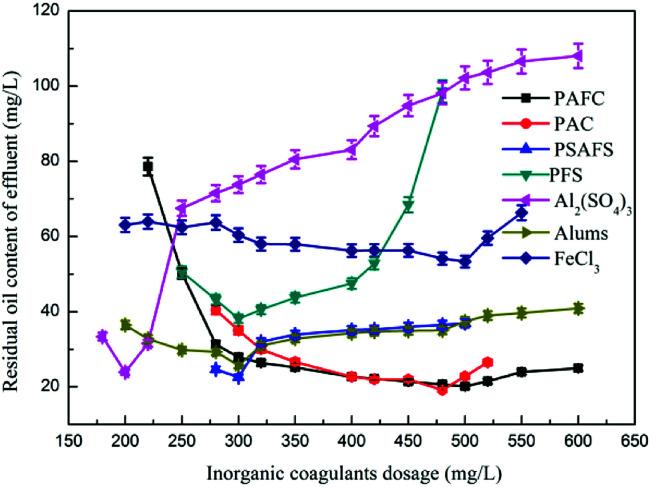
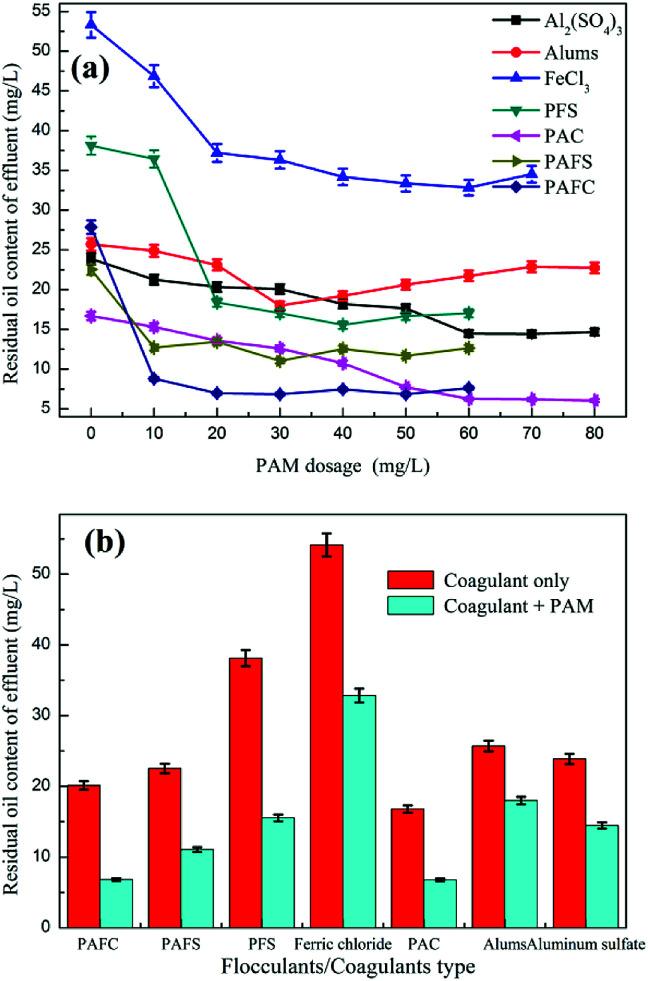
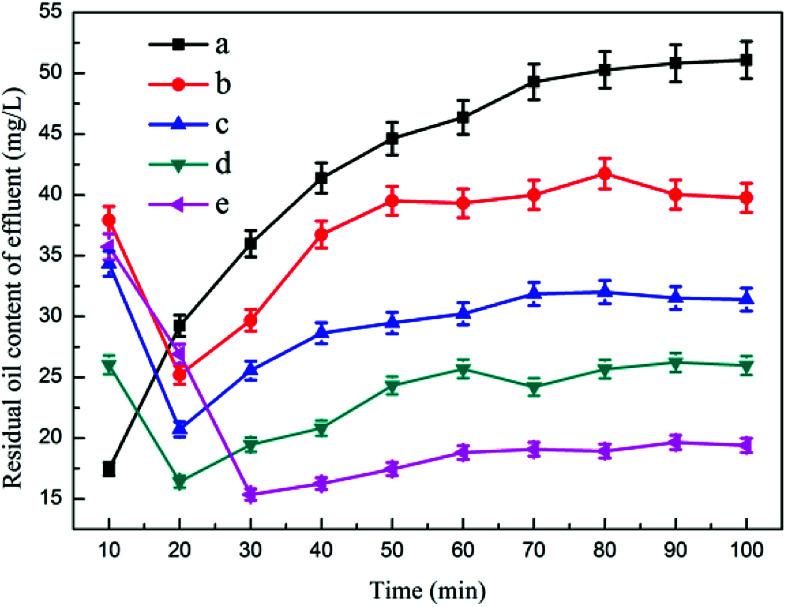
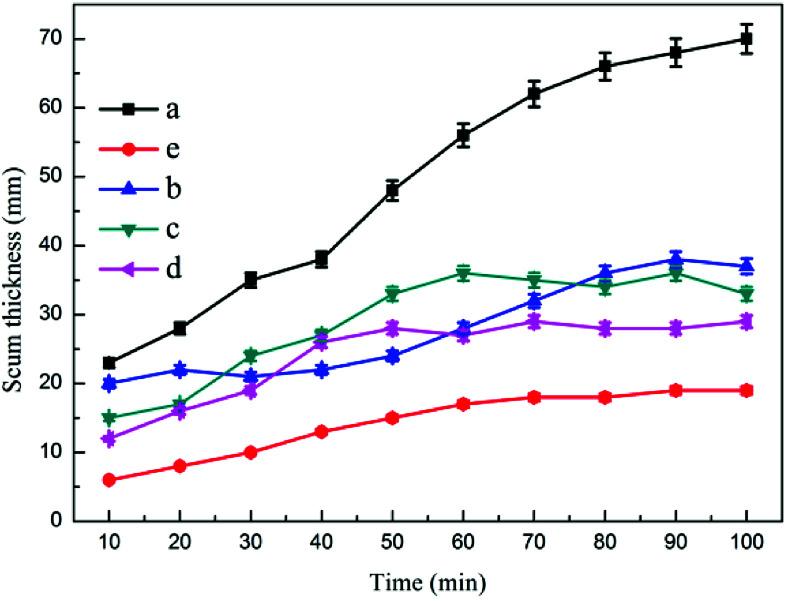
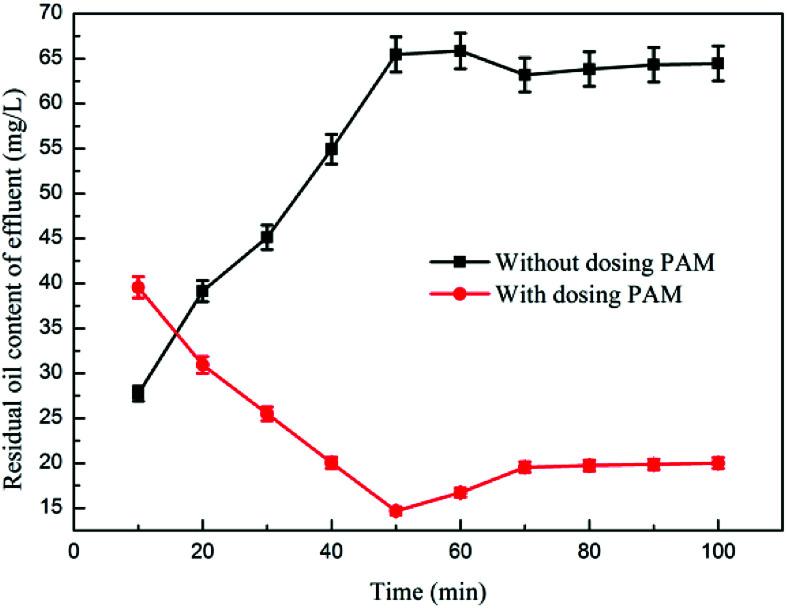
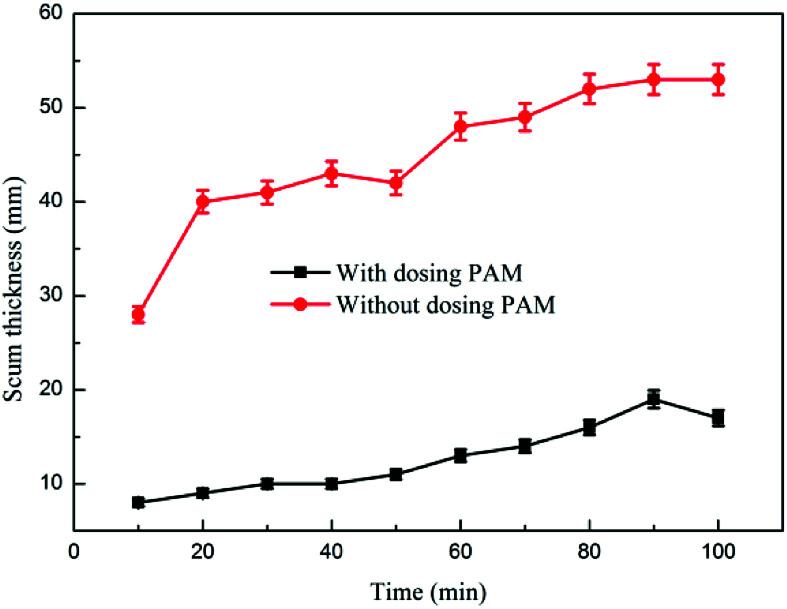
Ship emulsified oil wastewater was used as the research object in this study. The highly efficient coagulant demulsification degreasing mechanism and microbubble flotation technology were combined and the effects of coagulant type and dosage amount on the demulsification of emulsified oil wastewater were evaluated. The influence of the mixed coagulation effect of pH values, temperature, and hydraulic condition parameters were determined and water intake, air intake, and oil content were regulated. The coagulant for the demulsification of emulsified oil wastewater was screened; the dosage was 500 mg L, and the removal capacity of the coagulant was in the following order: polyaluminum ferric chloride (PAFC) > polyaluminum chloride (PAC) > polysilicate aluminum ferric sulfate (PSAFS) > alum > Al(SO) > polyferric sulfate > FeCl. Polyacrylamide (PAM) with added water was used to further reduce the oil content. The PAFC, PAC, and PSAFS were selected as coagulation-air flotation dynamic test alternative agents. The investment quantities of PAFC, PSAFS and PAM were 300 mg L, 300 mg L and 30 mg L, respectively. The stirring time was 5 min, the pH value was 6.5-6.9, the flow rate was 0.25 m h, the oil content of the emulsified oil wastewater was 3000-5000 mg L and the effluent oil was stable below 15 ppm. The microbubble generation device using air flotation effluent was used in the two air flotation treatments to enhance the device efficiency. The air flotation device adopted the structural design of the upper part of the water inlet and the lower part of the micro-air bubble, which can increase the collision probability of the microbubble and improve the efficiency of oil removal.
本研究以船舶乳化油废水为研究对象。将高效混凝剂破乳除油机理与微气泡浮选技术相结合,评估了混凝剂类型和投加量对乳化油废水破乳的影响。确定了pH值、温度和水力条件参数的混合混凝效果的影响,并对进水、进气和含油量进行了调节。筛选了用于乳化油废水破乳的混凝剂;投加量为500mg/L,混凝剂的去除能力顺序为:聚氯化铝铁(PAFC)>聚合氯化铝(PAC)>聚硅酸硫酸铝铁(PSAFS)>明矾>Al(SO)>聚合硫酸铁>FeCl。添加水的聚丙烯酰胺(PAM)用于进一步降低含油量。选择PAFC、PAC和PSAFS作为混凝气浮动态试验替代药剂。PAFC、PSAFS和PAM的投加量分别为300mg/L、300mg/L和30mg/L。搅拌时间为5min,pH值为6.5 - 6.9,流速为0.25m/h,乳化油废水含油量为3000 - 5000mg/L,出水含油稳定在15ppm以下。在两次气浮处理中使用气浮出水的微气泡产生装置来提高装置效率。气浮装置采用进水口在上、微气泡在下部的结构设计,可增加微气泡的碰撞概率,提高除油效率。


 Zotero 插件