
通过开发一种快速、简单且可重复的HPLC-ESI-Q-TOF MS分析方法鉴定叙利亚L.提取物的主要成分及其抗氧化活性。
Identification of Major Constituents of L. Extracts in Syria by Development of a Rapid, Simple, and Reproducible HPLC-ESI-Q-TOF MS Analysis and Their Antioxidant Activities.
作者信息
Alahmad Abdalrahim, Alghoraibi Ibrahim, Zein Raghad, Kraft Sergej, Dräger Gerald, Walter Johanna-Gabriela, Scheper Thomas
机构信息
Institute of Technical Chemistry, Leibniz University of Hannover, Callinstrasse 5, 30167 Hannover, Germany.
Department of Basic and Supporting Sciences, Faculty of Pharmacy, Arab International University, 20872 Damascus, Syria.
出版信息
ACS Omega. 2022 Apr 12;7(16):13475-13493. doi: 10.1021/acsomega.1c06335. eCollection 2022 Apr 26.
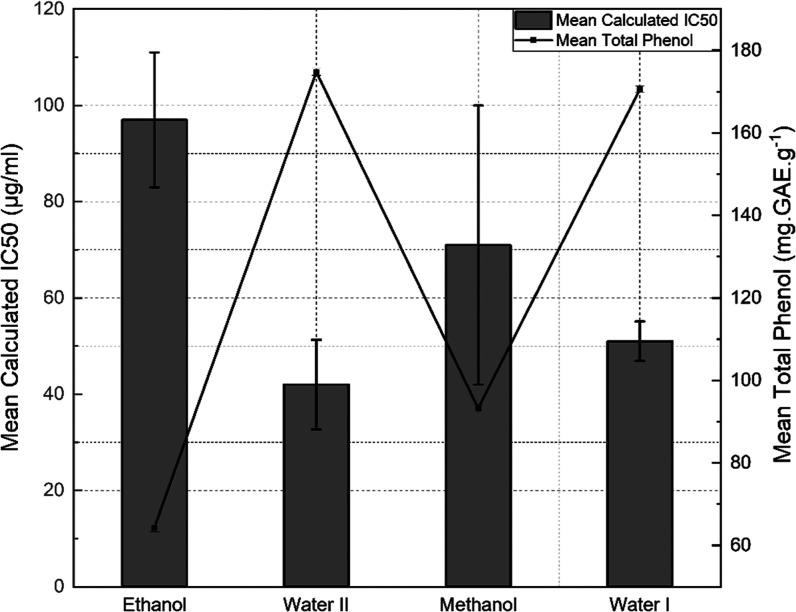
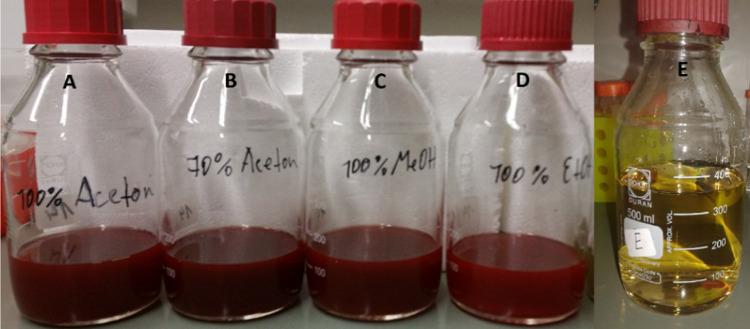
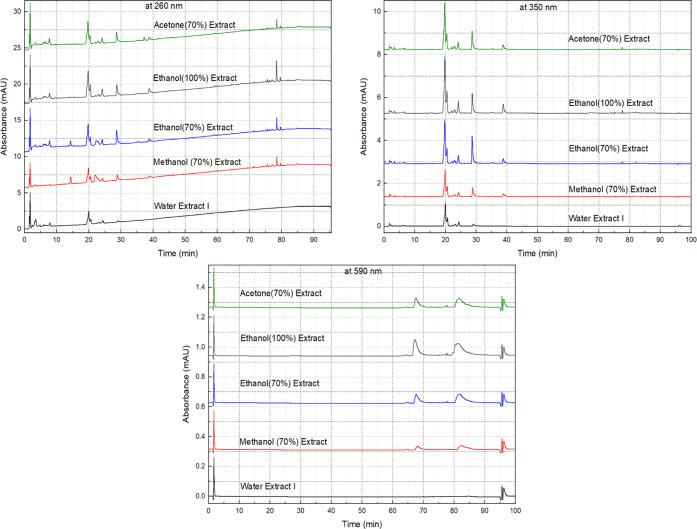
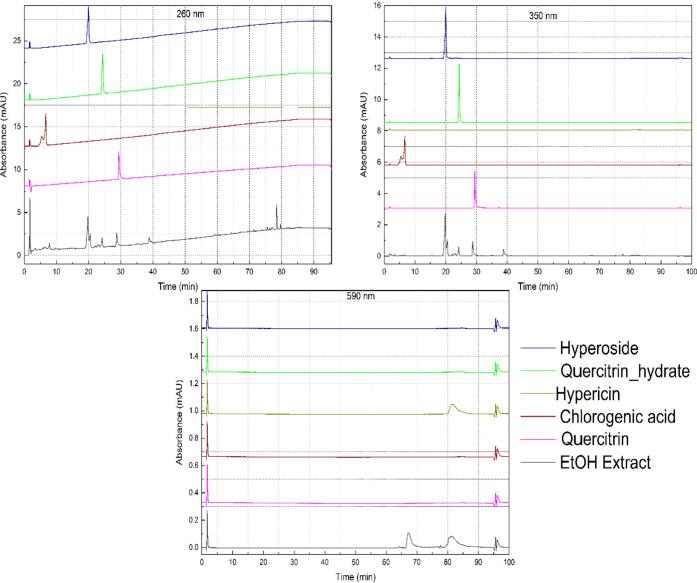
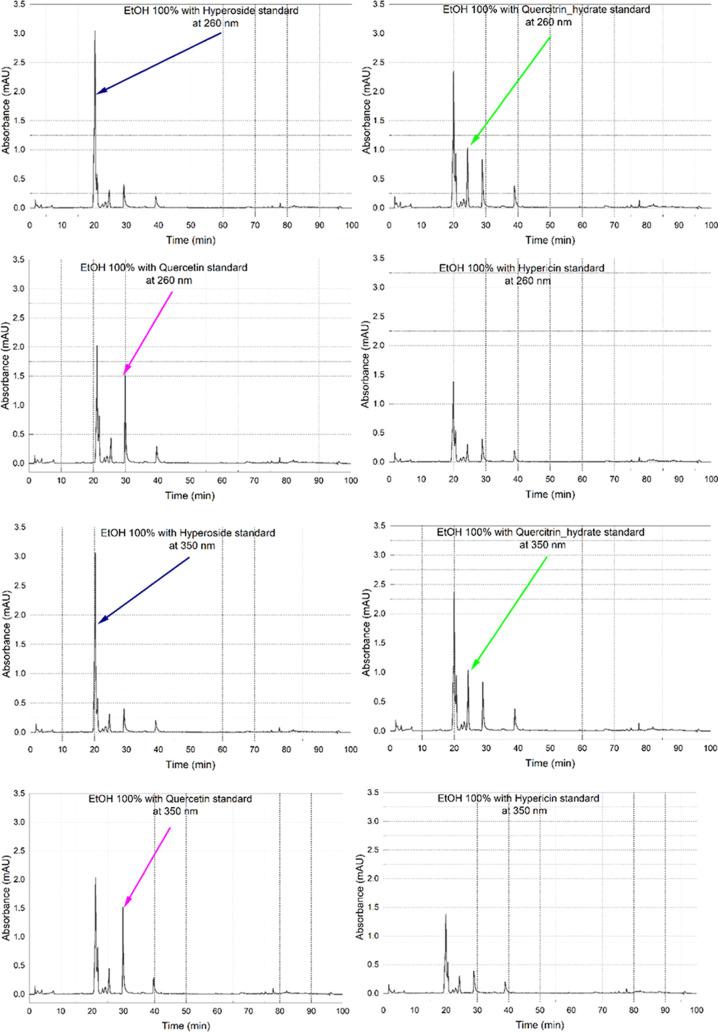
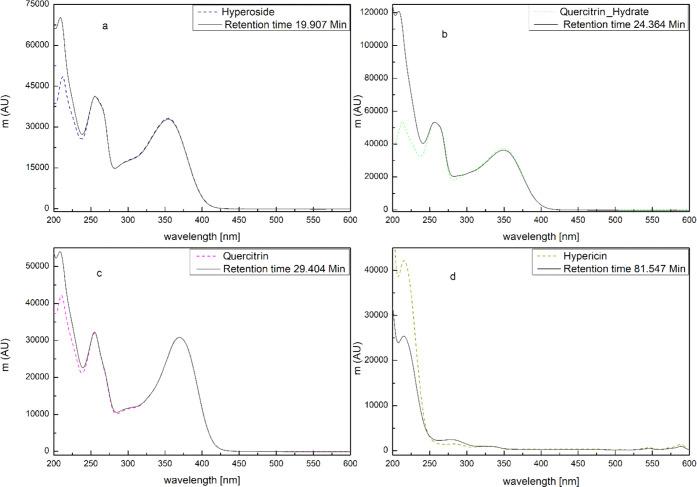
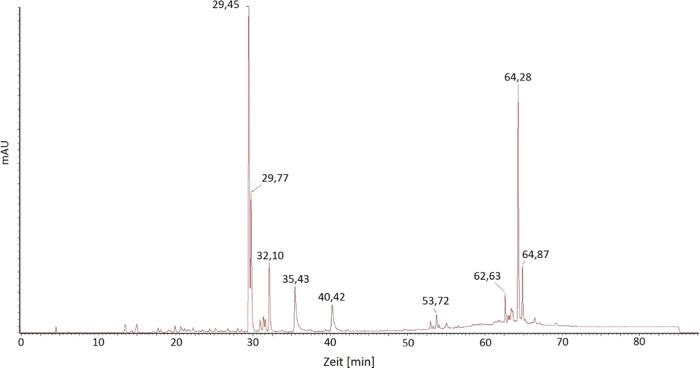
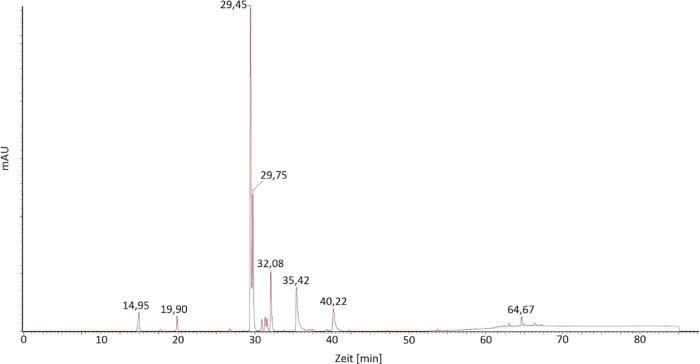
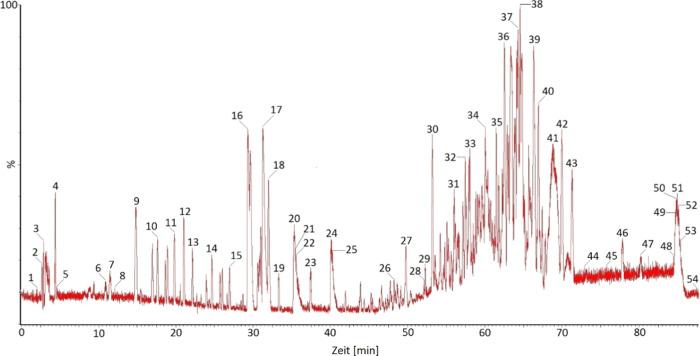
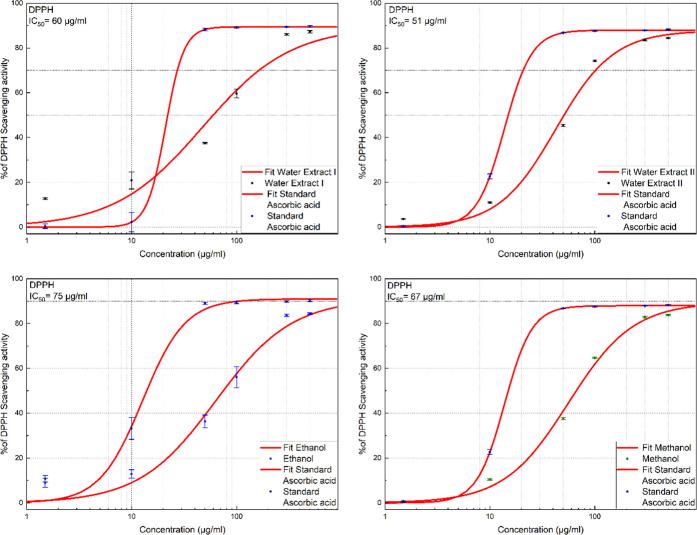
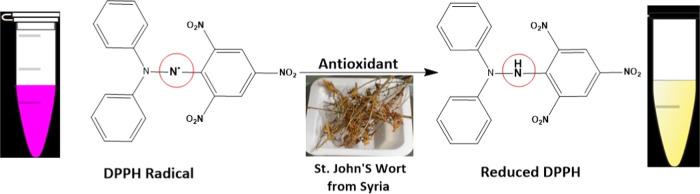
Linn () is a popular and widespread medicine in Syria, which is used for a wide range of conditions, including gastrointestinal diseases, heart disease, skin diseases, and psychological disorders. This widespread use prompted us to identify the main compounds of this plant from Syria that are responsible for its medicinal properties, especially since its components differ between countries according to the nature of the soil, climate, and altitude. This is, to the best of our knowledge, the first report in which , a plant native to Syria, is extracted using different solvents and its most important compounds are identified. In this study, the dried above-ground parts, i.e., leaves, stem, petals, and flowers, were extracted using different solvents (water, ethanol, methanol, and acetone) and extraction protocols. By increasing the polarity of the solvent, higher yields were obtained, indicating that mainly hydrophobic compounds were extracted. Therefore, we conclude that extraction using the tea method or using a mixture of water and organic solvents resulted in higher yields compared with pure organic solvents or continuous boiling with water for long periods. The obtained extracts were analyzed using high-performance liquid chromatography equipped with a diode array detector (HPLC-DAD), coupled with UV-visible spectrophotometry at a full spectrum (200-800 nm). The HPLC spectra of the extracts were almost identical at three wavelengths (260 nm for phloroglucinols (hyperforin and derivates), 590 nm for naphthodianthrones (hypericins), and 350 nm for other flavonols, flavones, and caffeoylquinic acids), with differences observed only in the intensity of the peaks. This indicates that the same compounds were obtained using different solvents, but in different amounts. Five standards (chlorogenic acid, quercetin, quercitrin hydrate, hyperoside, and hypericin) were used, and a comparison with retention times and ultraviolet (UV) spectra reported in the literature was performed to identify 10 compounds in these extracts: hyperforin, adhyperforin, hypericin, rutin, quercetin, quercitrin, quercitrin hydrate, hyperoside, biapigenin, and chlorogenic acid. Although the European Pharmacopoeia still describes ultraviolet spectroscopy as a method for determining the quantity of Hyperici herba, interference from other metabolites can occur. Combined HPLC-DAD and electrospray ionization-mass spectrometry (LC-ESI-MS) in the positive mode have therefore also been used to confirm the presence of these compounds in the extracts by correlating known masses with the identified masses or through characteristic fragmentation patterns. Total phenolic contents of the extracts were determined by the Folin-Ciocalteu assay, and antioxidant activity was evaluated as free radical scavenging capacity using 2,2-diphenyl-1-picrylhydrazyl (DPPH) and 2,2'-azino-bis(3-ethylbenzothiazoline-6-sulfonic acid) (ABTS) assays. The results indicate that the aqueous extracts prepared by the tea method gave the highest total phenols, while the pure organic solvents gave very low phenols. Also, the extracts that contain the largest amount of phenols gave lower IC values or higher antioxidant activity than that of others.
Linn()在叙利亚是一种常用且广泛应用的药物,可用于治疗多种病症,包括胃肠道疾病、心脏病、皮肤病和心理障碍。这种广泛的使用促使我们确定这种叙利亚植物的主要化合物,这些化合物赋予了它药用特性,特别是因为其成分会因土壤、气候和海拔的性质在不同国家有所差异。据我们所知,这是第一份关于从叙利亚提取一种本土植物并使用不同溶剂鉴定其最重要化合物的报告。在本研究中,使用不同溶剂(水、乙醇、甲醇和丙酮)及提取方案对干燥的地上部分,即叶子、茎、花瓣和花朵进行提取。随着溶剂极性的增加,获得了更高的产率,这表明主要提取的是疏水性化合物。因此,我们得出结论,与纯有机溶剂或长时间用水连续煮沸相比,采用泡茶法或使用水与有机溶剂的混合物进行提取可获得更高的产率。使用配备二极管阵列检测器的高效液相色谱(HPLC - DAD)对所得提取物进行分析,并结合全光谱(200 - 800 nm)的紫外 - 可见分光光度法。提取物的HPLC光谱在三个波长处几乎相同(间苯三酚类(金丝桃素和衍生物)为260 nm,萘骈二蒽酮类(金丝桃素)为590 nm,其他黄酮醇、黄酮和咖啡酰奎宁酸为350 nm),仅峰强度存在差异。这表明使用不同溶剂获得了相同的化合物,但量不同。使用了五种标准品(绿原酸、槲皮素、水合槲皮苷、金丝桃苷和金丝桃素),并与文献中报道的保留时间和紫外光谱进行比较,以鉴定这些提取物中的10种化合物:金丝桃素、去甲金丝桃素、金丝桃素、芦丁、槲皮素、槲皮苷、水合槲皮苷、金丝桃苷、双芹菜素和绿原酸。尽管欧洲药典仍将紫外光谱法描述为测定金丝桃草含量的方法,但可能会受到其他代谢物的干扰。因此,还使用了正模式下的HPLC - DAD和电喷雾电离质谱联用(LC - ESI - MS),通过将已知质量与鉴定出的质量相关联或通过特征性裂解模式来确认提取物中这些化合物的存在。通过福林 - 西奥尔特法测定提取物的总酚含量,并使用2,2 - 二苯基 - 1 - 苦基肼(DPPH)和2,2'-联氮 - 双(3 - 乙基苯并噻唑啉 - 6 - 磺酸)(ABTS)测定法将抗氧化活性评估为自由基清除能力。结果表明,采用泡茶法制备的水提取物总酚含量最高,而纯有机溶剂提取物的酚含量非常低。此外,酚含量最高的提取物比其他提取物具有更低的IC值或更高的抗氧化活性。



 Zotero 插件