
针对小儿获得性脑损伤的复杂远程康复干预措施的可行性与可接受性:情境中的儿童干预(CICI)
Feasibility and Acceptability of a Complex Telerehabilitation Intervention for Pediatric Acquired Brain Injury: The Child in Context Intervention (CICI).
作者信息
Holthe Ingvil Laberg, Rohrer-Baumgartner Nina, Svendsen Edel J, Hauger Solveig Lægreid, Forslund Marit Vindal, Borgen Ida M H, Øra Hege Prag, Kleffelgård Ingerid, Strand-Saugnes Anine Pernille, Egeland Jens, Røe Cecilie, Wade Shari L, Løvstad Marianne
机构信息
Department of Research, Sunnaas Rehabilitation Hospital, 1453 Nesodden, Norway.
Department of Psychology, Faculty of Social Sciences, University of Oslo, 0317 Oslo, Norway.
出版信息
J Clin Med. 2022 May 3;11(9):2564. doi: 10.3390/jcm11092564.
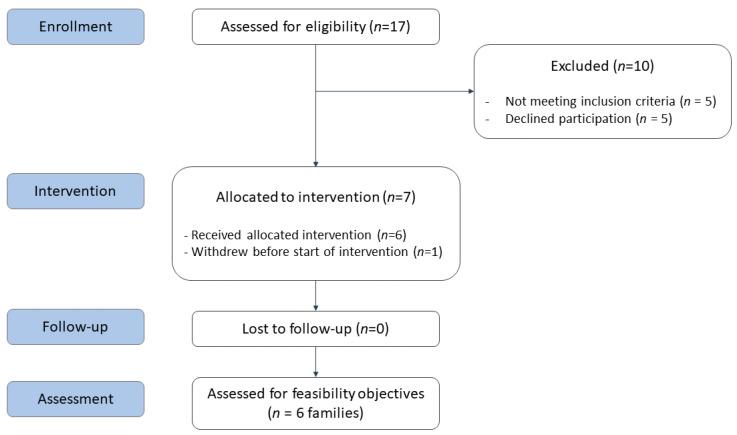
The current study is a feasibility study of a randomized controlled trial (RCT): the Child in Context Intervention (CICI). The CICI study is an individualized, goal-oriented and home-based intervention conducted mainly through videoconference. It targets children with ongoing challenges (physical, cognitive, behavioral, social and/or psychological) after acquired brain injury (ABI) and their families at least one year post injury. The CICI feasibility study included six children aged 11-16 years with verified ABI-diagnosis, their families and their schools. The aim was to evaluate the feasibility of the intervention components, child and parent perceptions of usefulness and relevance of the intervention as well as the assessment protocol through a priori defined criteria. Overall, the families and therapists rated the intervention as feasible and acceptable, including the videoconference treatment delivery. However, the burden of assessment was too high. The SMART-goal approach was rated as useful, and goal attainment was high. The parents' ratings of acceptability of the intervention were somewhat higher than the children's. In conclusion, the CICI protocol proved feasible and acceptable to families, schools and therapists. The assessment burden was reduced, and adjustments in primary outcomes were made for the definitive RCT.
本研究是一项关于随机对照试验(RCT)——情境中的儿童干预(CICI)的可行性研究。CICI研究是一种主要通过视频会议进行的个性化、目标导向且基于家庭的干预措施。它针对脑损伤(ABI)后至少一年仍面临持续挑战(身体、认知、行为、社交和/或心理方面)的儿童及其家庭。CICI可行性研究纳入了6名年龄在11至16岁之间且已确诊ABI的儿童、他们的家庭以及他们的学校。目的是通过预先定义的标准评估干预组件的可行性、儿童和家长对干预有用性和相关性的看法以及评估方案。总体而言,家庭和治疗师认为该干预措施可行且可接受,包括视频会议治疗方式。然而,评估负担过重。SMART目标方法被认为是有用的,目标达成率很高。家长对干预可接受性的评分略高于儿童。总之,CICI方案对家庭、学校和治疗师来说是可行且可接受的。评估负担得以减轻,并为确定性RCT对主要结局进行了调整。




 Zotero 插件