
益生菌介导的银纳米颗粒生物合成及其对O157:H7致病菌株的抗菌应用。
Probiotic-Mediated Biosynthesis of Silver Nanoparticles and Their Antibacterial Applications against Pathogenic Strains of O157:H7.
作者信息
Wang Xiaoqing, Lee Sun-Young, Akter Shahina, Huq Md Amdadul
机构信息
Department of Food and Nutrition, College of Biotechnology and Natural Resource, Chung-Ang University, Anseong 17546, Gyeonggi-do, Korea.
Department of Food Science and Biotechnology, Gachon University, Seongnam 461701, Gyeonggi-do, Korea.
出版信息
Polymers (Basel). 2022 Apr 29;14(9):1834. doi: 10.3390/polym14091834.
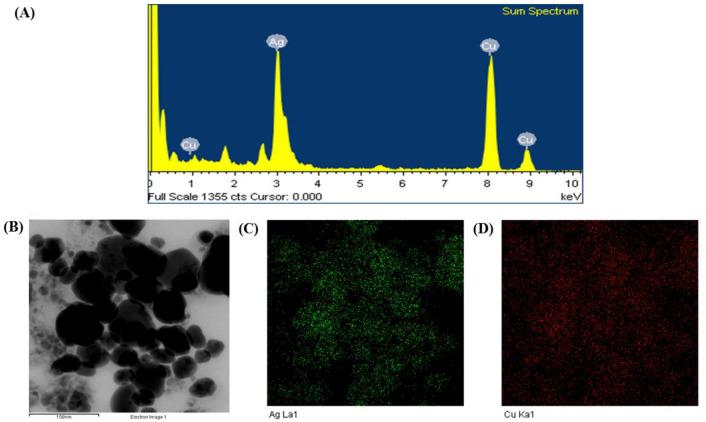
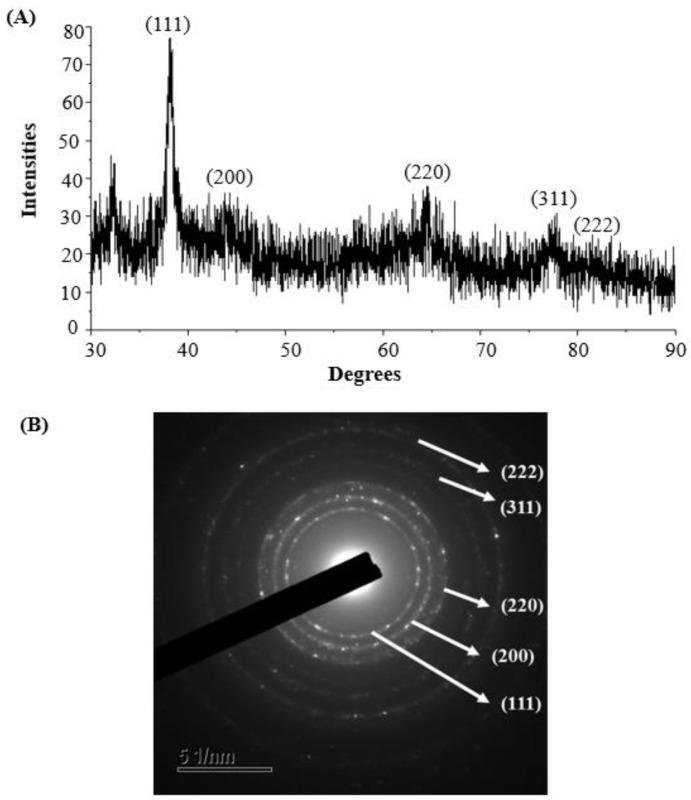
The present study aimed to suggest a simple and environmentally friendly biosynthesis method of silver nanoparticles (AgNPs) using the strain MAHUQ-74 isolated from kimchi. Antibacterial activity and mechanisms of AgNPs against antibiotic-resistant pathogenic strains of O157:H7 were investigated. The strain MAHUQ-74 had 99.93% relatedness to the NBRC 101234 strain. The biosynthesized AgNPs had a strong surface plasmon resonance (SPR) peak at 430 nm. The transmission electron microscope (TEM) image shows the spherical shape and size of the synthesized AgNPs is 13 to 50 nm. XRD analysis and SAED pattern revealed the crystal structure of biosynthesized AgNPs. Fourier transform infrared spectroscopy (FTIR) data showed various functional groups associated with the reduction of silver ions to AgNPs. The resultant AgNPs showed strong antibacterial activity against nine O157:H7 pathogens. Minimum inhibitory concentration (MIC) values of the AgNPs synthesized by strain MAHUQ-74 were 3.12 μg/mL for eight O157:H7 strains and 12.5 μg/mL for strain ATCC 25922. Minimum bactericidal concentrations (MBCs) were 25 μg/mL for O157:H7 ATCC 35150, O157:H7 ATCC 43895, O157:H7 ATCC 43890, O157:H7 ATCC 43889, and ATCC 25922; and 50 μg/mL for O157:H7 2257, O157: NM 3204-92, O157:H7 8624 and O157:H7 ATCC 43894. FE-SEM analysis demonstrated that the probiotic-mediated synthesized AgNPs produced structural and morphological changes and destroyed the membrane integrity of pathogenic O157:H7. Therefore, AgNPs synthesized by strain MAHUQ-74 may be potential antibacterial agents for the control of antibiotic-resistant pathogenic strains of O157:H7.
本研究旨在提出一种利用从泡菜中分离出的MAHUQ - 74菌株,简单且环保的银纳米颗粒(AgNPs)生物合成方法。研究了AgNPs对O157:H7抗生素抗性致病菌株的抗菌活性及作用机制。MAHUQ - 74菌株与NBRC 101234菌株的亲缘关系为99.93%。生物合成的AgNPs在430 nm处有一个很强的表面等离子体共振(SPR)峰。透射电子显微镜(TEM)图像显示合成的AgNPs呈球形,尺寸为13至50 nm。X射线衍射(XRD)分析和选区电子衍射(SAED)图谱揭示了生物合成AgNPs的晶体结构。傅里叶变换红外光谱(FTIR)数据显示了与银离子还原为AgNPs相关的各种官能团。所得的AgNPs对9种O157:H7病原体表现出很强的抗菌活性。MAHUQ - 74菌株合成的AgNPs对8种O157:H7菌株的最小抑菌浓度(MIC)值为3.12 μg/mL,对ATCC 25922菌株为12.5 μg/mL。对O157:H7 ATCC 35150、O157:H7 ATCC 43895、O157:H7 ATCC 43890、O157:H7 ATCC 43889和ATCC 25922的最小杀菌浓度(MBC)为25 μg/mL;对O157:H7 2257、O157:NM 3204 - 92、O157:H7 8624和O157:H7 ATCC 43894为50 μg/mL。场发射扫描电子显微镜(FE - SEM)分析表明,益生菌介导合成的AgNPs产生了结构和形态变化,并破坏了致病性O157:H7的膜完整性。因此,MAHUQ - 74菌株合成的AgNPs可能是控制O157:H7抗生素抗性致病菌株的潜在抗菌剂。




 Zotero 插件