
一个免疫相关的长链非编码 RNA 对特征可用于识别喉鳞状细胞癌的预后,并预测其免疫图谱。
An immune-related lncRNA pairs signature to identify the prognosis and predict the immune landscape of laryngeal squamous cell carcinoma.
机构信息
Department of Otolaryngology, Affiliated Hospital of Nantong University, Nantong, 226001, Jiangsu, China.
Department of Oncology, Nantong Tumor Hospital, Nantong, 226001, Jiangsu, China.
出版信息
BMC Cancer. 2022 May 14;22(1):545. doi: 10.1186/s12885-022-09524-1.
BACKGROUND
Laryngeal squamous cell carcinoma (LSCC) is the most common squamous cell carcinoma. Though significant effort has been focused on molecular pathogenesis, development, and recurrence of LSCC, little is known about its relationship with the immune-related long non-coding RNA (lncRNA) pairs.
METHODS
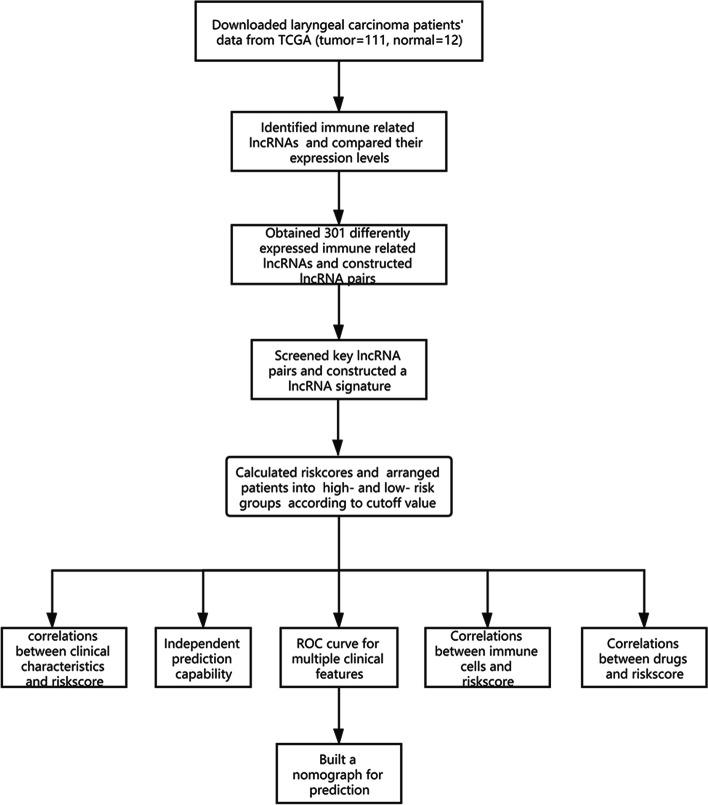
After obtaining the transcriptome profiling data sets and the corresponding clinical characteristics of LSCC patients and normal samples from The Cancer Genome Atlas (TCGA) database, a series of bioinformatic analysis was conducted to select the differently expressed immune-related lncRNAs and build a signature of immune-related lncRNA pairs. Then, the effectiveness of the signature was validated.
RESULTS
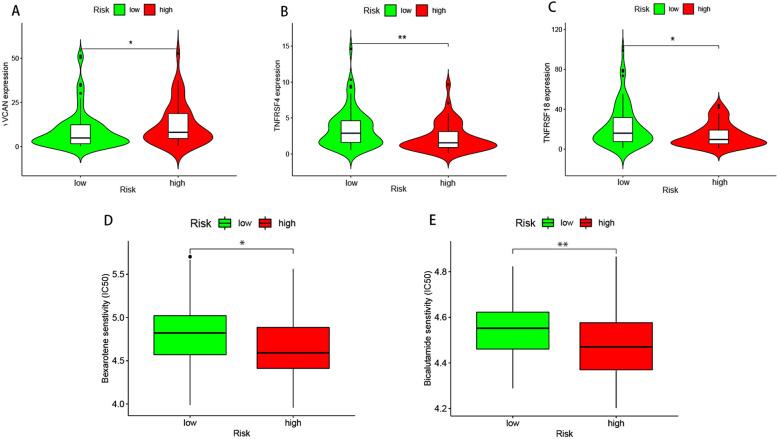
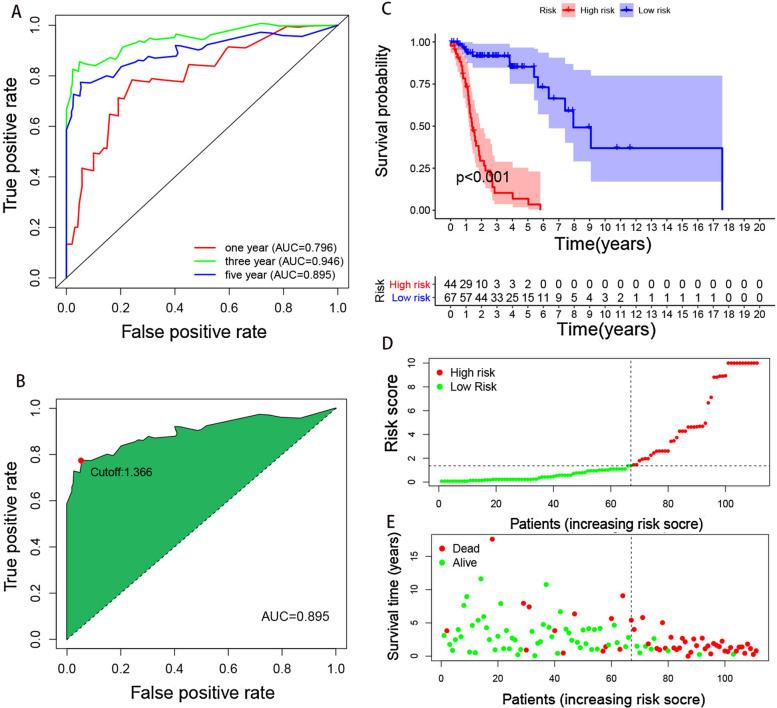
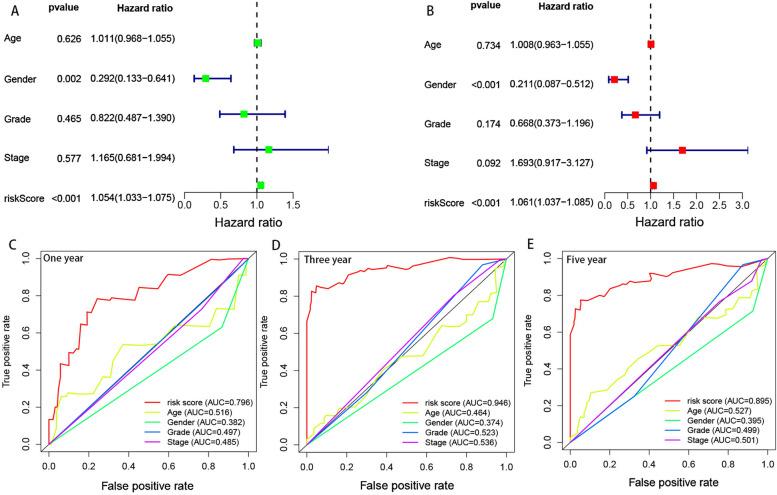
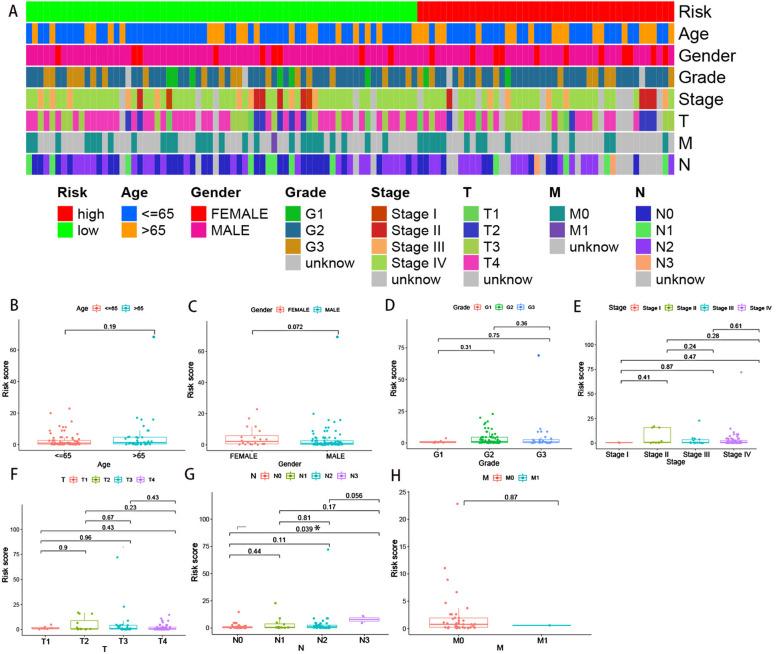
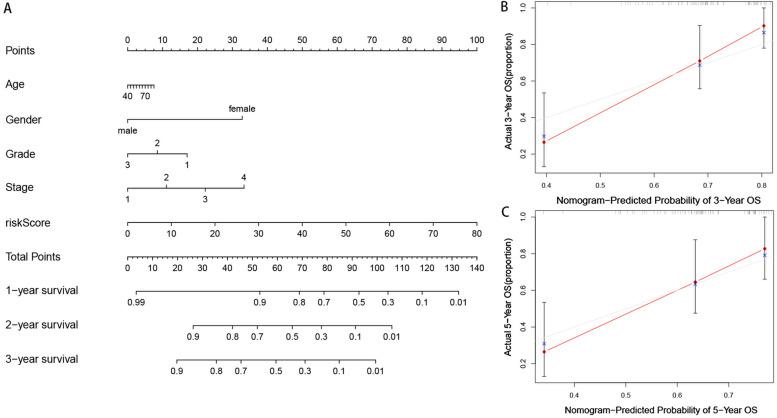
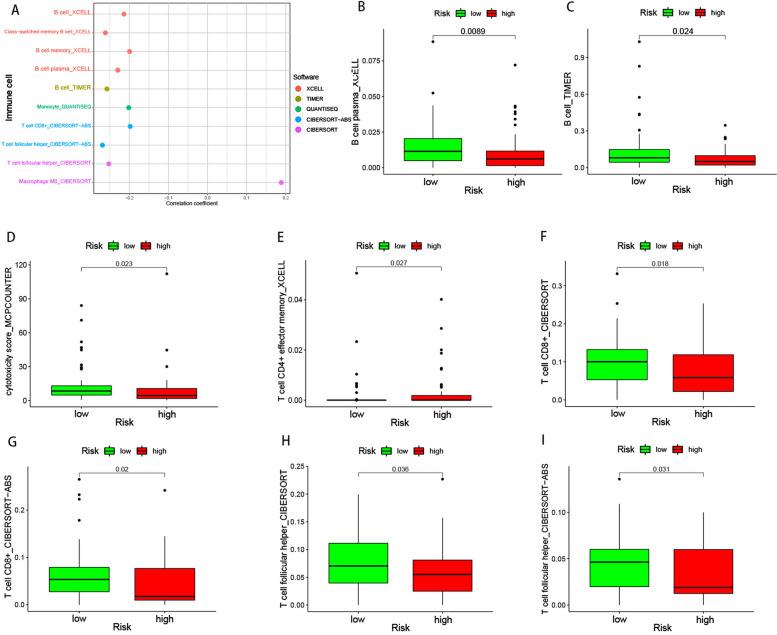
A total of 111 LSCC patients and 12 normal samples' transcriptome profiling data sets were retrieved from TCGA. 301 differently expressed immune-related lncRNAs were identified and 35,225 lncRNA pairs were established. After univariate Cox analysis, LASSO regression and multivariate Cox analysis, 7 lncRNA pairs were eventually selected to construct a signature. The riskscore was computed using the following formula: Riskscore = 0.95 × (AL133330.1|AC132872.3) + (-1.23) × (LINC01094|LINC02154) + 0.65 × (LINC02575|AC122685.1) + (-1.15) × (MIR9-3HG|LINC01748) + 1.45 × (AC092687.3|SNHG12) + (-0.87) × (AC090204.1|AL158166.1) + 0.64 × (LINC01063|Z82243.1). Patients were classified into the high-risk group (> 1.366) and the low-risk group (< 1.366) according to the cutoff value (1.366), which is based on the 5-year riskscore ROC curve. The survival analysis showed that the low-risk group had a better prognosis (P < 0.001). The riskscore was better than other clinical characteristics in prognostic prediction and the area under the curves (AUCs) for the 1-, 3-, and 5-year survivals were 0.796, 0.946, and 0.895, respectively. Combining age, gender, grade, stage, and riskscore, a nomograph was developed to predict survival probability in LSCC patients. Then, the riskscore was confirmed to be related with the content of tumor-infiltration immune cells and the model could serve as a potential predictor for chemosensitivity.
CONCLUSION
We successfully established a more stable signature of 7 immune-related lncRNA pairs, which has demonstrated a better prognostic ability for LSCC patients and may assist clinicians to precisely prescribe chemo drugs.
背景
喉鳞状细胞癌(LSCC)是最常见的鳞状细胞癌。尽管人们已经在分子发病机制、发展和复发方面进行了大量研究,但对于其与免疫相关长非编码 RNA(lncRNA)对的关系仍知之甚少。
方法
从癌症基因组图谱(TCGA)数据库中获取 LSCC 患者和正常样本的转录组谱数据集和相应的临床特征后,进行了一系列生物信息学分析,以选择差异表达的免疫相关 lncRNA,并构建免疫相关 lncRNA 对的特征。然后,验证了该特征的有效性。
结果
从 TCGA 中检索到 111 名 LSCC 患者和 12 名正常样本的转录组谱数据集。鉴定出 301 个差异表达的免疫相关 lncRNA,并建立了 35225 个 lncRNA 对。经过单因素 Cox 分析、LASSO 回归和多因素 Cox 分析,最终选择 7 个 lncRNA 对构建特征。风险评分通过以下公式计算:Riskscore = 0.95×(AL133330.1|AC132872.3) + (-1.23)×(LINC01094|LINC02154) + 0.65×(LINC02575|AC122685.1) + (-1.15)×(MIR9-3HG|LINC01748) + 1.45×(AC092687.3|SNHG12) + (-0.87)×(AC090204.1|AL158166.1) + 0.64×(LINC01063|Z82243.1)。根据截断值(1.366),患者被分为高风险组(>1.366)和低风险组(<1.366),该截断值基于 5 年风险评分 ROC 曲线。生存分析表明,低风险组的预后更好(P<0.001)。风险评分在预后预测方面优于其他临床特征,并且 1、3 和 5 年生存率的 AUC 分别为 0.796、0.946 和 0.895。结合年龄、性别、分级、分期和风险评分,开发了一个列线图,用于预测 LSCC 患者的生存概率。然后,证实风险评分与肿瘤浸润免疫细胞的含量有关,该模型可作为化疗药物敏感性的潜在预测因子。
结论
我们成功建立了一个更稳定的 7 个免疫相关 lncRNA 对特征,该特征对 LSCC 患者具有更好的预后能力,可能有助于临床医生更精确地开具化疗药物。

 Zotero 插件