
纳米技术在智能纺织品行业的应用:批判性回顾。
Applications of nanotechnology in smart textile industry: A critical review.
机构信息
Department of Chemical Engineering, Kombolcha Institute of Technology, Wollo University, Ethiopia.
Department of Chemistry, Khalifa University of Science and Technology, Abu Dhabi 127788, United Arab Emirates.
出版信息
J Adv Res. 2022 Jan 22;38:55-75. doi: 10.1016/j.jare.2022.01.008. eCollection 2022 May.
BACKGROUND
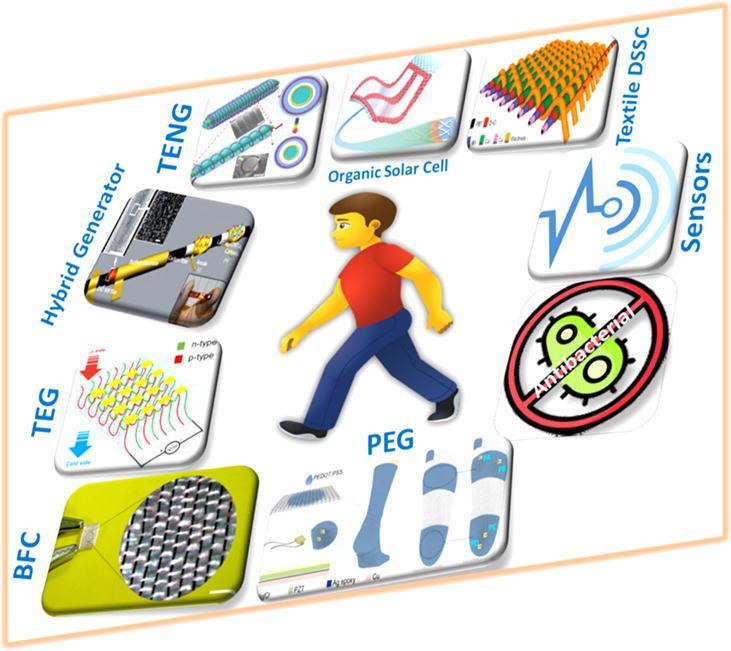
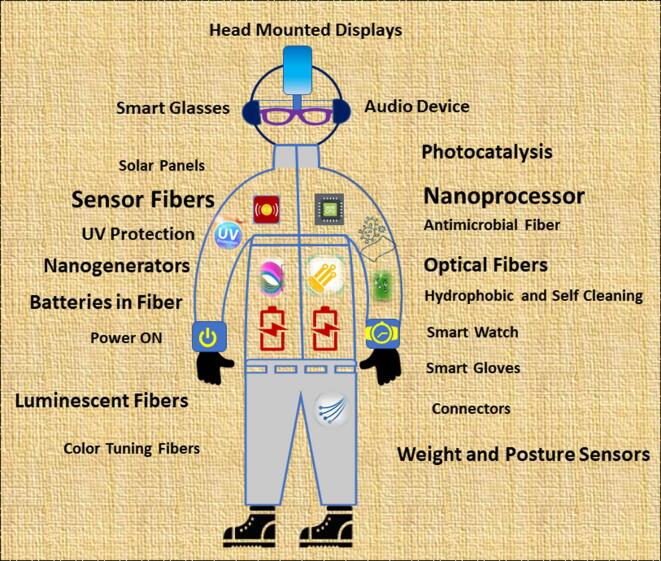
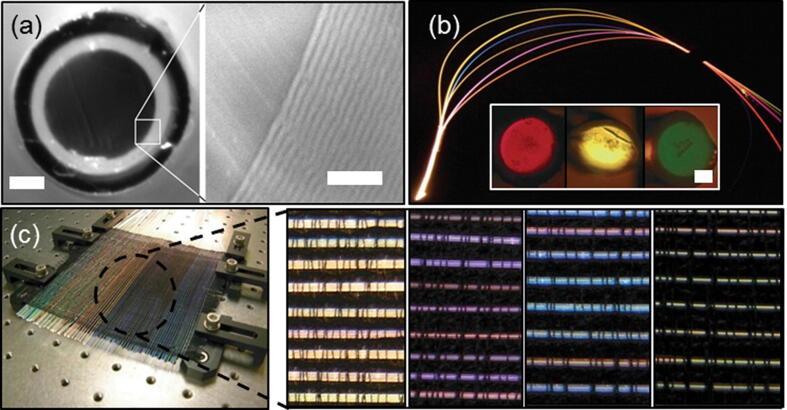
In recent years, nanotechnology has been playing an important role in designing smart fabrics. Nanomaterials have been employed to introduce in a sustainable manner, antimicrobial, ultraviolet resistant, electrically conductive, optical, hydrophobic and flame-retardant properties into textiles and garments. Nanomaterial based smart devices are now also being integrated with the textiles so as to perform various functions such as energy harvesting and storage, sensing, drug release and optics. These advancements have found wide applications in the fashion industry and are being developed for wider use in defence, healthcare and on-body energy harnessing applications.
AIM OF REVIEW
The objective of this work is to provide an insight into the current trends of using nanotechnology in the modern textile industries and to inspire and anticipate further research in this field. This review provides an overview of the most current advances concerning on-body electronics research and the wonders which could be realized by nanomaterials in modern textiles in terms of total energy reliance on our clothes.
KEY SCIENTIFIC CONCEPTS OF REVIEW
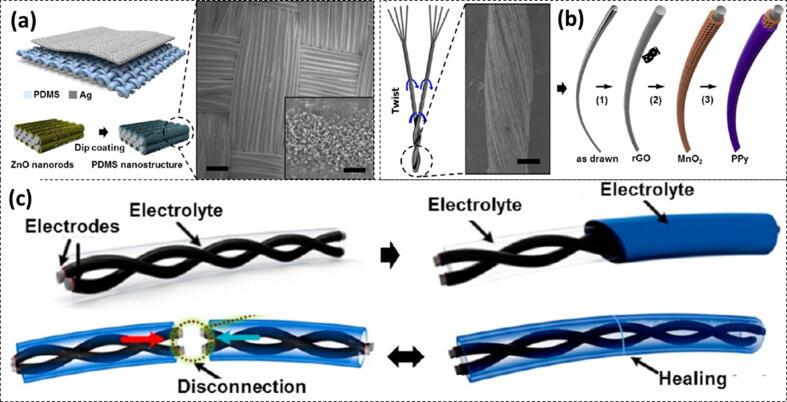
The work underlines the various methods and techniques for the functionalization of nanomaterials and their integration into textiles with an emphasis on cost-effectiveness, comfort, wearability, energy conversion efficiency and eco-sustainability. The most recent trends of developing various nanogenerators, supercapacitors and photoelectronic devices on the fabric are highlighted, with special emphasis on the efficiency and wearability of the textile. The potential nanotoxicity associated with the processed textiles due to the tendency of these nanomaterials to leach into the environment along with possible remediation measures are also discussed. Finally, the future outlook regarding progress in the integration of smart nano-devices on textile fabrics is provided.
背景
近年来,纳米技术在设计智能织物方面发挥着重要作用。纳米材料已被用于以可持续的方式引入抗菌、抗紫外线、导电、光学、疏水性和阻燃性到纺织品和服装中。基于纳米材料的智能设备现在也与纺织品集成在一起,以执行各种功能,如能量收集和存储、传感、药物释放和光学。这些进展在时尚界得到了广泛应用,并正在为更广泛地应用于国防、医疗保健和人体能量收集应用而开发。
综述目的
本工作的目的是提供对当前纳米技术在现代纺织工业中应用趋势的深入了解,并激发和预测该领域的进一步研究。本综述概述了关于体上电子研究的最新进展,以及纳米材料在现代纺织品中可以实现的奇迹,即在我们的衣服上实现对总能量的完全依赖。
综述的关键科学概念
本工作强调了各种功能化纳米材料的方法和技术,以及将它们集成到纺织品中的方法,重点是成本效益、舒适性、可穿戴性、能量转换效率和生态可持续性。突出了各种纳米发电机、超级电容器和光电设备在织物上的最新发展趋势,特别强调了纺织品的效率和可穿戴性。还讨论了与这些纳米材料倾向于浸出到环境中相关的潜在纳米毒性以及可能的修复措施。最后,提供了关于智能纳米器件在纺织织物上集成进展的未来展望。

 Zotero 插件