
嵌合抗原受体 T 细胞治疗后细胞因子释放综合征与预后的相关性:54 例复发或难治性多发性骨髓瘤患者的分析。
Correlation of Cytokine Release Syndrome With Prognosis After Chimeric Antigen Receptor T Cell Therapy: Analysis of 54 Patients With Relapsed or Refractory Multiple Myeloma.
机构信息
Department of Hematology, The Affiliated Hospital of Xuzhou Medical University, Xuzhou, China.
The First Clinical Medical College, Xuzhou Medical University, Xuzhou, China.
出版信息
Front Immunol. 2022 Apr 27;13:814548. doi: 10.3389/fimmu.2022.814548. eCollection 2022.
UNLABELLED
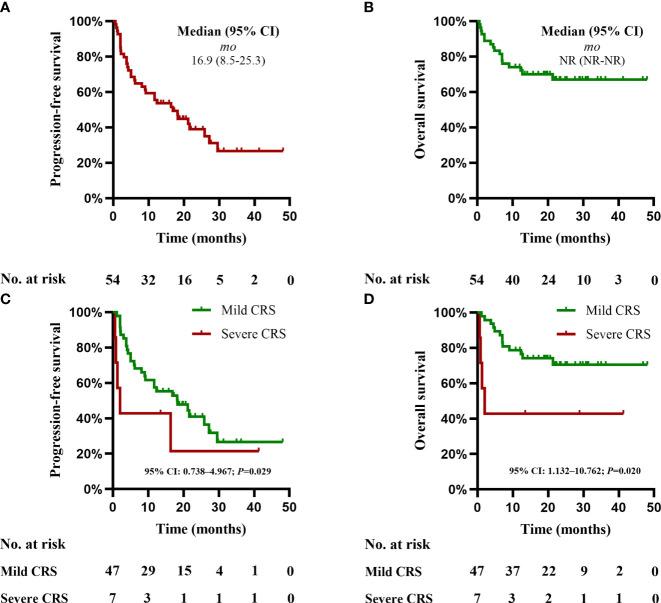
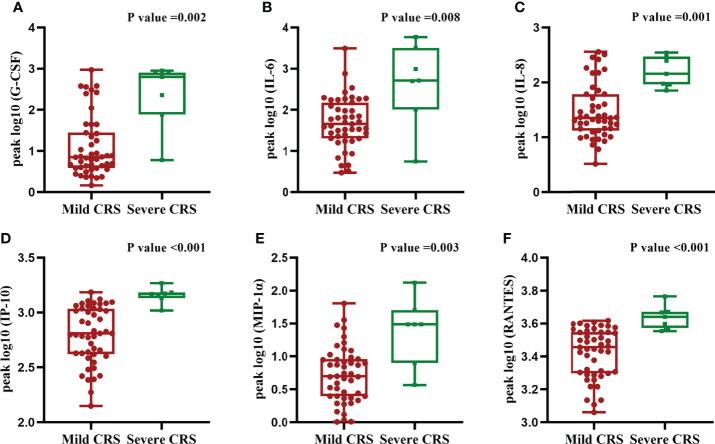
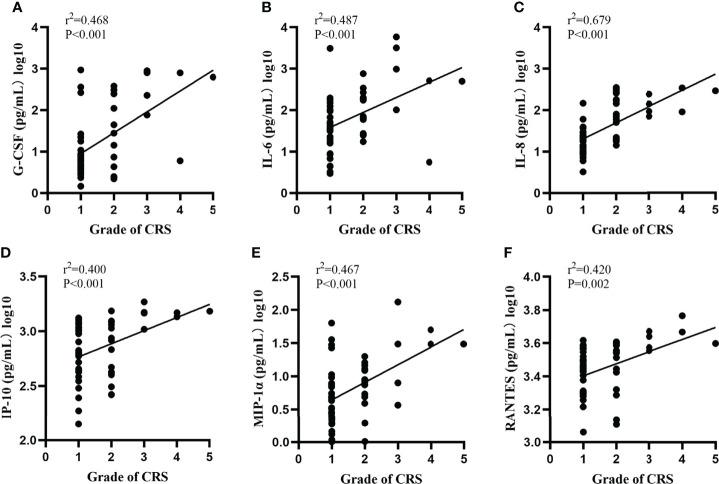
Although chimeric antigen receptor T (CAR-T) cell therapy has proven to be effective in treating relapsed or refractory multiple myeloma (R/R MM), the severity of cytokine release syndrome (CRS) can affect patient survival and the risk factors for CRS remain an intractable issue. We enrolled 54 patients with R/R MM following combined infusion of anti-CD19 and anti-B-cell maturation antigen (BCMA) CAR-T cells. The results showed the overall response rate was 94% (51/54) after CAR-T cell infusion, with a 100% incidence of CRS, including 47 patients with grade 1-2 (mild) CRS and 7 patients with grade 3-5 (severe) CRS. In the mild CRS group, the median progression-free survival (PFS) was 18.2 months (95% CI, 6.5 to 30.1) and the median overall survival (OS) was not reached yet. In the severe CRS group, median PFS and median OS were 1.9 months (95% CI, 0.2 to 3.8). Further analysis demonstrated that severe CRS had a shorter median PFS and OS than mild CRS (=0.029, =0.020). Bone marrow tumor burden was found to be independently associated with CRS. The grade of CRS was positively correlated with six serum cytokines levels including G-CSF, IL-6, IL-8, IP-10, MIP-1a and RANTES. In conclusion, early detection and management of CRS are imperative for the prevention of life-threatening complications and improvement in the survival of patients of CAR-T cell therapy.
CLINICAL TRIAL REGISTRATION
www.chictr.org.cn, identifier ChiCTR-OIC-17011272.
未注明
嵌合抗原受体 T(CAR-T)细胞疗法已被证明在治疗复发或难治性多发性骨髓瘤(R/R MM)方面有效,但细胞因子释放综合征(CRS)的严重程度会影响患者的生存,而 CRS 的危险因素仍然是一个棘手的问题。我们招募了 54 例接受抗 CD19 和抗 B 细胞成熟抗原(BCMA)CAR-T 细胞联合输注的 R/R MM 患者。结果显示,CAR-T 细胞输注后总体缓解率为 94%(51/54),CRS 的发生率为 100%,包括 47 例 1-2 级(轻度)CRS 和 7 例 3-5 级(重度)CRS。在轻度 CRS 组中,中位无进展生存期(PFS)为 18.2 个月(95%CI,6.5-30.1),中位总生存期(OS)尚未达到。在重度 CRS 组中,中位 PFS 和中位 OS 分别为 1.9 个月(95%CI,0.2-3.8)。进一步分析表明,重度 CRS 的中位 PFS 和 OS 短于轻度 CRS(=0.029,=0.020)。骨髓肿瘤负担与 CRS 独立相关。CRS 分级与包括 G-CSF、IL-6、IL-8、IP-10、MIP-1a 和 RANTES 在内的 6 种血清细胞因子水平呈正相关。总之,早期检测和管理 CRS 对于预防危及生命的并发症和改善 CAR-T 细胞治疗患者的生存至关重要。
临床试验注册
www.chictr.org.cn,标识符 ChiCTR-OIC-17011272。
 Zotero 插件