
IFI16 作为核 DNA 传感器,可无差别结合并降低 HSV-1 基因组对感染的可及性。
The Nuclear DNA Sensor IFI16 Indiscriminately Binds to and Diminishes Accessibility of the HSV-1 Genome to Suppress Infection.
机构信息
Department of Molecular Biology, Princeton Universitygrid.16750.35, Princeton, New Jersey, USA.
出版信息
mSystems. 2022 Jun 28;7(3):e0019822. doi: 10.1128/msystems.00198-22. Epub 2022 May 16.
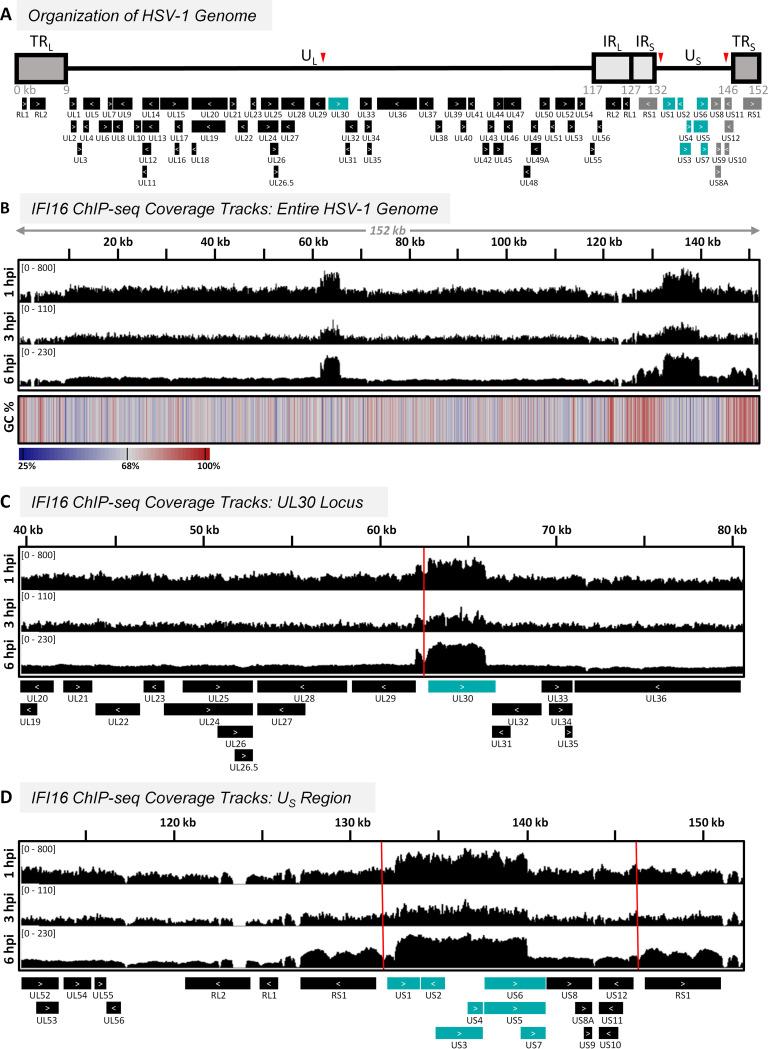
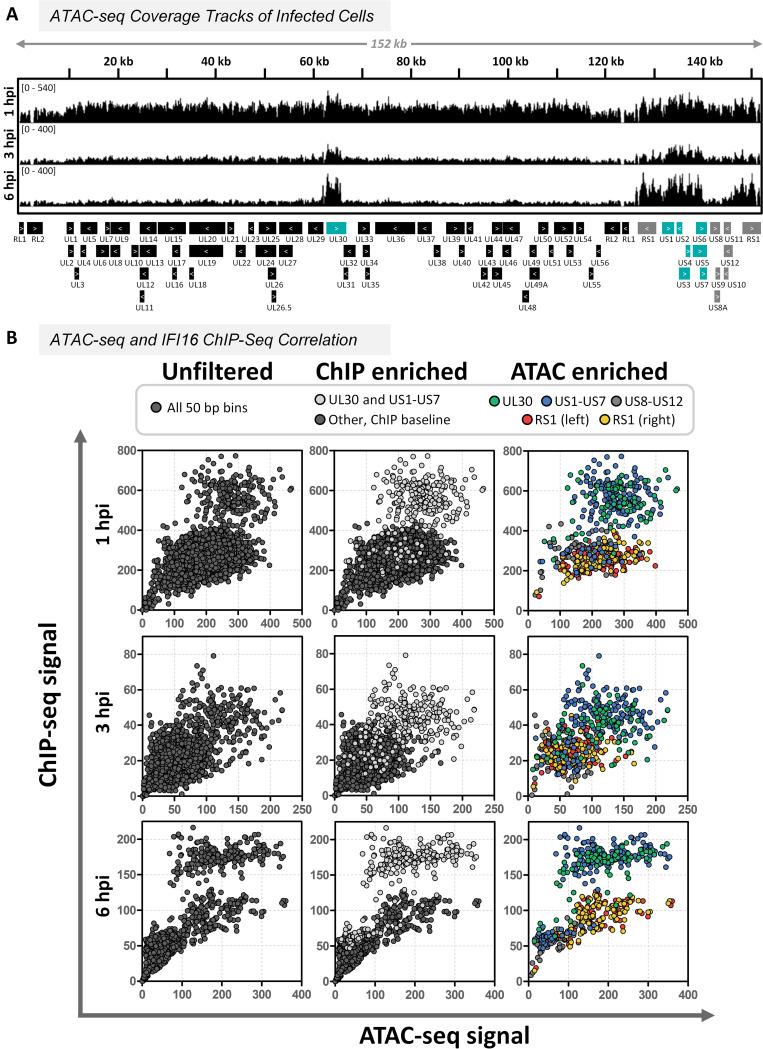
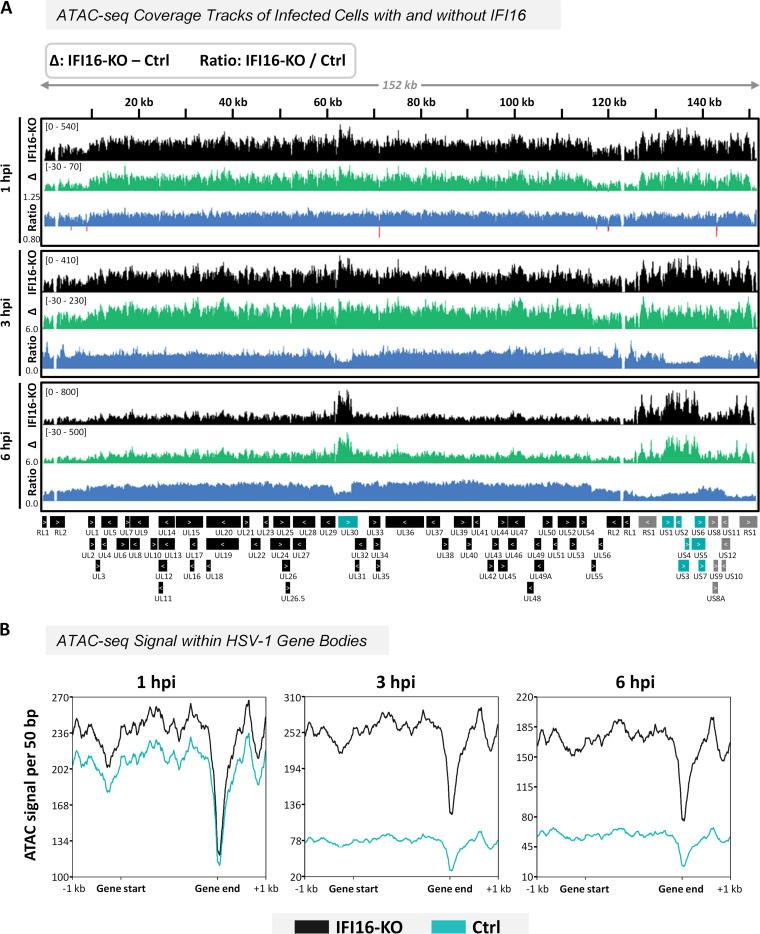
Human cells identify invading pathogens and activate immune signaling pathways through a wide array of pattern recognition receptors, including DNA sensors. The interferon-inducible protein 16 (IFI16) is a nuclear DNA sensor that recognizes double-stranded DNA from a number of viral sources, including genomes of nuclear-replicating viruses. Among these is the prevalent human pathogen herpes simplex virus 1 (HSV-1). Upon binding to the HSV-1 DNA genome, IFI16 both induces antiviral cytokine expression and suppresses virus gene expression. Here, we used a multiomics approach of DNA sequencing techniques paired with targeted mass spectrometry to obtain an extensive view of the interaction between IFI16 and the HSV-1 genome and how this binding affects the viral DNA structure and protein expression. Through chromatin immunoaffinity purification coupled with next-generation DNA sequencing (ChIP-seq), we found that IFI16 binds to the HSV-1 genome in a sequence-independent manner while simultaneously exhibiting broad enrichment at two loci: UL30, the viral DNA polymerase gene, and US1 to US7. The assay for transposase-accessible chromatin with sequencing (ATAC-seq) revealed that these two regions are among the most accessible stretches of DNA on the genome, thereby facilitating IFI16 binding. Accessibility of the entire HSV-1 genome is elevated upon IFI16 knockout, indicating that expression of IFI16 globally induces chromatinization of viral DNA. Deletion of IFI16 also results in a global increase in the expression of HSV-1 proteins, as measured by parallel reaction monitoring-mass spectrometry of viral proteins representing 80% of the HSV-1 genome. Altogether, we demonstrate that IFI16 interacts with the HSV-1 genome in a sequence-independent manner, coordinating epigenetic silencing of the viral genome and decreasing protein expression and virus replication. Mammalian host defense against viral infection includes broad-acting cellular restriction factors, as well as effectors of intrinsic and innate immunity. IFI16 is a critical nuclear host defense factor and intrinsic immune protein involved in binding viral DNA genomes, thereby repressing the replication of nucleus-replicating viruses, including the human herpes simplex virus 1. What has remained unclear is where on the viral genome IFI16 binds and how binding affects both viral DNA structural accessibility and viral protein expression. Our study provides a global view of where and how a nuclear restriction factor of DNA viruses associates with viral genomes to exert antiviral functions during early stages of an acute virus infection. Our study can additionally serve as a systems-level model to evaluate nuclear DNA sensor interactions with viral genomes, as well as the antiviral outcomes of transcriptionally silencing pathogen-derived DNA.
人类细胞通过多种模式识别受体(包括 DNA 传感器)识别入侵的病原体并激活免疫信号通路。干扰素诱导蛋白 16(IFI16)是一种核 DNA 传感器,可识别来自多种病毒来源的双链 DNA,包括核复制病毒的基因组。其中包括普遍存在的人类病原体单纯疱疹病毒 1(HSV-1)。IFI16 与 HSV-1 DNA 基因组结合后,既能诱导抗病毒细胞因子的表达,又能抑制病毒基因的表达。在这里,我们使用 DNA 测序技术与靶向质谱相结合的多组学方法,全面观察 IFI16 与 HSV-1 基因组的相互作用,以及这种结合如何影响病毒 DNA 结构和蛋白质表达。通过染色质免疫沉淀与下一代 DNA 测序(ChIP-seq)相结合,我们发现 IFI16 以序列非依赖性的方式与 HSV-1 基因组结合,同时在两个基因座上广泛富集:病毒 DNA 聚合酶基因 UL30 和 US1 到 US7。转座酶可及染色质的测定(ATAC-seq)显示,这两个区域是基因组上最具可及性的 DNA 延伸段,从而促进了 IFI16 的结合。IFI16 敲除后,整个 HSV-1 基因组的可及性升高,表明 IFI16 的表达使病毒 DNA 整体发生染色质化。IFI16 的缺失也导致 HSV-1 蛋白的表达全面增加,这可以通过代表 HSV-1 基因组 80%的病毒蛋白的平行反应监测-质谱法测量。总的来说,我们证明 IFI16 以序列非依赖性的方式与 HSV-1 基因组相互作用,协调病毒基因组的表观遗传沉默,并降低蛋白质表达和病毒复制。
宿主防御病毒感染包括广谱细胞限制因子以及固有免疫和先天免疫的效应物。IFI16 是一种关键的核宿主防御因子和内在免疫蛋白,参与结合病毒 DNA 基因组,从而抑制包括人类单纯疱疹病毒 1 在内的核复制病毒的复制。目前尚不清楚 IFI16 结合病毒基因组的位置以及结合如何影响病毒 DNA 结构的可及性和病毒蛋白的表达。我们的研究提供了一个关于核 DNA 病毒限制因子与病毒基因组结合的整体视图,以在急性病毒感染的早期阶段发挥抗病毒功能。我们的研究还可以作为一个系统水平的模型,用于评估核 DNA 传感器与病毒基因组的相互作用,以及转录沉默病原体衍生 DNA 的抗病毒结果。


 Zotero 插件