
基于集成学习的家庭固体废物产生预测分类方法。
An Ensemble Learning Based Classification Approach for the Prediction of Household Solid Waste Generation.
机构信息
Faculty of Computer and Information Systems, Islamic University of Madinah, Madinah 42351, Saudi Arabia.
School of Digital Science, Universiti Brunei Darussalam, Tungku Link, Gadong BE1410, Brunei.
出版信息
Sensors (Basel). 2022 May 5;22(9):3506. doi: 10.3390/s22093506.
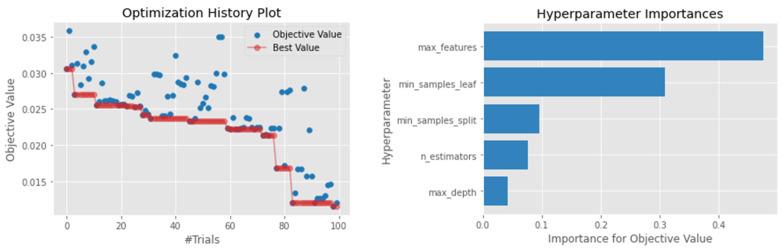
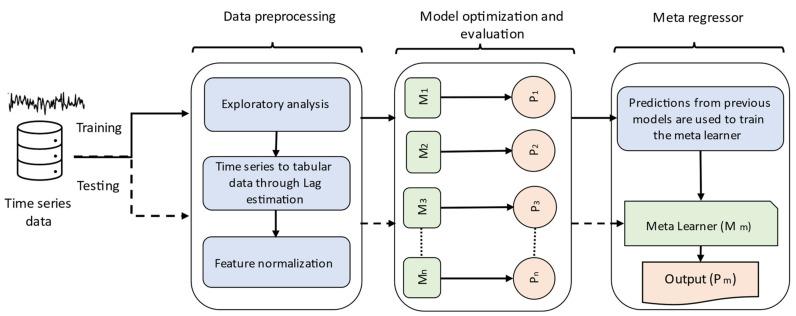
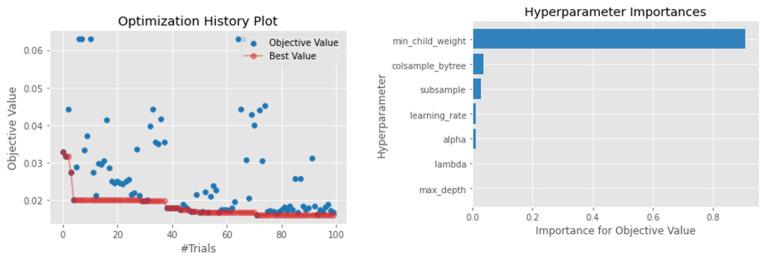
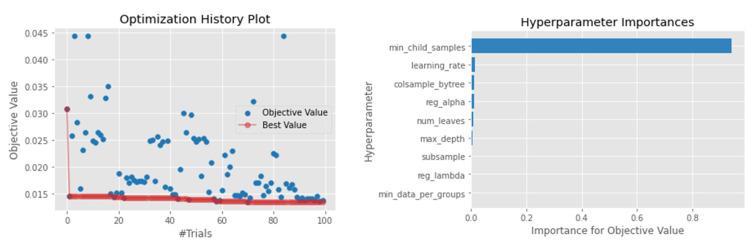
With the increase in urbanization and smart cities initiatives, the management of waste generation has become a fundamental task. Recent studies have started applying machine learning techniques to prognosticate solid waste generation to assist authorities in the efficient planning of waste management processes, including collection, sorting, disposal, and recycling. However, identifying the best machine learning model to predict solid waste generation is a challenging endeavor, especially in view of the limited datasets and lack of important predictive features. In this research, we developed an ensemble learning technique that combines the advantages of (1) a hyperparameter optimization and (2) a meta regressor model to accurately predict the weekly waste generation of households within urban cities. The hyperparameter optimization of the models is achieved using the Optuna algorithm, while the outputs of the optimized single machine learning models are used to train the meta linear regressor. The ensemble model consists of an optimized mixture of machine learning models with different learning strategies. The proposed ensemble method achieved an R2 score of 0.8 and a mean percentage error of 0.26, outperforming the existing state-of-the-art approaches, including SARIMA, NARX, LightGBM, KNN, SVR, ETS, RF, XGBoosting, and ANN, in predicting future waste generation. Not only did our model outperform the optimized single machine learning models, but it also surpassed the average ensemble results of the machine learning models. Our findings suggest that using the proposed ensemble learning technique, even in the case of a feature-limited dataset, can significantly boost the model performance in predicting future household waste generation compared to individual learners. Moreover, the practical implications for the research community and respective city authorities are discussed.
随着城市化和智慧城市倡议的增加,管理废物产生已成为一项基本任务。最近的研究已经开始应用机器学习技术来预测固体废物的产生,以协助有关当局有效地规划废物管理过程,包括收集、分类、处理和回收。然而,确定最佳的机器学习模型来预测固体废物的产生是一项具有挑战性的工作,特别是考虑到有限的数据集和缺乏重要的预测特征。在这项研究中,我们开发了一种集成学习技术,该技术结合了(1)超参数优化和(2)元回归模型的优势,以准确预测城市家庭每周的废物产生量。使用 Optuna 算法实现模型的超参数优化,而优化后的单个机器学习模型的输出则用于训练元线性回归器。集成模型由具有不同学习策略的优化混合机器学习模型组成。所提出的集成方法的 R2 得分为 0.8,平均百分比误差为 0.26,优于现有的最先进方法,包括 SARIMA、NARX、LightGBM、KNN、SVR、ETS、RF、XGBoosting 和 ANN,在预测未来废物产生方面表现出色。我们的模型不仅优于优化后的单个机器学习模型,而且还优于机器学习模型的平均集成结果。我们的研究结果表明,即使在特征有限的数据集的情况下,与单个学习者相比,使用所提出的集成学习技术也可以显著提高模型在预测未来家庭废物产生方面的性能。此外,还讨论了该研究结果对研究界和相关城市当局的实际意义。


 Zotero 插件