
内质网应激与脑缺血/再灌注损伤中的未折叠蛋白反应
Endoplasmic Reticulum Stress and the Unfolded Protein Response in Cerebral Ischemia/Reperfusion Injury.
作者信息
Wang Lei, Liu Yan, Zhang Xu, Ye Yingze, Xiong Xiaoxing, Zhang Shudi, Gu Lijuan, Jian Zhihong, Wang Hongfa
机构信息
Department of Neurosurgery, Renmin Hospital of Wuhan University, Wuhan, China.
Department of Anesthesiology, Renmin Hospital of Wuhan University, Wuhan, China.
出版信息
Front Cell Neurosci. 2022 May 4;16:864426. doi: 10.3389/fncel.2022.864426. eCollection 2022.
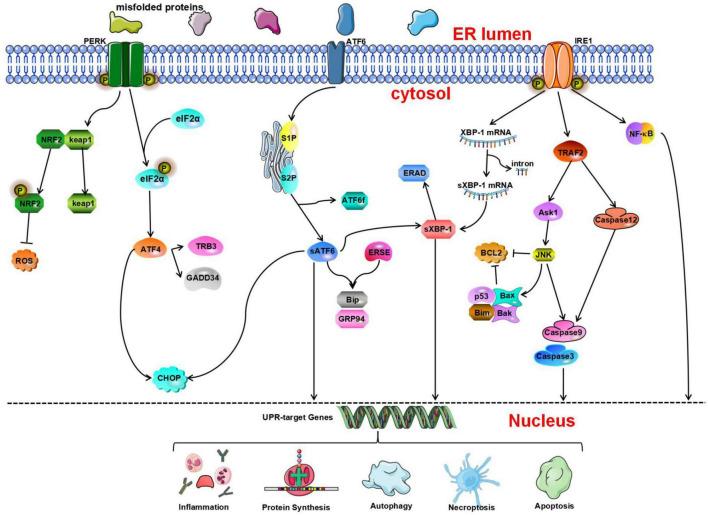
Ischemic stroke is an acute cerebrovascular disease characterized by sudden interruption of blood flow in a certain part of the brain, leading to serious disability and death. At present, treatment methods for ischemic stroke are limited to thrombolysis or thrombus removal, but the treatment window is very narrow. However, recovery of cerebral blood circulation further causes cerebral ischemia/reperfusion injury (CIRI). The endoplasmic reticulum (ER) plays an important role in protein secretion, membrane protein folding, transportation, and maintenance of intracellular calcium homeostasis. Endoplasmic reticulum stress (ERS) plays a crucial role in cerebral ischemia pathophysiology. Mild ERS helps improve cell tolerance and restore cell homeostasis; however, excessive or long-term ERS causes apoptotic pathway activation. Specifically, the protein kinase R-like endoplasmic reticulum kinase (PERK), activating transcription factor 6 (ATF6), and inositol-requiring enzyme 1 (IRE1) pathways are significantly activated following initiation of the unfolded protein response (UPR). CIRI-induced apoptosis leads to nerve cell death, which ultimately aggravates neurological deficits in patients. Therefore, it is necessary and important to comprehensively explore the mechanism of ERS in CIRI to identify methods for preserving brain cells and neuronal function after ischemia.
缺血性中风是一种急性脑血管疾病,其特征是大脑某一部位的血流突然中断,导致严重残疾和死亡。目前,缺血性中风的治疗方法仅限于溶栓或取栓,但治疗窗口非常狭窄。然而,脑血液循环的恢复会进一步导致脑缺血/再灌注损伤(CIRI)。内质网(ER)在蛋白质分泌、膜蛋白折叠、运输以及维持细胞内钙稳态方面发挥着重要作用。内质网应激(ERS)在脑缺血病理生理学中起着关键作用。轻度ERS有助于提高细胞耐受性并恢复细胞稳态;然而,过度或长期的ERS会导致凋亡途径激活。具体而言,在未折叠蛋白反应(UPR)启动后,蛋白激酶R样内质网激酶(PERK)、活化转录因子6(ATF6)和肌醇需求酶1(IRE1)途径会显著激活。CIRI诱导的凋亡导致神经细胞死亡,最终加重患者的神经功能缺损。因此,全面探究ERS在CIRI中的机制,以确定缺血后保护脑细胞和神经元功能的方法是必要且重要的。

 Zotero 插件