
mRNA 疫苗在病毒和癌症防治领域的现状——一篇迷你综述
The Current Landscape of mRNA Vaccines Against Viruses and Cancer-A Mini Review.
机构信息
Rosalind and Morris Goodman Cancer Institute, McGill University, Montreal, QC, Canada.
Department of Biochemistry, McGill University, Montreal, QC, Canada.
出版信息
Front Immunol. 2022 May 6;13:885371. doi: 10.3389/fimmu.2022.885371. eCollection 2022.
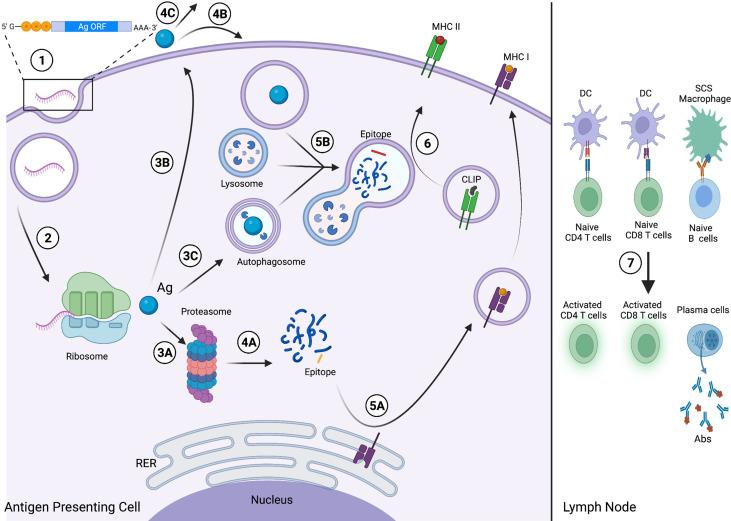
Both infectious viral diseases and cancer have historically been some of the most common causes of death worldwide. The COVID-19 pandemic is a decidedly relevant example of the former. Despite progress having been made over past decades, new and improved techniques are still needed to address the limitations faced by current treatment standards, with mRNA-based therapy emerging as a promising solution. Highly flexible, scalable and cost-effective, mRNA therapy is proving to be a compelling vaccine platform against viruses. Likewise, mRNA vaccines show similar promise against cancer as a platform capable of encoding multiple antigens for a diverse array of cancers, including those that are patient specific as a novel form of personalized medicine. In this review, the molecular mechanisms, biotechnological aspects, and clinical developments of mRNA vaccines against viral infections and cancer are discussed to provide an informative update on the current state of mRNA therapy research.
传染病和癌症一直是全球范围内最常见的死亡原因之一。COVID-19 大流行就是前者的一个明显例子。尽管过去几十年取得了进展,但仍需要新的和改进的技术来解决当前治疗标准所面临的限制,基于 mRNA 的治疗方法作为一种有前途的解决方案出现了。mRNA 疗法具有高度的灵活性、可扩展性和成本效益,被证明是对抗病毒的一种极具吸引力的疫苗平台。同样,mRNA 疫苗作为一种能够为多种癌症(包括针对特定患者的癌症)编码多种抗原的平台,也显示出了对抗癌症的类似前景,作为一种新型的个性化药物。在这篇综述中,讨论了针对病毒感染和癌症的 mRNA 疫苗的分子机制、生物技术方面和临床进展,以提供有关 mRNA 治疗研究现状的信息更新。
 Zotero 插件