
恢复期和社区 mRNA 疫苗接种者中严重急性呼吸综合征冠状病毒 2 型 IgG 抗体对奥密克戎和德尔塔变异体亲和力的变异性。
Variability in Severe Acute Respiratory Syndrome Coronavirus 2 IgG Antibody Affinity to Omicron and Delta Variants in Convalescent and Community mRNA-Vaccinated Individuals.
机构信息
Liquid Diagnostics LLC, San Clemente, CA; and.
UCLA School of Dentistry, Los Angeles, CA.
出版信息
Immunohorizons. 2022 May 26;6(5):307-311. doi: 10.4049/immunohorizons.2200031.
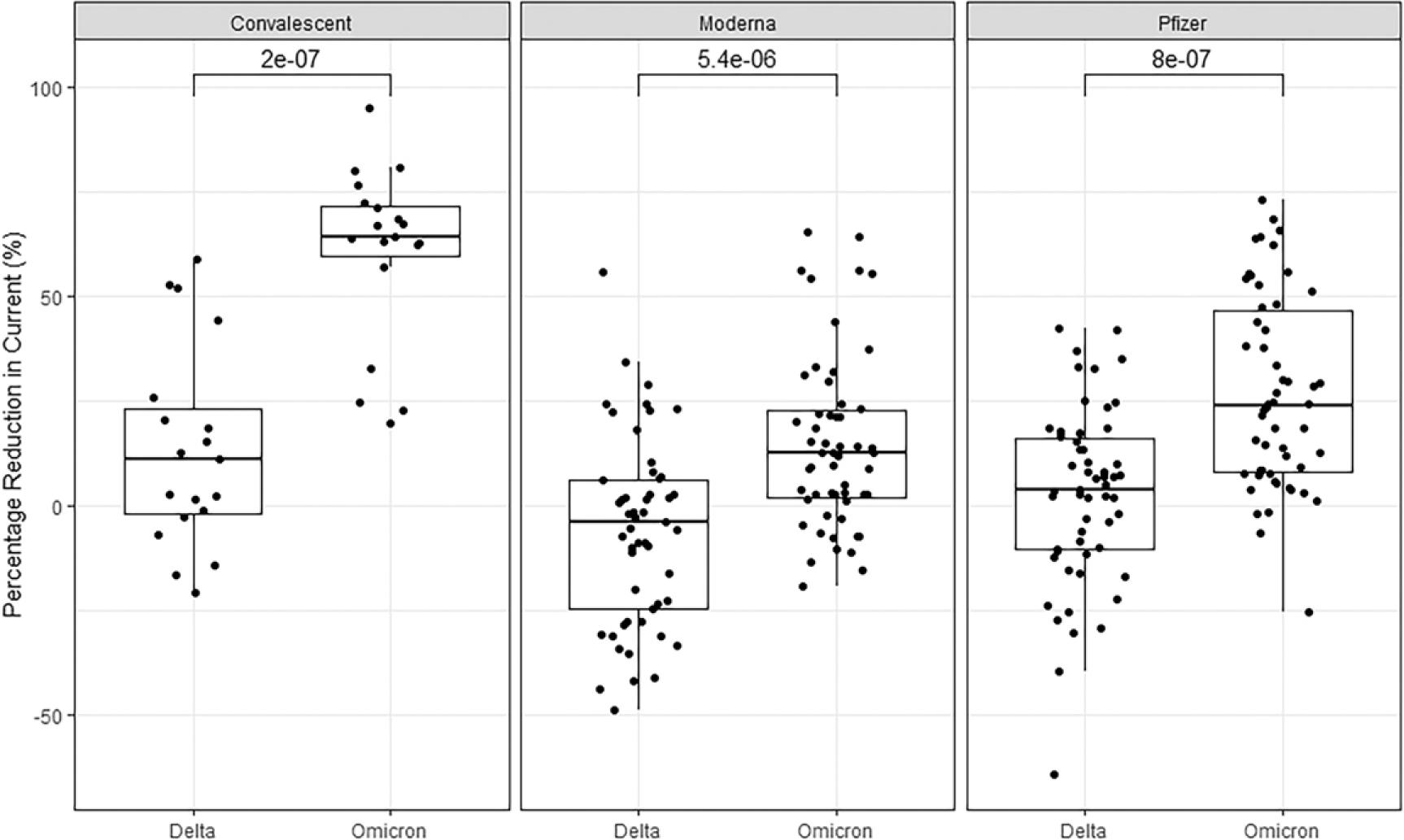
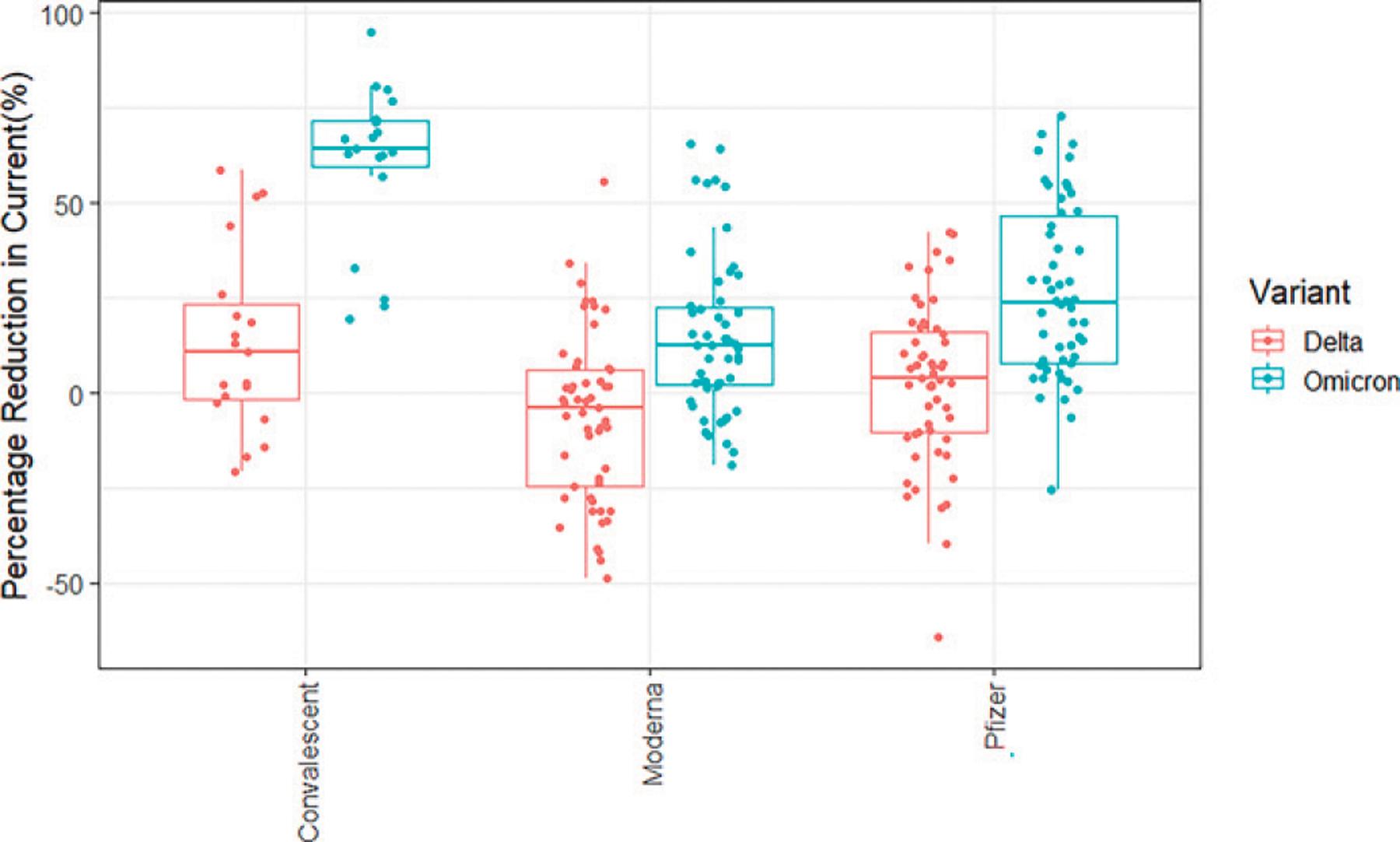
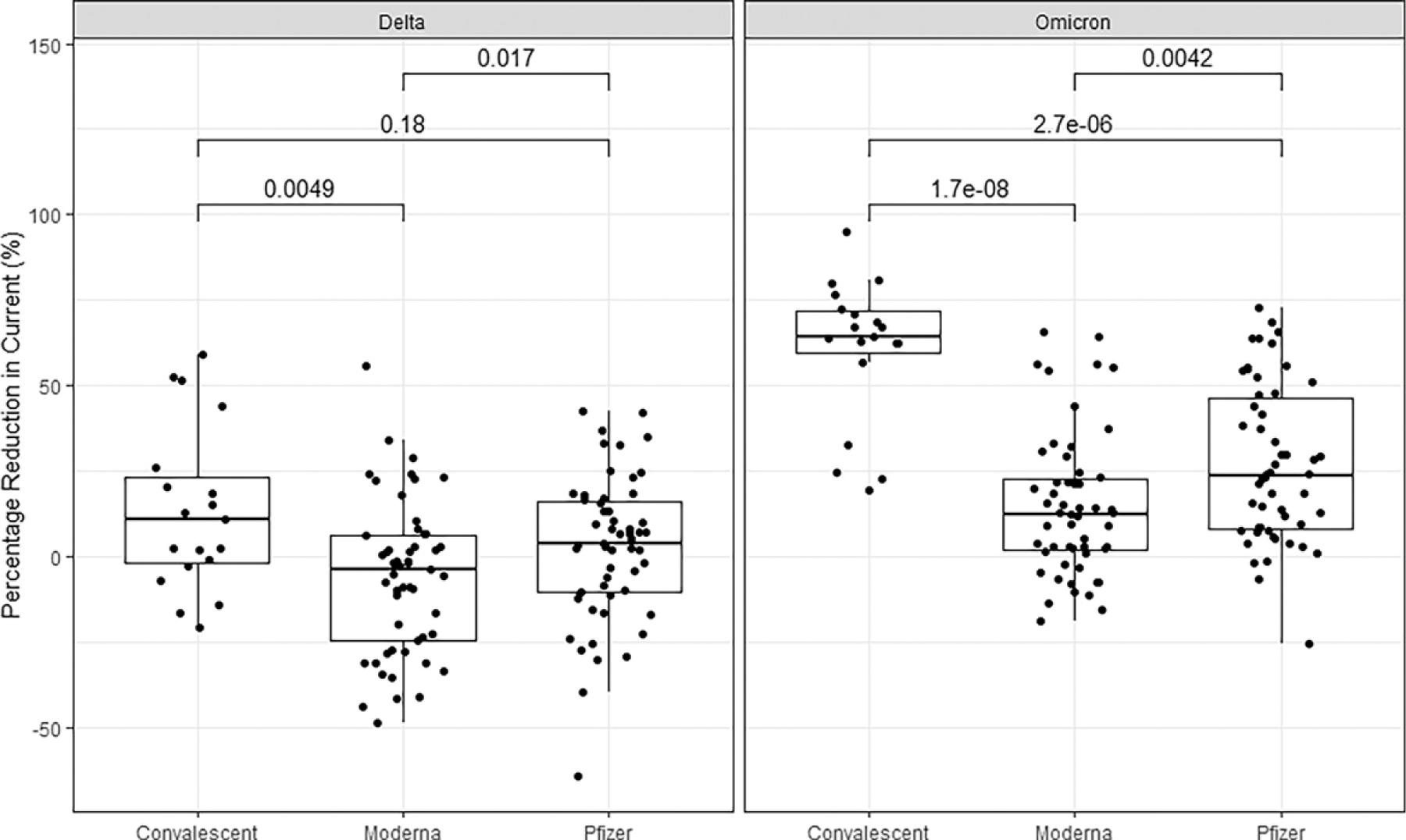
The emergence of the omicron and delta variants of severe acute respiratory syndrome coronavirus 2 (SARS-CoV-2) has begun a number of discussions regarding breakthrough infection, waning immunity, need and timing for vaccine boosters, and whether existing mRNA vaccines for the original SARS-CoV-2 strain are adequate. Our work leverages a biosensor-based technique to evaluate the binding efficacy of SARS-CoV-2 S1-specific salivary Abs to the omicron and delta variants using a cohort of mRNA-vaccinated ( = 109) and convalescent ( = 19) subjects. We discovered a wide range of binding efficacies to the variant strains, with a mean reduction of 60.5, 26.7, and 14.7% in measurable signal to the omicron strain and 13.4, 2.4, and -6.4% mean reduction to the delta variant for convalescent, Pfizer-, and Moderna-vaccinated groups, respectively. This assay may be an important tool in determining susceptibility to infection or need for booster immunization as the pandemic evolves.
严重急性呼吸综合征冠状病毒 2(SARS-CoV-2)的奥密克戎和德尔塔变体的出现引发了一些关于突破性感染、免疫减弱、疫苗加强针的需求和时机以及现有的针对原始 SARS-CoV-2 株的 mRNA 疫苗是否足够的讨论。我们的工作利用基于生物传感器的技术,使用一组接受 mRNA 疫苗接种的(= 109)和康复的(= 19)受试者,评估 SARS-CoV-2 S1 特异性唾液 Abs 与奥密克戎和德尔塔变体的结合效力。我们发现针对变异株的结合效力范围很广,与奥密克戎株相比,康复组、辉瑞组和 Moderna 组的可测量信号平均分别降低了 60.5%、26.7%和 14.7%,与德尔塔变异株相比,分别降低了 13.4%、2.4%和-6.4%。随着大流行的发展,这种检测方法可能是确定感染易感性或加强免疫需求的重要工具。
 Zotero 插件