
循环代谢物作为内侧颞叶癫痫患者疾病的生物标志物
Circulating Metabolites as Biomarkers of Disease in Patients with Mesial Temporal Lobe Epilepsy.
作者信息
Godoi Alexandre B, do Canto Amanda M, Donatti Amanda, Rosa Douglas C, Bruno Danielle C F, Alvim Marina K, Yasuda Clarissa L, Martins Lucas G, Quintero Melissa, Tasic Ljubica, Cendes Fernando, Lopes-Cendes Iscia
机构信息
Department of Translational Medicine, School of Medical Sciences, University of Campinas (UNICAMP), Campinas 13083-888, Brazil.
Brazilian Institute of Neuroscience and Neurotechnology (BRAINN), Campinas 13083-888, Brazil.
出版信息
Metabolites. 2022 May 17;12(5):446. doi: 10.3390/metabo12050446.
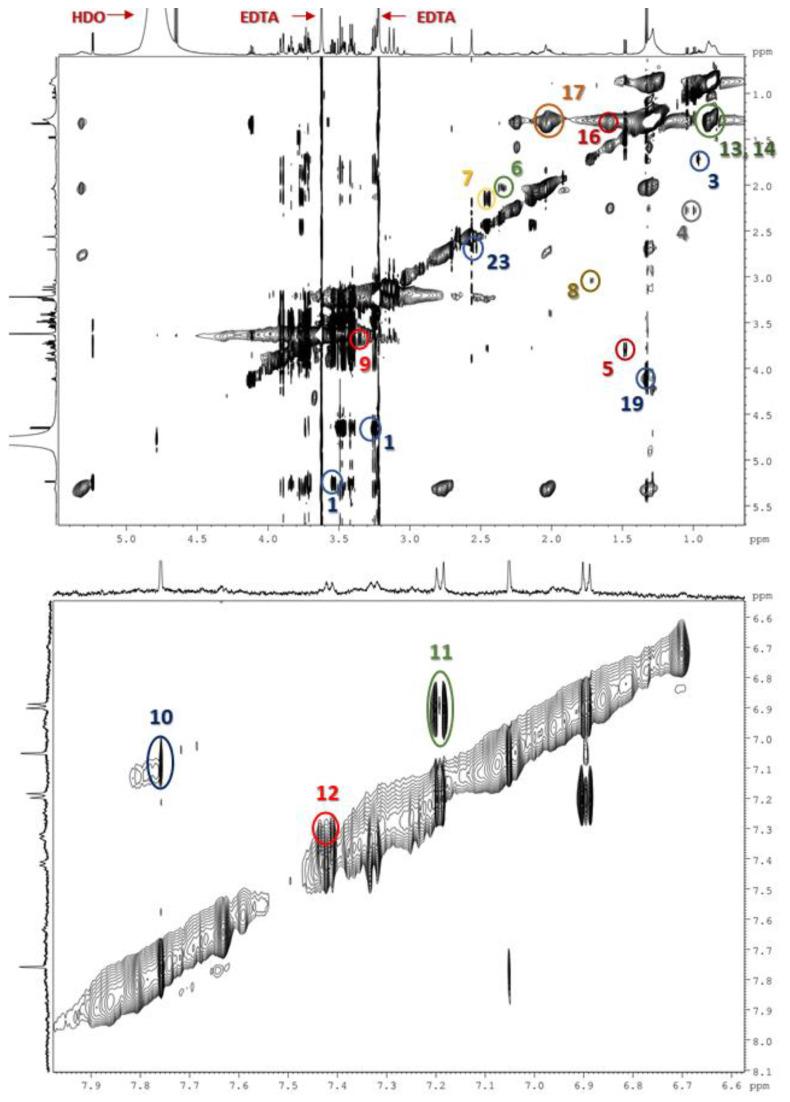
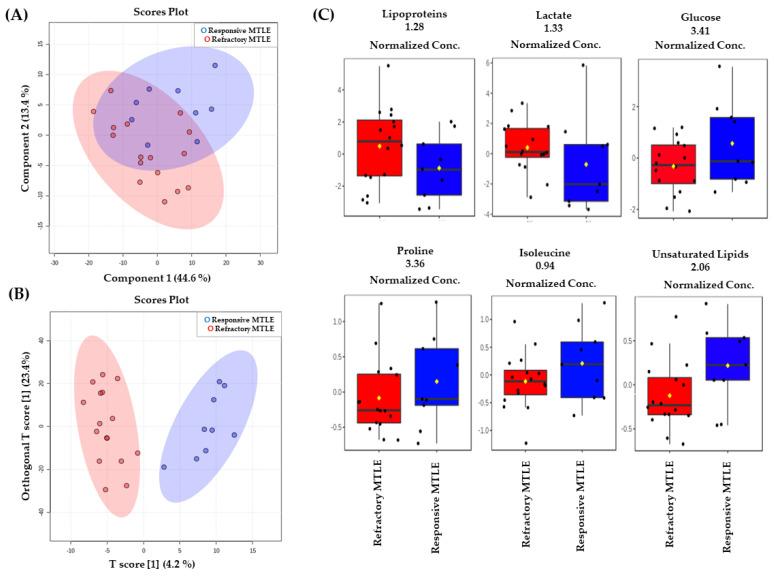
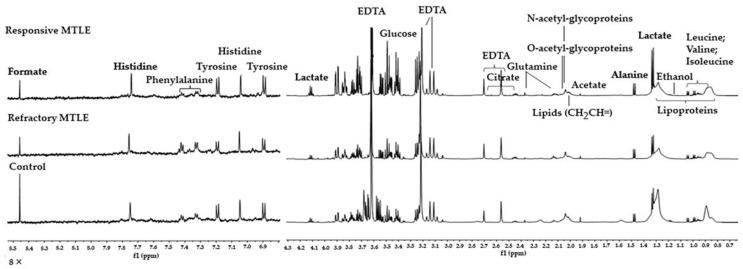
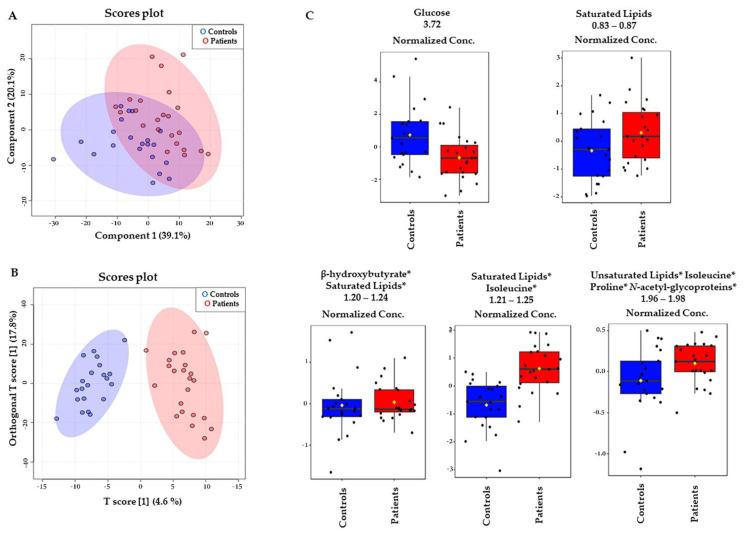
A major challenge in the clinical management of patients with mesial temporal lobe epilepsy (MTLE) is identifying those who do not respond to antiseizure medication (ASM), allowing for the timely pursuit of alternative treatments such as epilepsy surgery. Here, we investigated changes in plasma metabolites as biomarkers of disease in patients with MTLE. Furthermore, we used the metabolomics data to gain insights into the mechanisms underlying MTLE and response to ASM. We performed an untargeted metabolomic method using magnetic resonance spectroscopy and multi- and univariate statistical analyses to compare data obtained from plasma samples of 28 patients with MTLE compared to 28 controls. The patients were further divided according to response to ASM for a supplementary and preliminary comparison: 20 patients were refractory to treatment, and eight were responsive to ASM. We only included patients using carbamazepine in combination with clobazam. We analyzed the group of patients and controls and found that the profiles of glucose (p = 0.01), saturated lipids (p = 0.0002), isoleucine (p = 0.0001), β-hydroxybutyrate (p = 0.0003), and proline (p = 0.02) were different in patients compared to controls (p < 0.05). In addition, we found some suggestive metabolites (without enough predictability) by multivariate analysis (VIP scores > 2), such as lipoproteins, lactate, glucose, unsaturated lipids, isoleucine, and proline, that might be relevant to the process of pharmacoresistance in the comparison between patients with refractory and responsive MTLE. The identified metabolites for the comparison between MTLE patients and controls were linked to different biological pathways related to cell-energy metabolism and pathways related to inflammatory processes and the modulation of neurotransmitter release and activity in MTLE. In conclusion, in addition to insights into the mechanisms underlying MTLE, our results suggest that plasma metabolites may be used as disease biomarkers. These findings warrant further studies exploring the clinical use of metabolites to assist in decision-making when treating patients with MTLE.
内侧颞叶癫痫(MTLE)患者临床管理中的一个主要挑战是识别那些对抗癫痫药物(ASM)无反应的患者,以便及时寻求癫痫手术等替代治疗方法。在此,我们研究了血浆代谢物的变化,将其作为MTLE患者疾病的生物标志物。此外,我们利用代谢组学数据深入了解MTLE的潜在机制以及对ASM的反应。我们采用磁共振波谱的非靶向代谢组学方法以及多变量和单变量统计分析,比较了28例MTLE患者与28例对照的血浆样本数据。患者根据对ASM的反应进一步分组,以进行补充性和初步比较:20例患者治疗无效,8例患者对ASM有反应。我们仅纳入了同时使用卡马西平和氯巴占的患者。我们对患者组和对照组进行分析,发现与对照组相比,患者的葡萄糖(p = 0.01)、饱和脂质(p = 0.0002)、异亮氨酸(p = 0.0001)、β-羟基丁酸(p = 0.0003)和脯氨酸(p = 0.02)谱存在差异(p < 0.05)。此外,我们通过多变量分析(VIP评分> 2)发现了一些提示性代谢物(预测性不足),如脂蛋白、乳酸、葡萄糖、不饱和脂质、异亮氨酸和脯氨酸,这些代谢物在难治性和反应性MTLE患者的比较中可能与耐药过程相关。MTLE患者与对照组比较中确定的代谢物与不同的生物途径相关,这些途径与细胞能量代谢以及MTLE中与炎症过程和神经递质释放及活性调节相关的途径有关。总之,除了深入了解MTLE的潜在机制外,我们的结果表明血浆代谢物可用作疾病生物标志物。这些发现值得进一步研究,以探索代谢物在治疗MTLE患者时辅助决策的临床应用。



 Zotero 插件