
摄入微塑料纤维而非微塑料珠会影响热带家蟋蟀的生长速度。
Ingestion of Microplastic Fibres, But Not Microplastic Beads, Impacts Growth Rates in the Tropical House Cricket .
作者信息
Fudlosid Serita, Ritchie Marshall W, Muzzatti Matthew J, Allison Jane E, Provencher Jennifer, MacMillan Heath A
机构信息
Department of Biology, Carleton University, Ottawa, ON, Canada.
Department of Biology, University of Ottawa, Ottawa, ON, Canada.
出版信息
Front Physiol. 2022 May 11;13:871149. doi: 10.3389/fphys.2022.871149. eCollection 2022.
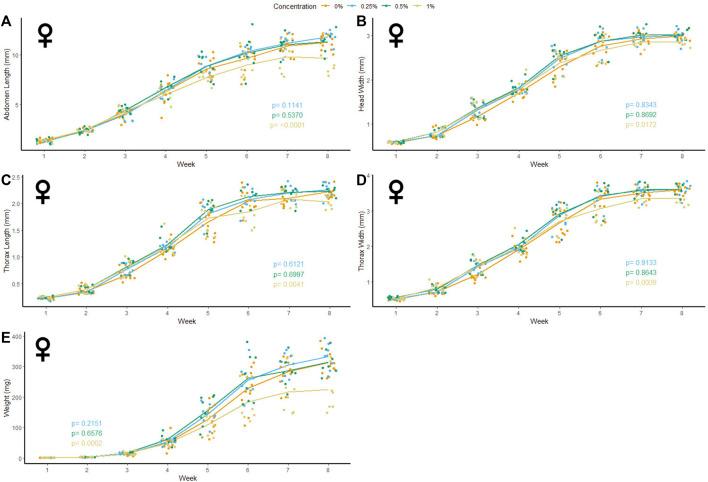
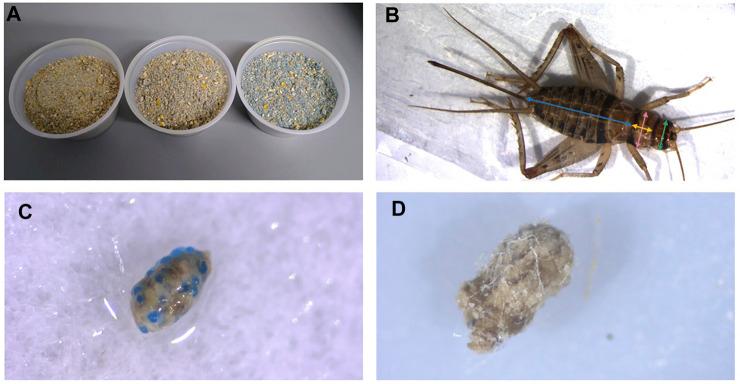
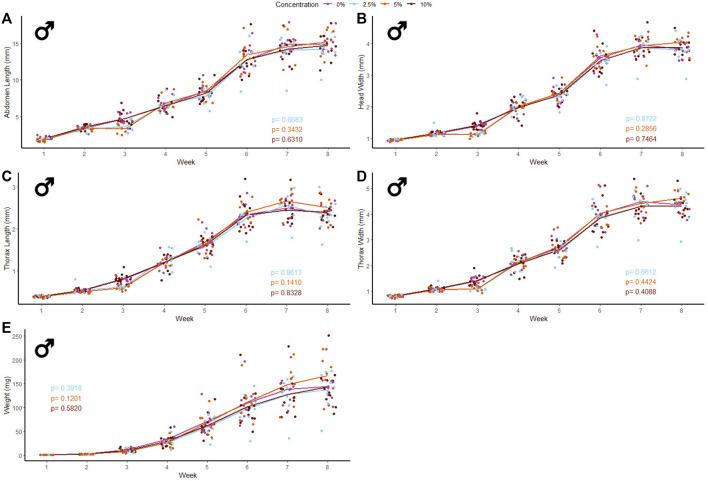
Microplastic is a growing concern as an environmental contaminant as it is ubiquitous in our ecosystems. Microplastics are present in terrestrial environments, yet the majority of studies have focused on the adverse effects of microplastics on aquatic biota. We hypothesized that microplastic ingestion by a terrestrial insect would have localized effects on gut health and nutrient absorption, such that prolonged dietary microplastic exposure would impact growth rate and adult body size. We further hypothesized that plastic form (fibres vs. beads) would influence these effects because of the nature of gut-plastic interactions. Freshly hatched tropical house crickets () were fed a standard diet containing different concentrations of either fluorescent polyethylene microplastic beads (75-105 μm), or untreated polyethylene terephthalate microfibers (< 5 mm) until they died or reached adulthood (approximately 8 weeks). Weight and body length were measured weekly and microplastic ingestion was confirmed through fluorescence microscopy and visual inspection of the frass. While, to our surprise, we found no effect of polyethylene bead ingestion on growth rate or final body size of , females experienced a reduction in size and weight when fed high concentrations of polyethylene terephthalate microfibers. These results suggest that high concentrations of polyethylene beads of the 100 μm size range can pass through the cricket gut without a substantial negative effect on their growth and development time, but high concentrations of polyethylene terephthalate microfibers cannot. Although we report the negative effects of microplastic ingestion on the growth of , it remains uncertain what threats microplastics pose to terrestrial insects.
微塑料作为一种环境污染物,因其在我们的生态系统中无处不在,正日益受到关注。微塑料存在于陆地环境中,但大多数研究都集中在微塑料对水生生物群的不利影响上。我们假设,陆生昆虫摄入微塑料会对肠道健康和营养吸收产生局部影响,因此长期饮食中接触微塑料会影响生长速度和成虫体型。我们进一步假设,塑料形态(纤维与珠子)会因肠道与塑料相互作用的性质而影响这些影响。将刚孵化的热带家蟋蟀( )喂食含有不同浓度荧光聚乙烯微塑料珠(75 - 105微米)或未处理的聚对苯二甲酸乙二酯微纤维(<5毫米)的标准饮食,直到它们死亡或成年(约8周)。每周测量体重和体长,并通过荧光显微镜和对粪便的目视检查确认微塑料的摄入情况。虽然令我们惊讶的是,我们发现摄入聚乙烯珠对 的生长速度或最终体型没有影响,但当喂食高浓度聚对苯二甲酸乙二酯微纤维时,雌性蟋蟀的体型和体重有所减小。这些结果表明,100微米尺寸范围的高浓度聚乙烯珠可以通过蟋蟀肠道,而对它们的生长和发育时间没有实质性负面影响,但高浓度聚对苯二甲酸乙二酯微纤维则不能。尽管我们报告了摄入微塑料对 生长的负面影响,但微塑料对陆生昆虫构成何种威胁仍不确定。


 Zotero 插件