
纵向 16S rRNA 测序揭示了肠道微生物群的变化与小鼠非酒精性脂肪性肝病进展之间的关系。
Longitudinal 16S rRNA Sequencing Reveals Relationships among Alterations of Gut Microbiota and Nonalcoholic Fatty Liver Disease Progression in Mice.
机构信息
State Key Laboratory for Diagnosis and Treatment of Infectious Diseases, National Clinical Research Center for Infectious Diseases, Collaborative Innovation Center for Diagnosis and Treatment of Infectious Diseases, The First Affiliated Hospital, Zhejiang Universitygrid.13402.34 School of Medicine, Hangzhou, China.
Research Units of Infectious Disease and Microecology, Chinese Academy of Medical Sciences, Beijing, China.
出版信息
Microbiol Spectr. 2022 Jun 29;10(3):e0004722. doi: 10.1128/spectrum.00047-22. Epub 2022 Jun 1.
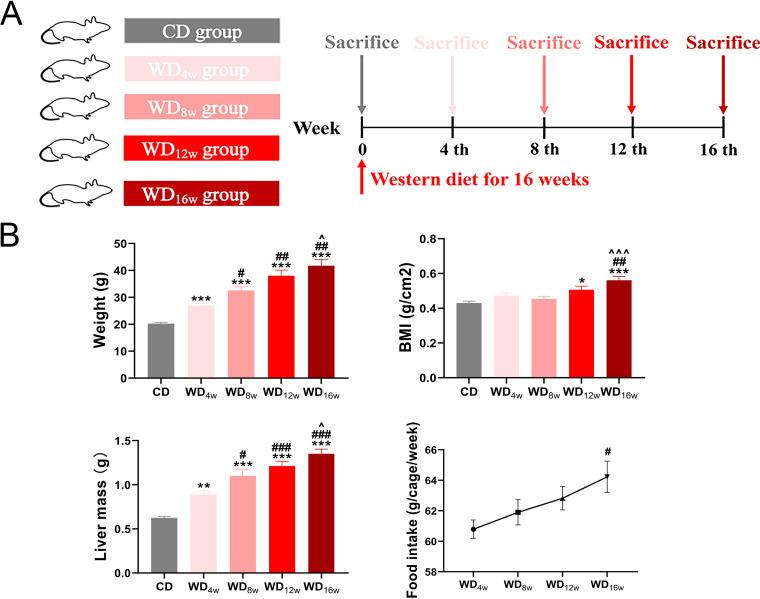
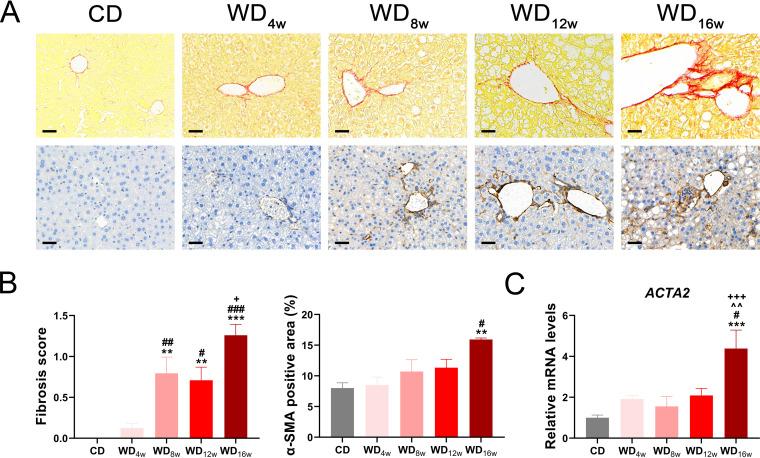
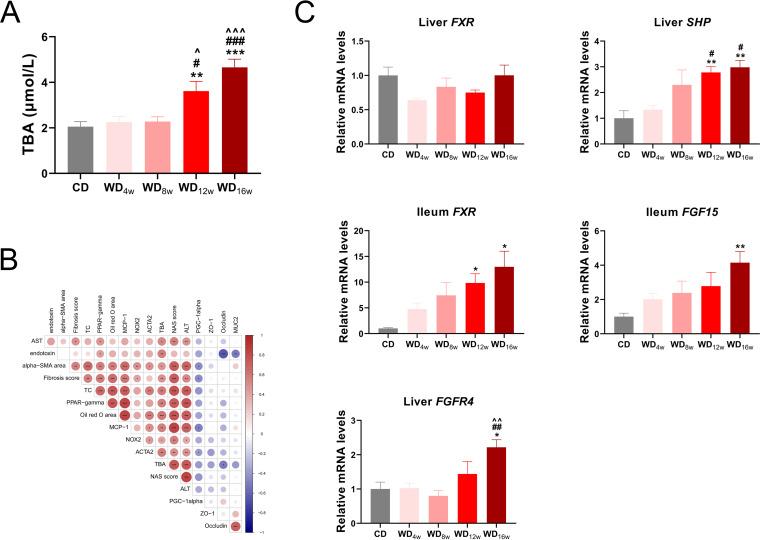
Nonalcoholic fatty liver disease (NAFLD) is a prevalent and progressive disease spectrum ranging from nonalcoholic fatty liver (NAFL) to nonalcoholic steatohepatitis (NASH), yet there is no effective treatment and efficient noninvasive diagnostic method for NASH. The present study investigated the longitudinal alternations of gut microbiota in the Western diet (WD) induced murine NAFLD model using 16S rRNA sequencing. Evident steatosis and inflammation were detected in the liver at the 8th and 12th week, while prompted hepatic oxidative injury and fibrosis were found at the 16th week. In this progressive process, impaired bile acid (BA) metabolism plays a vital part. Long-term WD intervention alters microbial richness and composition in the intestine, shaping characteristic microbial feature correspondence to each NAFLD stage. Descending abundances of and were found in NAFLD progression, while inflammation-related microbes , , and were verified to identify borderline NASH at 8th and 12th week, and BA-associated taxa , , , and were recognized as special symbols reflecting the state of oxidative damage and fibrosis in NASH at 16th week. Further, feces and colon abundances of were verified to be depleted in the process of borderline NASH progressed to NASH, and exhibited substantial correlations with NAFLD indexes ALT, AST, TC, and TBA. These characteristic taxa were effective to identify NAFLD and NASH, and microbiota-derived predictive models for NAFLD and NASH exhibited great potential (AUC 0.983 and 0.784). These findings demonstrate that a core set of gut microbiome especially BA-related taxa may be adopted as a noninvasive diagnostic tool for NAFLD and NASH. This study concentrates on longitudinal alternations of gut microbiota in NAFLD progression and discovers the interrelationships between them. These findings may uncover the role of gut microbiota in NAFLD progression and identify novel noninvasive diagnostic tools for NAFLD based on microbial biomarkers.
非酒精性脂肪性肝病 (NAFLD) 是一种普遍且进行性的疾病谱,从非酒精性脂肪肝 (NAFL) 到非酒精性脂肪性肝炎 (NASH),但目前尚无有效的治疗方法和有效的非侵入性诊断方法。本研究通过 16S rRNA 测序研究了 Western 饮食 (WD) 诱导的 NAFLD 模型中肠道微生物群的纵向变化。在第 8 周和第 12 周时,肝脏中检测到明显的脂肪变性和炎症,而在第 16 周时则发现肝氧化损伤和纤维化。在这个进展过程中,受损的胆汁酸 (BA) 代谢起着至关重要的作用。长期 WD 干预改变了肠道中的微生物丰富度和组成,形成了与每个 NAFLD 阶段相对应的特征微生物特征。在 NAFLD 进展过程中发现 和 的丰度下降,而与炎症相关的微生物 、 和 被证实可在第 8 周和第 12 周识别边界性 NASH,BA 相关分类群 、 、 和 被认为是反映 NASH 氧化损伤和纤维化状态的特殊标志在第 16 周。此外,在边界性 NASH 进展为 NASH 的过程中,粪便和结肠中 的丰度被证实减少,并与 NAFLD 指标 ALT、AST、TC 和 TBA 呈显著相关性。这些特征分类群可有效识别 NAFLD 和 NASH,且基于微生物的预测模型对 NAFLD 和 NASH 具有很大的潜力 (AUC 0.983 和 0.784)。这些发现表明,一组核心肠道微生物群,特别是与 BA 相关的分类群,可能被用作 NAFLD 和 NASH 的非侵入性诊断工具。本研究集中于 NAFLD 进展过程中肠道微生物群的纵向变化,并发现它们之间的相互关系。这些发现可能揭示了肠道微生物群在 NAFLD 进展中的作用,并基于微生物生物标志物为 NAFLD 识别新的非侵入性诊断工具。




 Zotero 插件