
睡眠与晚发性阿尔茨海默病:共同的遗传风险因素、药物靶点、分子机制及因果效应
Sleep and Late-Onset Alzheimer's Disease: Shared Genetic Risk Factors, Drug Targets, Molecular Mechanisms, and Causal Effects.
作者信息
Chen Dongze, Wang Xinpei, Huang Tao, Jia Jinzhu
机构信息
Department of Biostatistics, School of Public Health, Peking University, Beijing, China.
Department of Epidemiology and Biostatistics, School of Public Health, Peking University, Beijing, China.
出版信息
Front Genet. 2022 May 17;13:794202. doi: 10.3389/fgene.2022.794202. eCollection 2022.
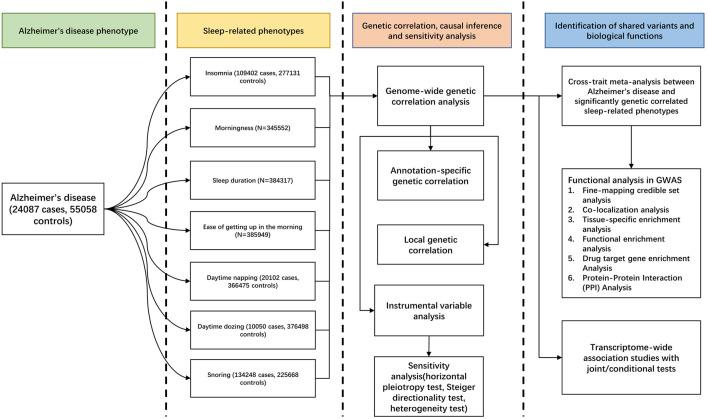
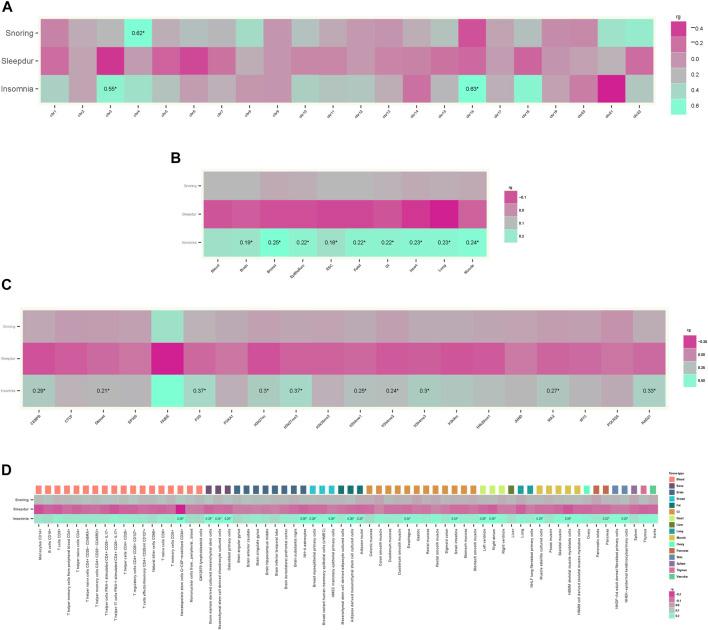
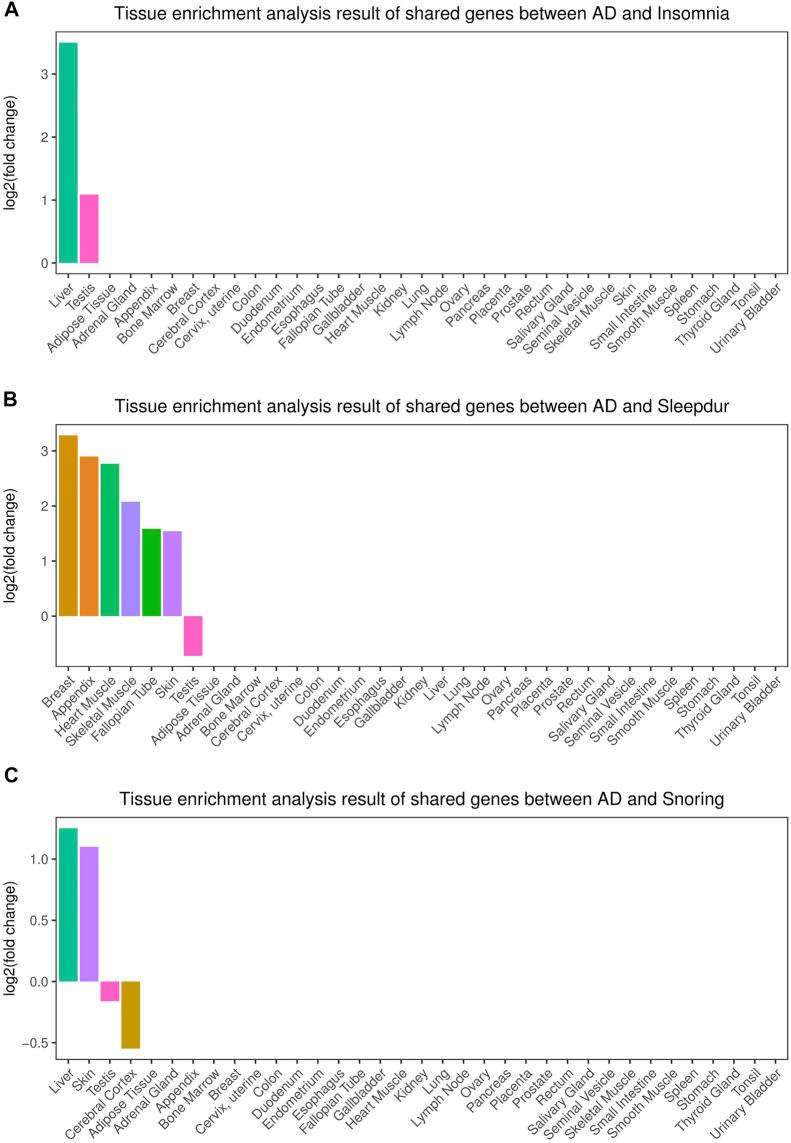
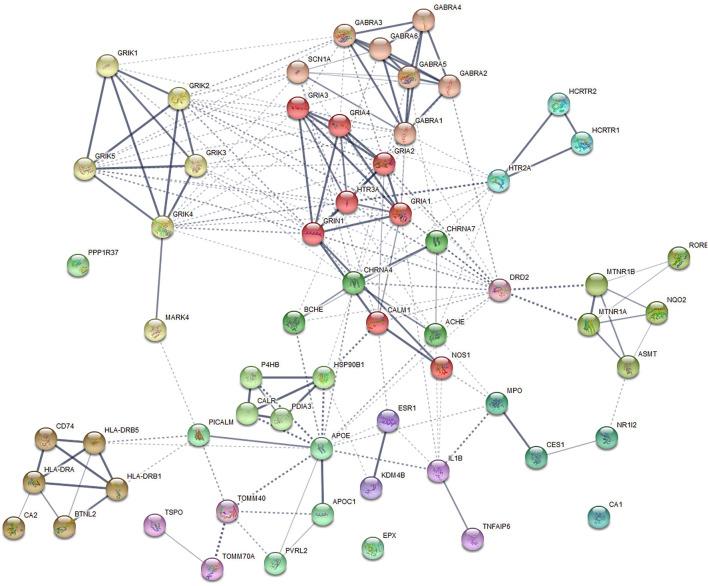
Late-onset Alzheimer's disease (AD) is associated with sleep-related phenotypes (SRPs). The fact that whether they share a common genetic etiology remains largely unknown. We explored the shared genetics and causality between AD and SRPs by using high-definition likelihood (HDL), cross-phenotype association study (CPASSOC), transcriptome-wide association study (TWAS), and bidirectional Mendelian randomization (MR) in summary-level data for AD ( = 455,258) and summary-level data for seven SRPs (sample size ranges from 359,916 to 1,331,010). AD shared a strong genetic basis with insomnia ( = 0.20; = 9.70 × 10), snoring ( = 0.13; = 2.45 × 10), and sleep duration ( = -0.11; = 1.18 × 10). The CPASSOC identifies 31 independent loci shared between AD and SRPs, including four novel shared loci. Functional analysis and the TWAS showed shared genes were enriched in liver, brain, breast, and heart tissues and highlighted the regulatory roles of immunological disorders, very-low-density lipoprotein particle clearance, triglyceride-rich lipoprotein particle clearance, chylomicron remnant clearance, and positive regulation of T-cell-mediated cytotoxicity pathways. Protein-protein interaction analysis identified three potential drug target genes (, , and ) that interacted with known FDA-approved drug target genes. The CPASSOC and TWAS demonstrated three regions 11p11.2, 6p22.3, and 16p11.2 may account for the shared basis between AD and sleep duration or snoring. MR showed insomnia had a causal effect on AD (OR = 1.02, = 6.7 × 10), and multivariate MR suggested a potential role of sleep duration and major depression in this association. Our findings provide strong evidence of shared genetics and causation between AD and sleep abnormalities and advance our understanding of the genetic overlap between them. Identifying shared drug targets and molecular pathways can be beneficial for treating AD and sleep disorders more efficiently.
迟发性阿尔茨海默病(AD)与睡眠相关表型(SRP)有关。它们是否共享共同的遗传病因在很大程度上仍不清楚。我们通过在AD的汇总水平数据(n = 455,258)和7种SRP的汇总水平数据(样本量范围从359,916到1,331,010)中使用高清似然性(HDL)、跨表型关联研究(CPASSOC)、全转录组关联研究(TWAS)和双向孟德尔随机化(MR),探索了AD与SRP之间的共享遗传学和因果关系。AD与失眠(r = 0.20;p = 9.70×10⁻⁹)、打鼾(r = 0.13;p = 2.45×10⁻⁵)和睡眠时间(r = -0.11;p = 1.18×10⁻³)共享一个强大的遗传基础。CPASSOC识别出AD和SRP之间共享的31个独立位点,包括4个新的共享位点。功能分析和TWAS表明,共享基因在肝脏、大脑、乳腺和心脏组织中富集,并突出了免疫紊乱、极低密度脂蛋白颗粒清除、富含甘油三酯脂蛋白颗粒清除、乳糜微粒残余物清除以及T细胞介导的细胞毒性途径的正调控作用。蛋白质 - 蛋白质相互作用分析确定了3个潜在的药物靶基因(RIPK1、RIPK3和MLKL),它们与已知的FDA批准的药物靶基因相互作用。CPASSOC和TWAS表明,11p11.2、6p22.3和16p11.2这三个区域可能解释了AD与睡眠时间或打鼾之间的共享基础。MR显示失眠对AD有因果效应(OR = 1.02,p = 6.7×10⁻⁴),多变量MR表明睡眠时间和重度抑郁在这种关联中可能起作用。我们的发现为AD与睡眠异常之间的共享遗传学和因果关系提供了有力证据,并推进了我们对它们之间遗传重叠的理解。识别共享的药物靶标和分子途径可能有助于更有效地治疗AD和睡眠障碍。


 Zotero 插件