
用于癌症研究的化学探针和基于活性的蛋白质谱分析。
Chemical Probes and Activity-Based Protein Profiling for Cancer Research.
机构信息
Division of Bio-Medical Science and Technology, Korea Institute of Science and Technology School, Korea University of Science and Technology, Seoul 02792, Korea.
Department of Pharmacology, College of Medicine, Korea University, Seoul 02792, Korea.
出版信息
Int J Mol Sci. 2022 May 25;23(11):5936. doi: 10.3390/ijms23115936.
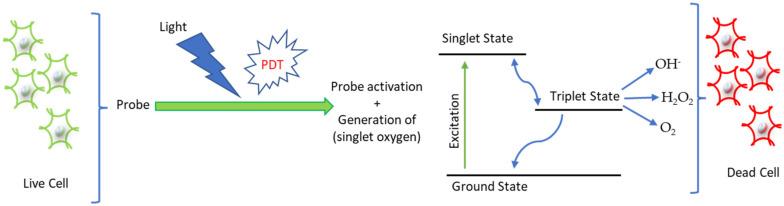
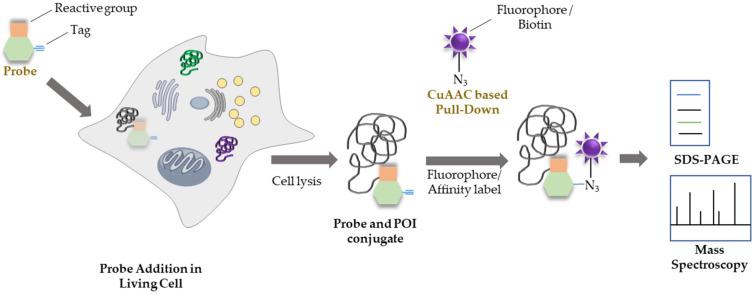
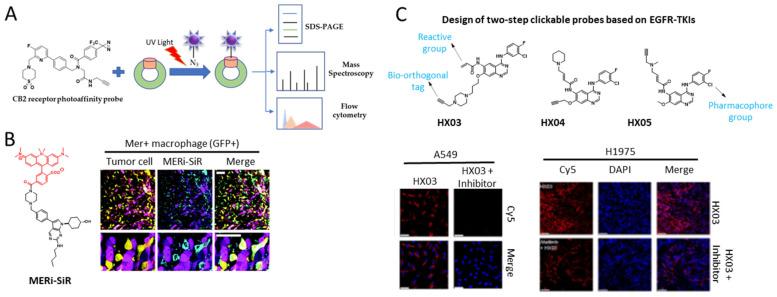
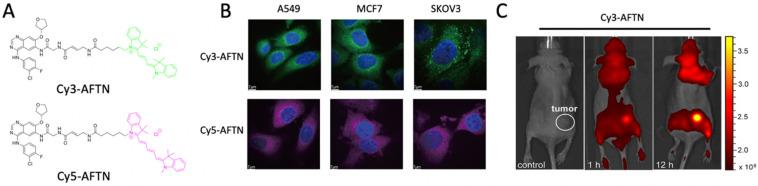
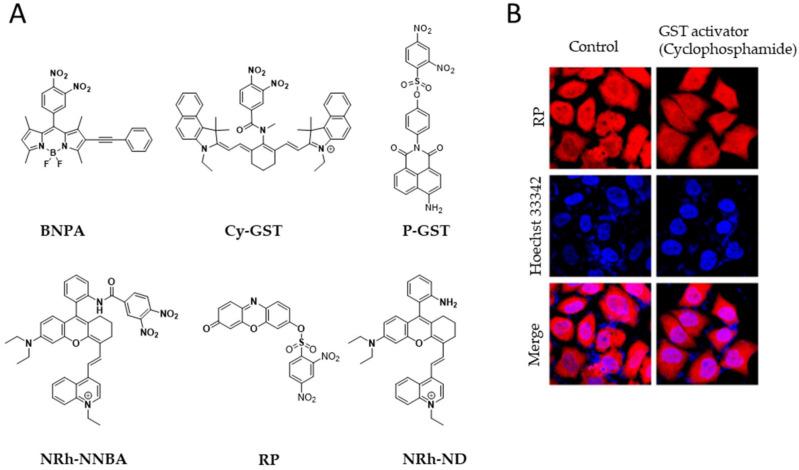
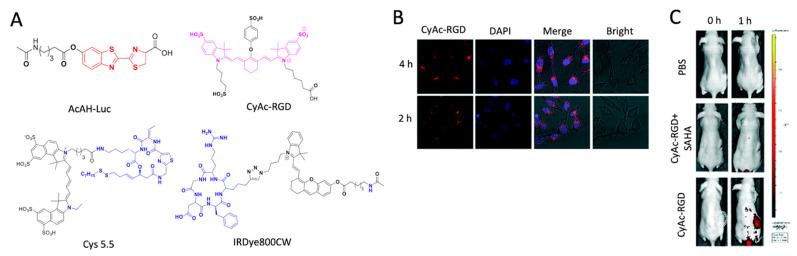
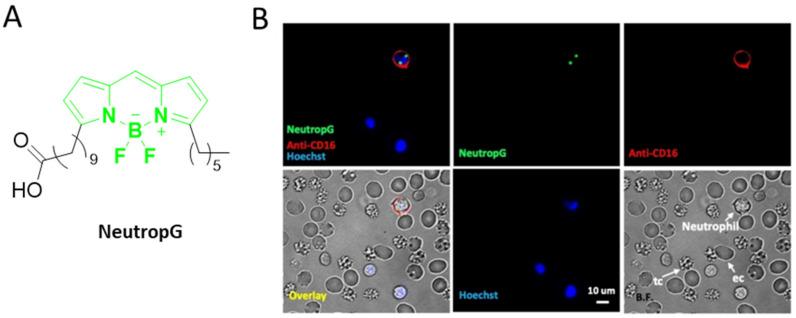
Chemical probes can be used to understand the complex biological nature of diseases. Due to the diversity of cancer types and dynamic regulatory pathways involved in the disease, there is a need to identify signaling pathways and associated proteins or enzymes that are traceable or detectable in tests for cancer diagnosis and treatment. Currently, fluorogenic chemical probes are widely used to detect cancer-associated proteins and their binding partners. These probes are also applicable in photodynamic therapy to determine drug efficacy and monitor regulating factors. In this review, we discuss the synthesis of chemical probes for different cancer types from 2016 to the present time and their application in monitoring the activity of transferases, hydrolases, deacetylases, oxidoreductases, and immune cells. Moreover, we elaborate on their potential roles in photodynamic therapy.
化学探针可用于了解疾病的复杂生物学特性。由于癌症类型的多样性和疾病中涉及的动态调控途径,因此需要鉴定在癌症诊断和治疗测试中可追踪或可检测的信号通路以及相关的蛋白质或酶。目前,荧光化学探针被广泛用于检测与癌症相关的蛋白质及其结合伴侣。这些探针还适用于光动力疗法,以确定药物疗效并监测调节因子。在本综述中,我们讨论了 2016 年至今不同类型癌症的化学探针的合成及其在监测转移酶、水解酶、脱乙酰酶、氧化还原酶和免疫细胞活性方面的应用。此外,我们还详细阐述了它们在光动力疗法中的潜在作用。


 Zotero 插件