
建立加速度计切点以分类脑卒中后患者的行走速度。
Establishing Accelerometer Cut-Points to Classify Walking Speed in People Post Stroke.
机构信息
Division of Physiotherapy, Department of Neurobiology, Care Sciences and Society, Karolinska Institutet, 141 83 Stockholm, Sweden.
Women's Health and Allied Health Professionals Theme, Medical Unit Occupational Therapy and Physiotherapy, Karolinska University Hospital, 171 64 Stockholm, Sweden.
出版信息
Sensors (Basel). 2022 May 27;22(11):4080. doi: 10.3390/s22114080.
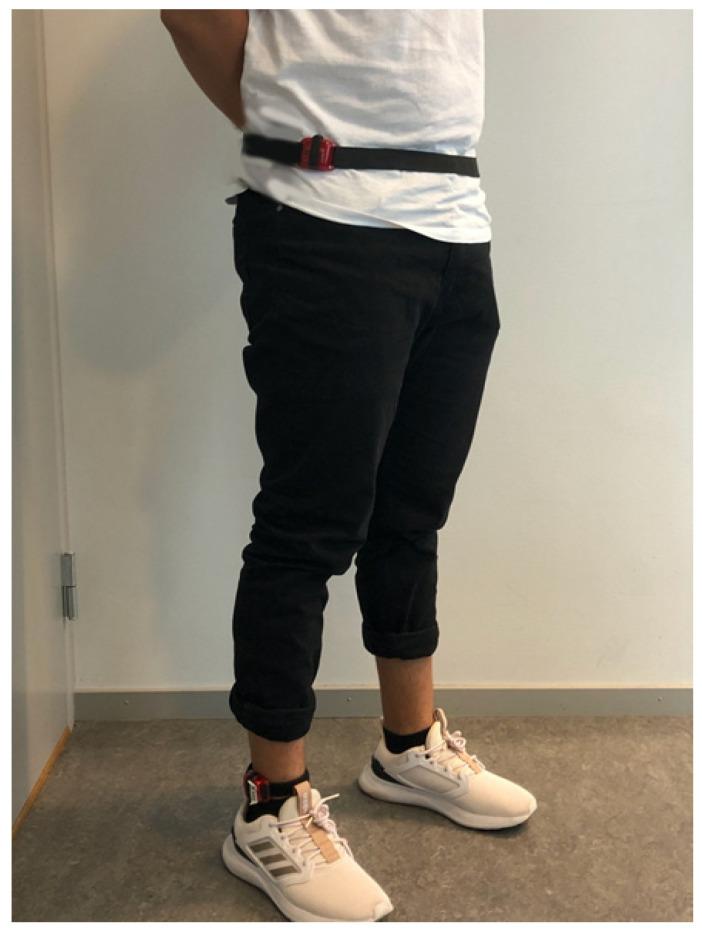
While accelerometers could be used to monitor important domains of walking in daily living (e.g., walking speed), the interpretation of accelerometer data often relies on validation studies performed with healthy participants. The aim of this study was to develop cut-points for waist- and ankle-worn accelerometers to differentiate non-ambulation from walking and different walking speeds in people post stroke. Forty-two post-stroke persons wore waist and ankle accelerometers (ActiGraph GT3x+, AG) while performing three non-ambulation activities (i.e., sitting, setting the table and washing dishes) and while walking in self-selected and brisk speeds. Receiver operating characteristic (ROC) curve analysis was used to define AG cut-points for non-ambulation and different walking speeds (0.41−0.8 m/s, 0.81−1.2 m/s and >1.2 m/s) by considering sensor placement, axis, filter setting and epoch length. Optimal data input and sensor placements for measuring walking were a vector magnitude at 15 s epochs for waist- and ankle-worn AG accelerometers, respectively. Across all speed categories, cut-point classification accuracy was good-to-excellent for the ankle-worn AG accelerometer and fair-to-excellent for the waist-worn AG accelerometer, except for between 0.81 and 1.2 m/s. These cut-points can be used for investigating the link between walking and health outcomes in people post stroke.
虽然加速度计可用于监测日常生活中行走的重要领域(例如,行走速度),但加速度计数据的解释通常依赖于在健康参与者中进行的验证研究。本研究的目的是为佩戴在腰部和脚踝上的加速度计制定区分非步行和中风后患者不同步行速度的切点。42 名中风后患者佩戴腰部和脚踝加速度计(ActiGraph GT3x+,AG),同时进行三种非步行活动(即坐着、摆放餐桌和洗碗)以及以自我选择和轻快的速度行走。使用接收器操作特性(ROC)曲线分析,通过考虑传感器位置、轴、滤波器设置和时间长度,为非步行和不同步行速度(0.41-0.8 m/s、0.81-1.2 m/s 和>1.2 m/s)定义 AG 切点。测量行走的最佳数据输入和传感器位置分别为腰部和脚踝佩戴的 AG 加速度计的 15 秒时间间隔的向量幅度。在所有速度类别中,脚踝佩戴的 AG 加速度计的切点分类准确性为良好到优秀,腰部佩戴的 AG 加速度计的切点分类准确性为一般到优秀,除了在 0.81-1.2 m/s 之间。这些切点可用于研究中风后患者行走与健康结果之间的联系。

 Zotero 插件