
在缴获的材料中鉴定出合成大麻素类新精神活性物质 CH-PIACA。
Identification of the synthetic cannabinoid-type new psychoactive substance, CH-PIACA, in seized material.
机构信息
Section of Forensic Chemistry, Department of Forensic Medicine, Faculty of Health and Medical Sciences, University of Copenhagen, Copenhagen, Denmark.
Department of Chemistry, University of Copenhagen, Copenhagen, Denmark.
出版信息
Drug Test Anal. 2022 Sep;14(9):1645-1651. doi: 10.1002/dta.3333. Epub 2022 Jun 16.
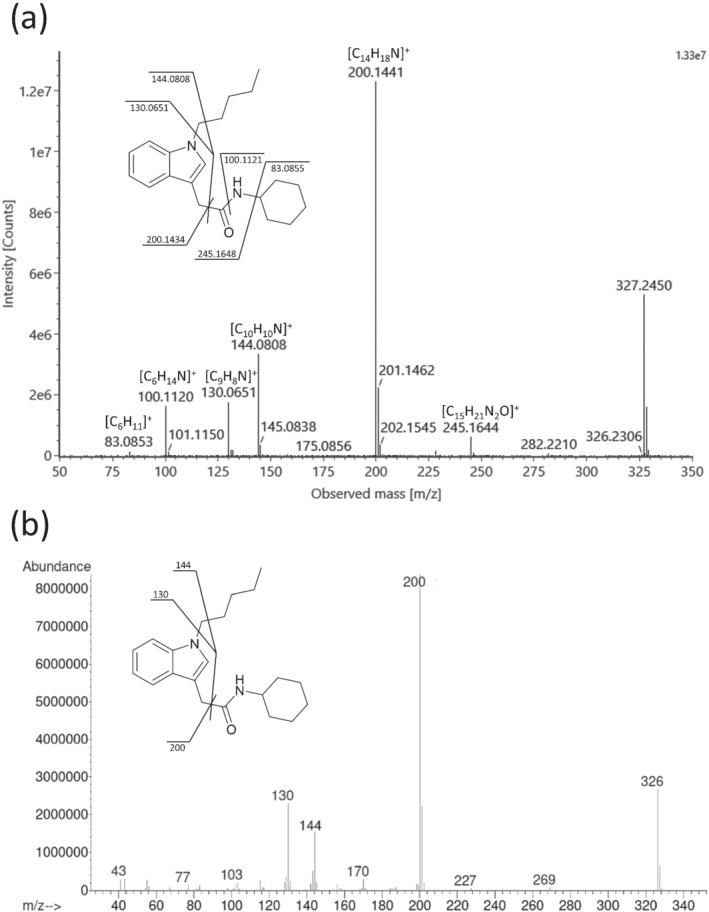
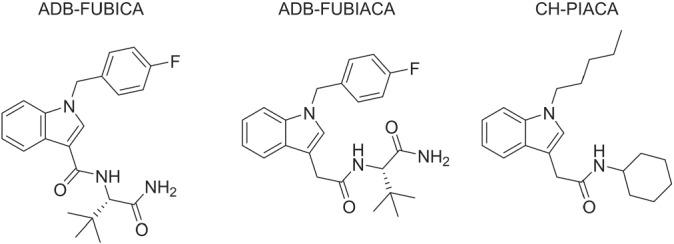
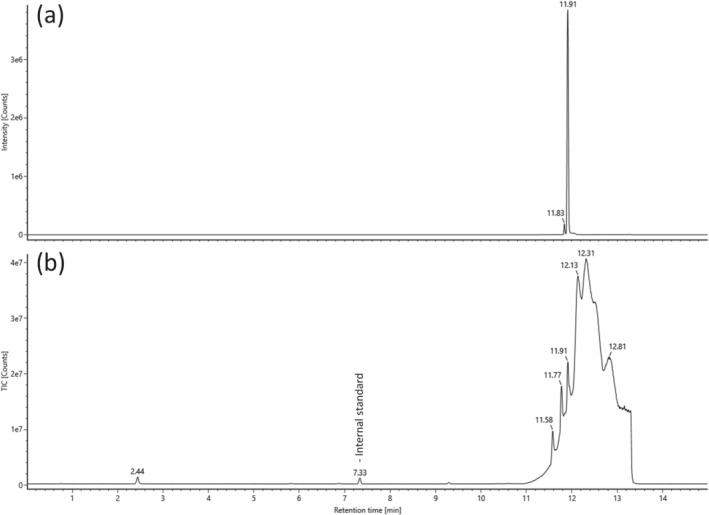
Synthetic cannabinoids (SCs) remain the largest class of new psychoactive substances (NPS), and while the number of NPS that are reported to the European Monitoring Centre for Drugs and Drug Addiction (EMCDDA) for the first time each year declines, the number of newly reported SCs still exceeds other NPS classes. This decline can be seen as a result of legislative changes by different jurisdictions which have sometimes transitioned to a more generalized approach when controlling substances by defining common structural scaffolds rather than explicit structures. While the consequences of such legislative changes have been expected over the years, the introduction of so-called "class-wide" bans puts further pressure on clandestine laboratories to synthesize compounds which are out of the scope of the legislation, and thus, these compounds are initially harder to detect and/or identify in the absence of analytical data. Recently, a SC with an indole-3-acetamide core-linker scaffold, AD-18 (i.e., ADB-FUBIATA or ADB-FUBIACA), was reported for the first time in China in 2021. Here, an additional cannabinoid with the indole-3-acetamide scaffold, N-cyclohexyl-2-(1-pentyl-1H-indol-3-yl)acetamide (CH-PIACA), is reported which was identified for the first time in a seized material in Denmark. Structural characterization was performed using gas chromatography-mass spectrometry (GC-MS), liquid chromatography-high-resolution mass spectrometry (LC-HRMS), and nuclear magnetic resonance (NMR) spectroscopy.
合成大麻素(SCs)仍然是新精神活性物质(NPS)中最大的一类,尽管每年向欧洲毒品和毒瘾监测中心(EMCDDA)首次报告的 NPS 数量有所下降,但新报告的 SC 数量仍超过其他 NPS 类别。这种下降可以被视为不同司法管辖区立法变化的结果,这些司法管辖区有时通过定义常见的结构支架而不是明确的结构来控制物质,从而采取了更具一般性的方法。虽然多年来一直预计会产生这种立法变化的后果,但所谓的“全面禁止”的引入给秘密实验室带来了更大的压力,要求它们合成超出立法范围的化合物,因此,在没有分析数据的情况下,这些化合物最初更难检测和/或识别。最近,一种具有吲哚-3-乙酰胺核心连接支架的 SC,AD-18(即 ADB-FUBIATA 或 ADB-FUBIACA),于 2021 年在中国首次报告。在这里,报告了另一种具有吲哚-3-乙酰胺支架的大麻素,N-环己基-2-(1-戊基-1H-吲哚-3-基)乙酰胺(CH-PIACA),这是在丹麦缴获的材料中首次鉴定出的。结构特征使用气相色谱-质谱(GC-MS)、液相色谱-高分辨率质谱(LC-HRMS)和核磁共振(NMR)光谱进行。
 Zotero 插件