
特应性皮炎患者 IgG 自身抗体可诱导嗜碱性粒细胞和肥大细胞释放细胞因子和促炎介质。
IgG Autoantibodies Against IgE from Atopic Dermatitis Can Induce the Release of Cytokines and Proinflammatory Mediators from Basophils and Mast Cells.
机构信息
Department of Translational Medical Sciences, University of Naples Federico II, Naples, Italy.
Center for Basic and Clinical Immunology Research (CISI), University of Naples Federico II, Naples, Italy.
出版信息
Front Immunol. 2022 May 31;13:880412. doi: 10.3389/fimmu.2022.880412. eCollection 2022.
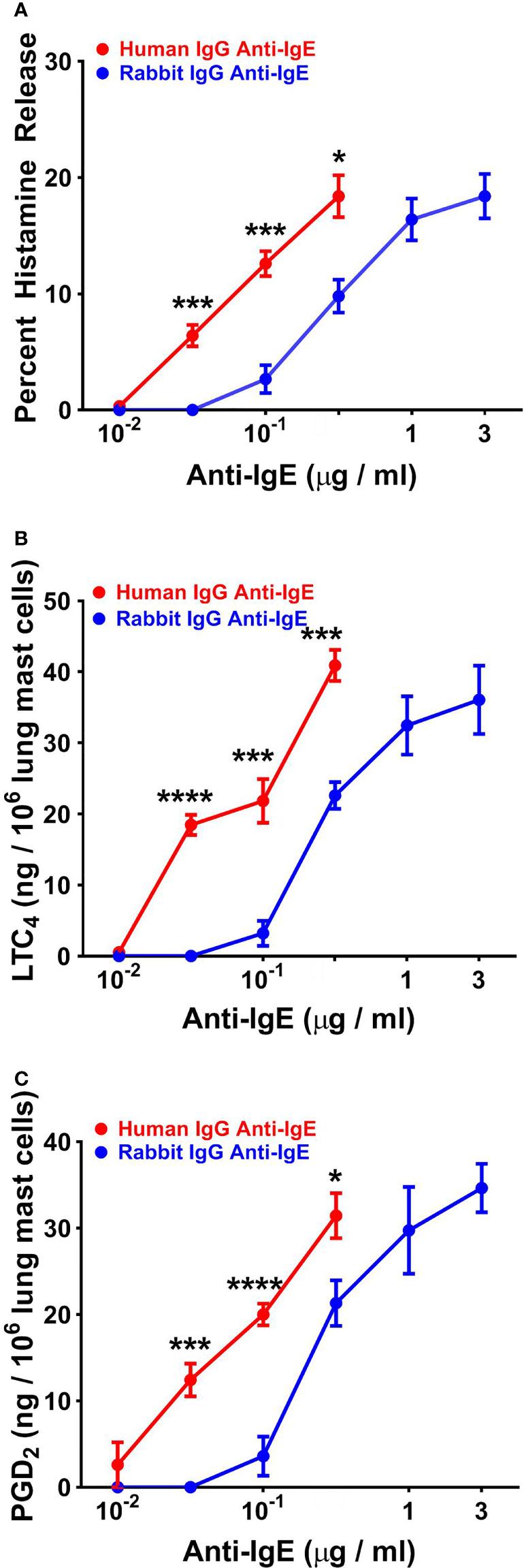
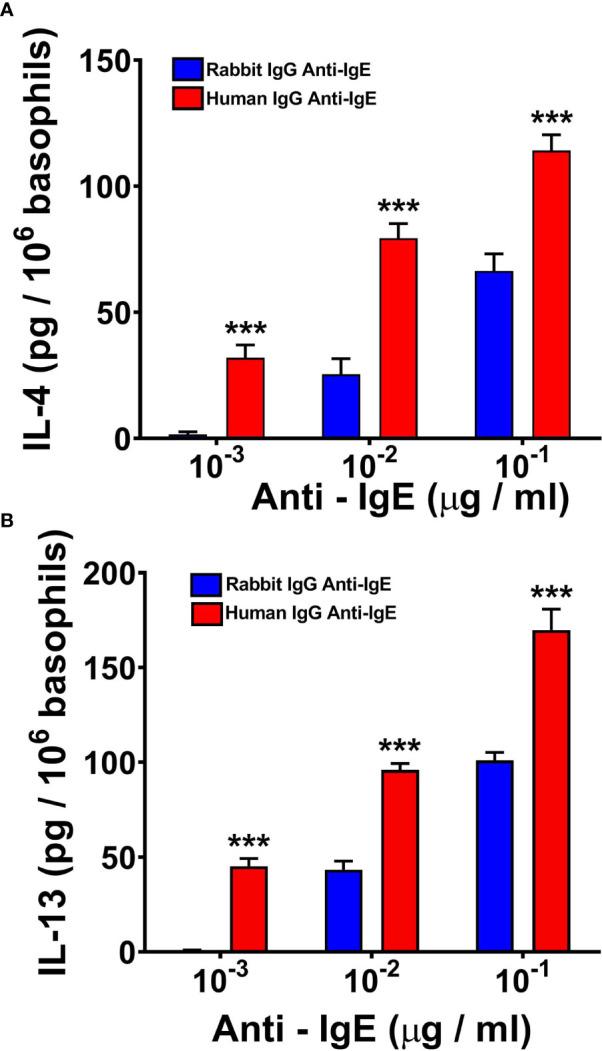
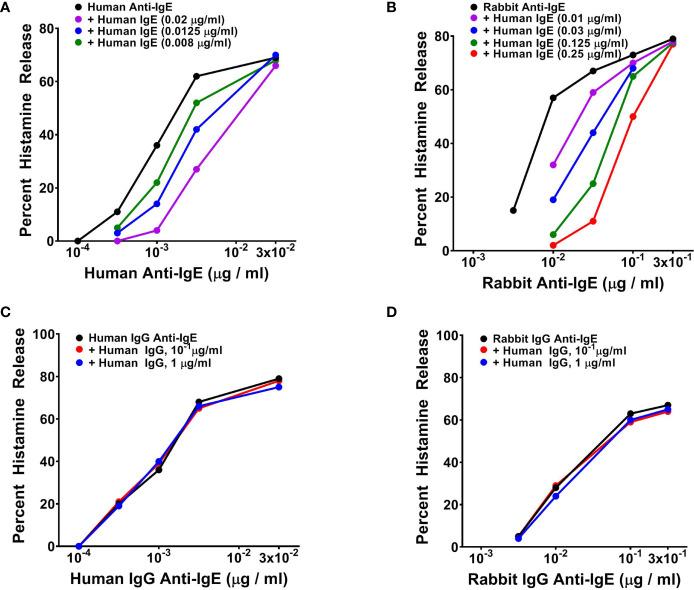
IgE-mediated release of proinflammatory mediators and cytokines from basophils and mast cells is a central event in allergic disorders. Several groups of investigators have demonstrated the presence of autoantibodies against IgE and/or FcεRI in patients with chronic spontaneous urticaria. By contrast, the prevalence and functional activity of anti-IgE autoantibodies in atopic dermatitis (AD) are largely unknown. We evaluated the ability of IgG anti-IgE from patients with AD to induce the IgE-dependent activation of human basophils and skin and lung mast cells. Different preparations of IgG anti-IgE purified from patients with AD and rabbit IgG anti-IgE were compared for their triggering effects on the release of histamine and type 2 cytokines (IL-4, IL-13) from basophils and of histamine and lipid mediators (prostaglandin D and cysteinyl leukotriene C) from human skin and lung mast cells. One preparation of human IgG anti-IgE out of six patients with AD induced histamine release from basophils, skin and lung mast cells. This preparation of human IgG anti-IgE induced the secretion of cytokines and eicosanoids from basophils and mast cells, respectively. Human monoclonal IgE was a competitive antagonist of both human and rabbit IgG anti-IgE. Human anti-IgE was more potent than rabbit anti-IgE for IL-4 and IL-13 production by basophils and histamine, prostaglandin D and leukotriene C release from mast cells. Functional anti-IgE autoantibodies rarely occur in patients with AD. When present, they induce the release of proinflammatory mediators and cytokines from basophils and mast cells, thereby possibly contributing to sustained IgE-dependent inflammation in at least a subset of patients with this disorder.
免疫球蛋白 E(IgE)介导的嗜碱性粒细胞和肥大细胞中前炎性介质和细胞因子的释放,是过敏疾病的一个核心事件。几组研究人员已经证明,在慢性自发性荨麻疹患者中存在针对 IgE 和/或 FcεRI 的自身抗体。相比之下,特应性皮炎(AD)中抗 IgE 自身抗体的患病率和功能活性在很大程度上是未知的。我们评估了来自 AD 患者的 IgG 抗 IgE 诱导人嗜碱性粒细胞以及皮肤和肺肥大细胞 IgE 依赖性激活的能力。比较了从 AD 患者和兔 IgG 抗 IgE 中纯化的不同 IgG 抗 IgE 制剂对嗜碱性粒细胞释放组胺和 2 型细胞因子(IL-4、IL-13)以及人皮肤和肺肥大细胞释放组胺和脂类介质(前列腺素 D 和半胱氨酰白三烯 C)的触发作用。在 6 名 AD 患者中,有 1 种 IgG 抗 IgE 制剂能够诱导嗜碱性粒细胞、皮肤和肺肥大细胞释放组胺。该 IgG 抗 IgE 制剂能够诱导细胞因子和类二十烷酸从嗜碱性粒细胞和肥大细胞中分别分泌。人单克隆 IgE 是人和兔 IgG 抗 IgE 的竞争性拮抗剂。对于嗜碱性粒细胞产生的细胞因子和组胺、前列腺素 D 和白三烯 C 从肥大细胞中释放,人抗 IgE 比兔抗 IgE 更为有效。AD 患者中很少出现功能性抗 IgE 自身抗体。当存在时,它们会诱导嗜碱性粒细胞和肥大细胞释放前炎性介质和细胞因子,从而可能导致至少一部分此类疾病患者持续的 IgE 依赖性炎症。


 Zotero 插件