
过敏和哮喘研究中的组学技术:一项 EAACI 立场文件。
Omics technologies in allergy and asthma research: An EAACI position paper.
机构信息
Swiss Institute of Allergy and Asthma Research (SIAF), University of Zurich, Davos, Switzerland.
Christine-Kühne Center for Allergy Research and Education (CK-CARE), Davos, Switzerland.
出版信息
Allergy. 2022 Oct;77(10):2888-2908. doi: 10.1111/all.15412. Epub 2022 Jun 30.
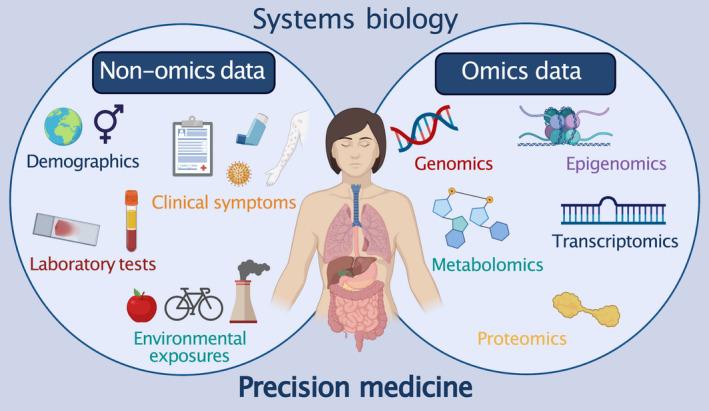
Allergic diseases and asthma are heterogenous chronic inflammatory conditions with several distinct complex endotypes. Both environmental and genetic factors can influence the development and progression of allergy. Complex pathogenetic pathways observed in allergic disorders present a challenge in patient management and successful targeted treatment strategies. The increasing availability of high-throughput omics technologies, such as genomics, epigenomics, transcriptomics, proteomics, and metabolomics allows studying biochemical systems and pathophysiological processes underlying allergic responses. Additionally, omics techniques present clinical applicability by functional identification and validation of biomarkers. Therefore, finding molecules or patterns characteristic for distinct immune-inflammatory endotypes, can subsequently influence its development, progression, and treatment. There is a great potential to further increase the effectiveness of single omics approaches by integrating them with other omics, and nonomics data. Systems biology aims to simultaneously and longitudinally understand multiple layers of a complex and multifactorial disease, such as allergy, or asthma by integrating several, separated data sets and generating a complete molecular profile of the condition. With the use of sophisticated biostatistics and machine learning techniques, these approaches provide in-depth insight into individual biological systems and will allow efficient and customized healthcare approaches, called precision medicine. In this EAACI Position Paper, the Task Force "Omics technologies in allergic research" broadly reviewed current advances and applicability of omics techniques in allergic diseases and asthma research, with a focus on methodology and data analysis, aiming to provide researchers (basic and clinical) with a desk reference in the field. The potential of omics strategies in understanding disease pathophysiology and key tools to reach unmet needs in allergy precision medicine, such as successful patients' stratification, accurate disease prognosis, and prediction of treatment efficacy and successful prevention measures are highlighted.
变应性疾病和哮喘是具有多种不同复杂表型的异质性慢性炎症性疾病。环境和遗传因素均可影响过敏的发生和发展。在变应性疾病中观察到的复杂发病途径给患者管理和成功的靶向治疗策略带来了挑战。高通量组学技术(如基因组学、表观基因组学、转录组学、蛋白质组学和代谢组学)的日益普及,使得研究过敏反应的生化系统和病理生理过程成为可能。此外,组学技术通过功能鉴定和验证生物标志物具有临床适用性。因此,寻找具有独特免疫炎症表型特征的分子或模式,可以影响其发生、发展和治疗。通过将单一组学方法与其他组学和非组学数据相结合,进一步提高其有效性具有巨大潜力。系统生物学旨在通过整合多个分离的数据组并生成该疾病的完整分子图谱,同时从多个层面和纵向来理解复杂和多因素疾病,如过敏或哮喘。通过使用复杂的生物统计学和机器学习技术,这些方法深入了解个体的生物系统,并将允许有效的、定制化的医疗保健方法,即精准医疗。在这份 EAACI 立场文件中,“组学技术在变应性研究中的应用”工作组广泛回顾了组学技术在变应性疾病和哮喘研究中的当前进展和适用性,重点介绍了方法学和数据分析,旨在为研究人员(基础和临床)提供该领域的参考手册。强调了组学策略在理解疾病病理生理学方面的潜力,以及在过敏精准医学中满足未满足需求的关键工具,例如成功的患者分层、准确的疾病预后、治疗效果预测和成功的预防措施。


 Zotero 插件