
mRNA 疫苗:癌症免疫治疗新时代的曙光。
mRNA Vaccines: The Dawn of a New Era of Cancer Immunotherapy.
机构信息
Department of Infectious Diseases, The Fifth Medical Center of PLA General Hospital, Beijing, China.
Department of Microbial Pathogenesis and Immunology, College of Medicine, Texas A&M University, Bryan, TX, United States.
出版信息
Front Immunol. 2022 Jun 2;13:887125. doi: 10.3389/fimmu.2022.887125. eCollection 2022.
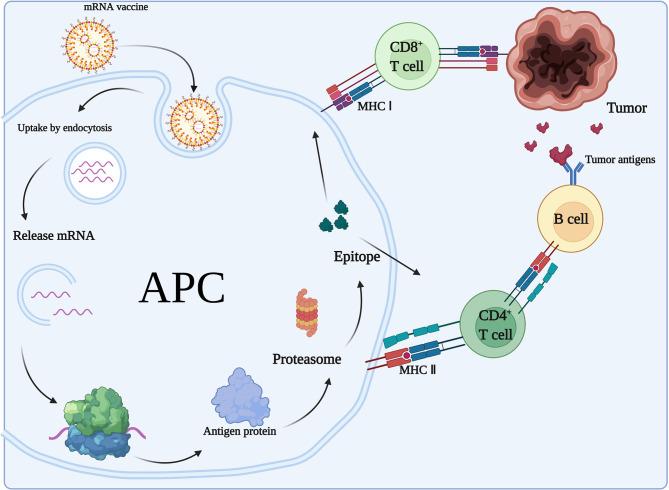
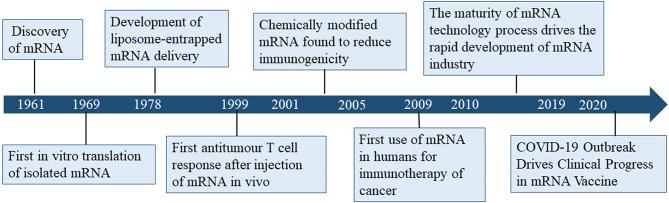
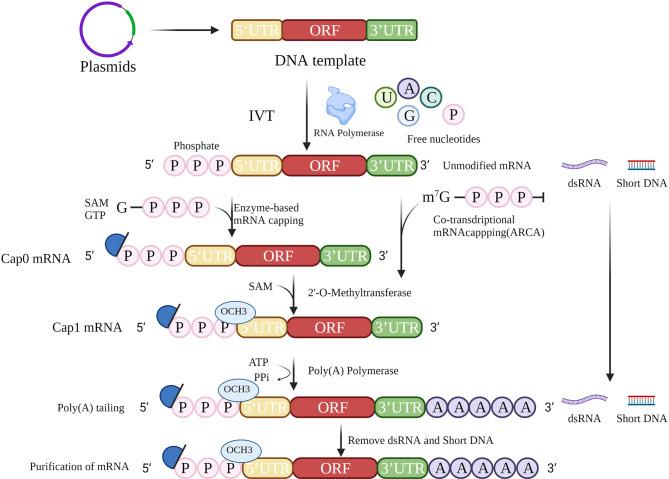
mRNA therapy is a novel anticancer strategy based on transcription (IVT), which has potential for the treatment of malignant tumors. The outbreak of the COVID-19 pandemic in the early 21st century has promoted the application of mRNA technologies in SARS-CoV-2 vaccines, and there has been a great deal of interest in the research and development of mRNA cancer vaccines. There has been progress in a number of key technologies, including mRNA production strategies, delivery systems, antitumor immune strategies, etc. These technologies have accelerated the progress and clinical applications of mRNA therapy, overcoming problems encountered in the past, such as instability, inefficient delivery, and weak immunogenicity of mRNA vaccines. This review provides a detailed overview of the production, delivery systems, immunological mechanisms, and antitumor immune response strategies for mRNA cancer vaccines. We list some mRNA cancer vaccines that are candidates for cancer treatment and discuss clinical trials in the field of tumor immunotherapy. In addition, we discuss the immunological mechanism of action by which mRNA vaccines destroy tumors as well as challenges and prospects for the future.
mRNA 疗法是一种基于转录(IVT)的新型抗癌策略,具有治疗恶性肿瘤的潜力。21 世纪初 COVID-19 疫情的爆发推动了 mRNA 技术在 SARS-CoV-2 疫苗中的应用,人们对 mRNA 癌症疫苗的研究和开发产生了极大的兴趣。在 mRNA 生产策略、递送系统、抗肿瘤免疫策略等方面取得了一些关键技术的进展。这些技术加速了 mRNA 治疗的进展和临床应用,克服了过去遇到的问题,如 mRNA 疫苗的不稳定性、低效递送和弱免疫原性。本文详细综述了 mRNA 癌症疫苗的生产、递送系统、免疫机制和抗肿瘤免疫反应策略。我们列出了一些作为癌症治疗候选物的 mRNA 癌症疫苗,并讨论了肿瘤免疫治疗领域的临床试验。此外,我们还讨论了 mRNA 疫苗破坏肿瘤的免疫作用机制以及未来面临的挑战和前景。

 Zotero 插件