
一种赖氨酸生物合成的双靶标除草剂抑制剂。
A dual-target herbicidal inhibitor of lysine biosynthesis.
机构信息
Department of Biochemistry and Genetics, La Trobe Institute for Molecular Science, La Trobe University, Bundoora, Australia.
School of Agriculture, Food and Wine, Waite Research Institute, The University of Adelaide, Waite Campus, Glen Osmond, Australia.
出版信息
Elife. 2022 Jun 20;11:e78235. doi: 10.7554/eLife.78235.
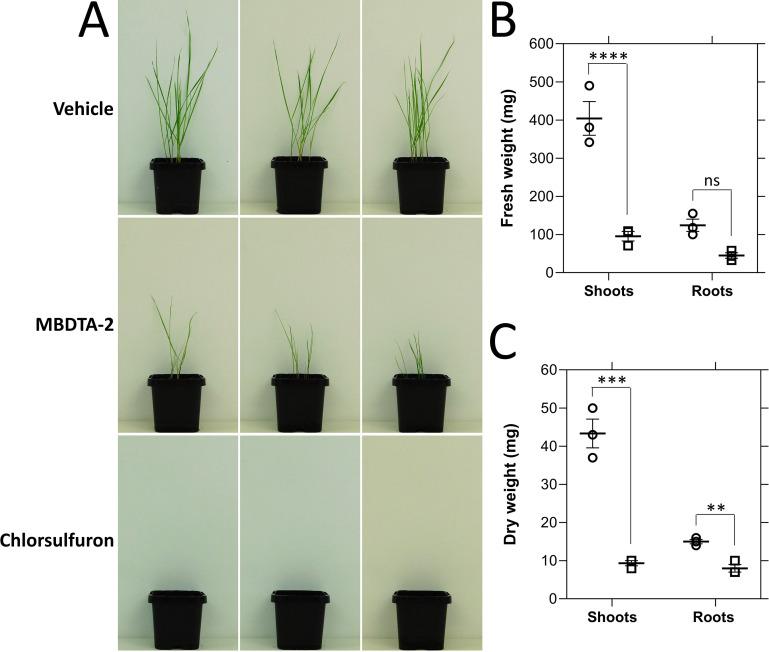
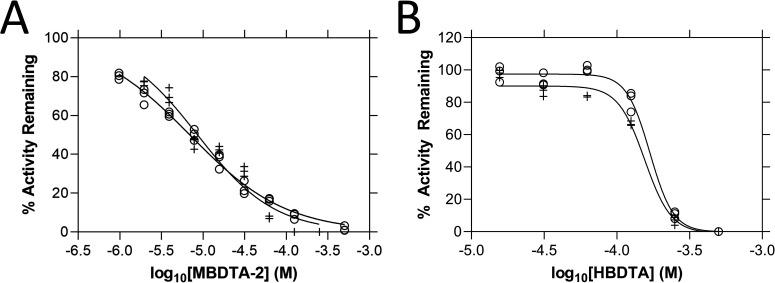
Herbicides with novel modes of action are urgently needed to safeguard global agricultural industries against the damaging effects of herbicide-resistant weeds. We recently developed the first herbicidal inhibitors of lysine biosynthesis, which provided proof-of-concept for a promising novel herbicide target. In this study, we expanded upon our understanding of the mode of action of herbicidal lysine biosynthesis inhibitors. We previously postulated that these inhibitors may act as proherbicides. Here, we show this is not the case. We report an additional mode of action of these inhibitors, through their inhibition of a second lysine biosynthesis enzyme, and investigate the molecular determinants of inhibition. Furthermore, we extend our herbicidal activity analyses to include a weed species of global significance.
新型作用模式的除草剂迫切需要,以保护全球农业产业免受抗除草剂杂草的破坏。我们最近开发了第一批赖氨酸生物合成的除草剂抑制剂,为一个有前途的新型除草剂靶标提供了概念验证。在这项研究中,我们扩展了对除草剂赖氨酸生物合成抑制剂作用模式的理解。我们之前假设这些抑制剂可能作为前体除草剂起作用。在这里,我们证明事实并非如此。我们报告了这些抑制剂的另一种作用模式,即通过抑制第二种赖氨酸生物合成酶。此外,我们还将除草剂活性分析扩展到包括一种具有全球重要意义的杂草物种。



 Zotero 插件