
基于结构的虚拟筛选、分子动力学模拟和 MM-PBSA 方法对 B.1.617.2(德尔塔)、AY.1(德尔塔加)和 C.37(拉姆达)SARS-CoV-2 变异株关键刺突突变进行计算重利用的方法。
Computational repurposing approach for targeting the critical spike mutations in B.1.617.2 (delta), AY.1 (delta plus) and C.37 (lambda) SARS-CoV-2 variants using exhaustive structure-based virtual screening, molecular dynamic simulations and MM-PBSA methods.
机构信息
Department of Plant Biology, Faculty of Biological Sciences, Kharazmi University, Tehran, Iran.
Department of Cell and Molecular Biology, Faculty of Biological Sciences, Kharazmi University, Tehran, Iran.
出版信息
Comput Biol Med. 2022 Aug;147:105709. doi: 10.1016/j.compbiomed.2022.105709. Epub 2022 Jun 7.
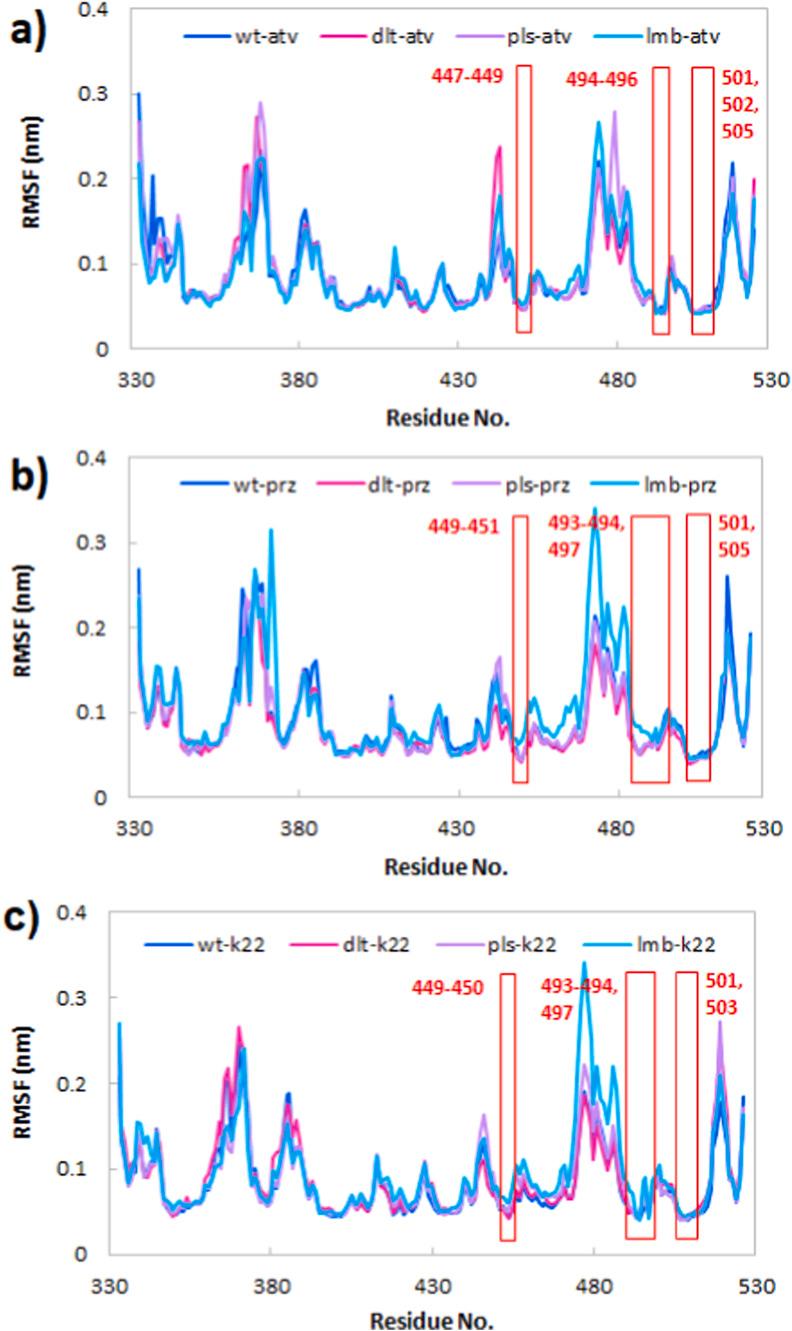
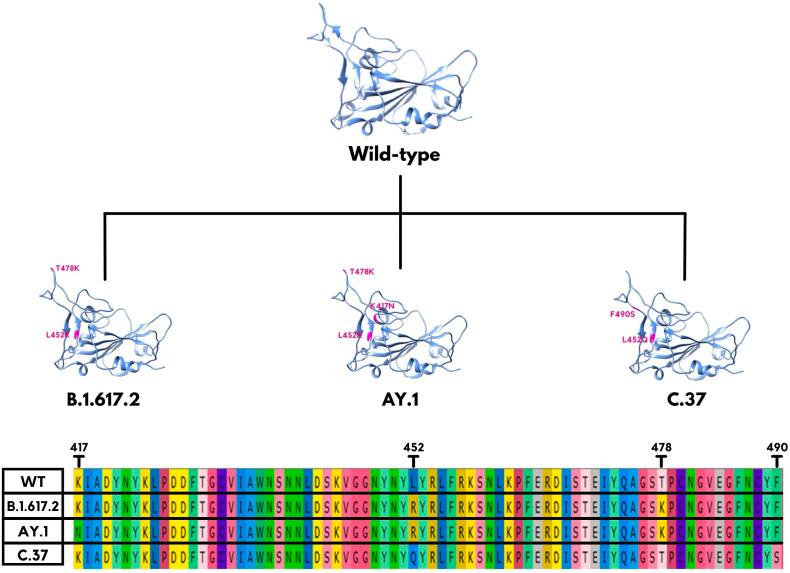
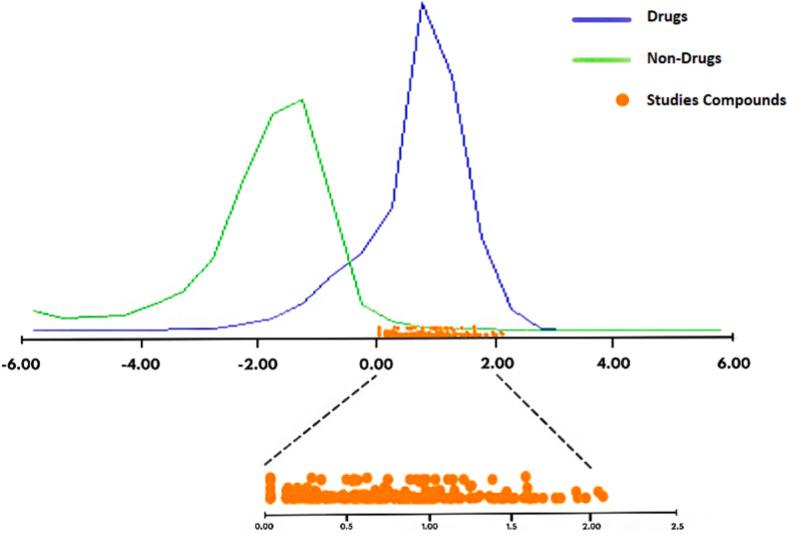
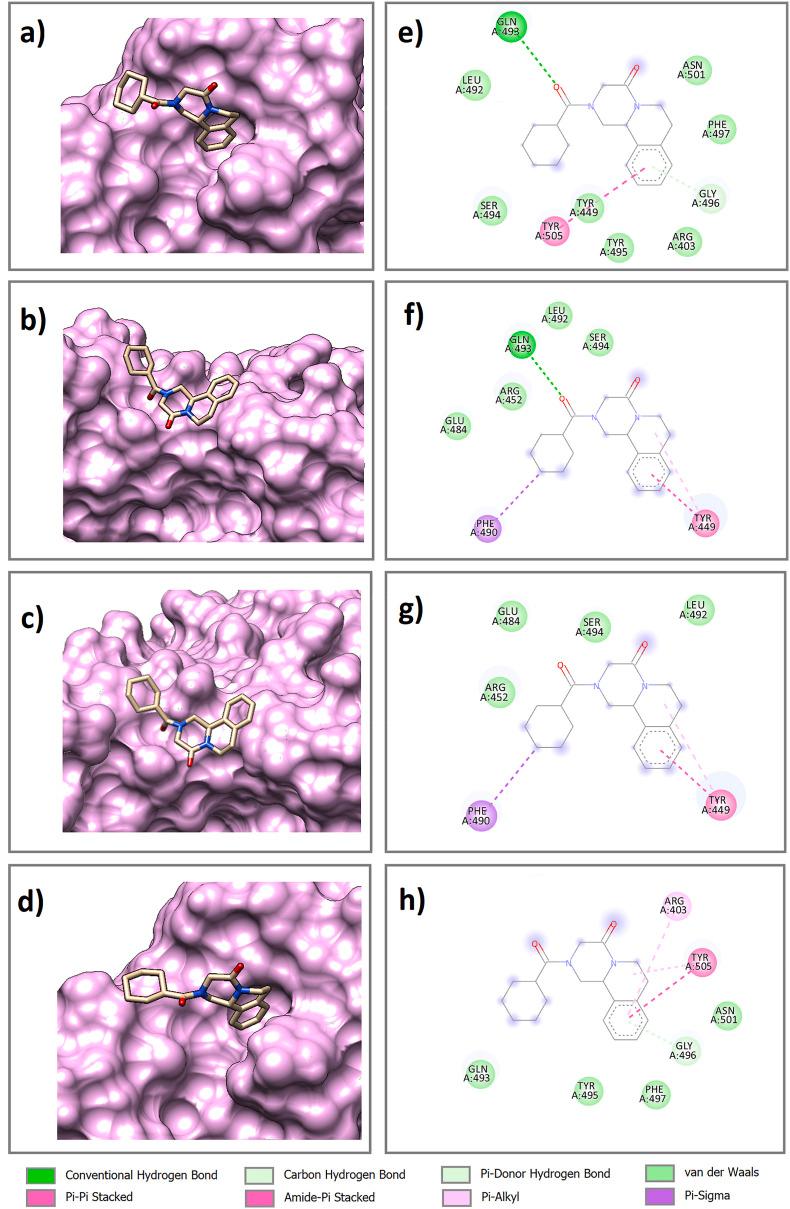
Severe acute respiratory syndrome coronavirus 2 (SARS-CoV-2) is the causative agent of the contagious coronavirus disease 2019 (COVID-19) which was first identified in Wuhan, China, in December 2019. Around the world, many researchers focused their research on identifying inhibitors against the druggable SARS-CoV-2 targets. The reported genomic mutations have a direct effect on the receptor-binding domain (RBD), which interacts with host angiotensin-converting enzyme 2 (ACE-2) for viral cell entry. These mutations, some of which are variants of concern (VOC), lead to increased morbidity and mortality rates. The newest variants including B.1.617.2 (Delta), AY.1 (Delta plus), and C.37 (Lambda) were considered in this study. Thus, an exhaustive structure-based virtual screening of a ligand library (in which FDA approved drugs are also present) using the drug-likeness screening, molecular docking, ADMET profiling was performed followed by molecular dynamics (MD) simulation, and Molecular Mechanics-Poisson Boltzmann Surface Area (MM-PBSA) calculation to identify compounds or drugs can be repurposed for inhibiting the wild type, Delta, Delta plus and Lambda variants of RBD of the spike protein. Based on the virtual screening steps, two FDA approved drugs, Atovaquone (atv) and Praziquantel (prz), were selected and repurposed as the best candidates of SARS-CoV-2 RBD inhibitors. Molecular docking results display that both atv and prz contribute in different interaction with binding site residues (Gln493, Asn501 and Gly502 in the hydrogen bond formation, Phe490 and Tyr505 in the π- π stacking and Tyr449, Ser494, and Phe497 in the vdW interactions) in the wild type, Delta, Delta plus and Lambda variants of RBD of the spike protein. MD simulations revealed that among the eight studied complexes, the wild type-atv and Delta-prz complexes have the most structural stability over the simulation time. Furthermore, MM-PBSA calculation showed that in the atv containing complexes, highest binding affinity is related to the wild type-atv complex and in the prz containing complexes, it is related to the Delta-prz complex. The validation of docking results was done by comparing with experimental data (heparin in complex with wild type and Delta variants). Also, comparison of the obtained results with the result of simulation of the k22 with the studied proteins showed that atv and prz are suitable inhibitors for these proteins, especially wild type t and Delta variant, respectively. Thus, we found that atv and prz are the best candidate for inhibition of wild type and Delta variant of the spike protein. Also, atv can be an appropriate inhibitor for the Lambda variant. Obtained in silico results may help the development of new anti-COVID-19 drugs.
严重急性呼吸系统综合症冠状病毒 2(SARS-CoV-2)是传染性冠状病毒病 2019(COVID-19)的病原体,该病毒于 2019 年 12 月在中国武汉首次被发现。在世界范围内,许多研究人员将研究重点放在鉴定针对可成药的 SARS-CoV-2 靶标的抑制剂上。报告的基因组突变直接影响与宿主血管紧张素转化酶 2(ACE-2)相互作用以实现病毒细胞进入的受体结合域(RBD)。这些突变,其中一些是关注的变体(VOC),导致发病率和死亡率的增加。在这项研究中考虑了最新的变体,包括 B.1.617.2(Delta)、AY.1(Delta plus)和 C.37(Lambda)。因此,我们对配体文库(其中也包含 FDA 批准的药物)进行了详尽的基于结构的虚拟筛选,使用药物相似性筛选、分子对接、ADMET 分析,随后进行分子动力学(MD)模拟和分子力学-泊松玻尔兹曼表面积(MM-PBSA)计算,以鉴定可用于抑制野生型、Delta、Delta plus 和 Lambda 变体的 RBD 的化合物或药物。基于虚拟筛选步骤,选择了两种 FDA 批准的药物阿托伐醌(atv)和吡喹酮(prz),并将其重新用作 SARS-CoV-2 RBD 抑制剂的最佳候选药物。分子对接结果显示,atv 和 prz 都与 RBD 的野生型、Delta、Delta plus 和 Lambda 变体的结合位点残基(氢键形成中的 Gln493、Asn501 和 Gly502,π-π 堆积中的 Phe490 和 Tyr505,以及 vdW 相互作用中的 Tyr449、Ser494 和 Phe497)不同程度地相互作用。MD 模拟表明,在所研究的八个复合物中,野生型-atv 和 Delta-prz 复合物在整个模拟时间内具有最高的结构稳定性。此外,MM-PBSA 计算表明,在含 atv 的复合物中,最高的结合亲和力与野生型-atv 复合物有关,而在含 prz 的复合物中,与 Delta-prz 复合物有关。对接结果的验证是通过与实验数据(肝素与野生型和 Delta 变体的复合物)进行比较来完成的。此外,将所得结果与研究蛋白的 k22 模拟结果进行比较表明,atv 和 prz 分别是这些蛋白的合适抑制剂,特别是野生型 t 和 Delta 变体。因此,我们发现 atv 和 prz 是抑制 Spike 蛋白野生型和 Delta 变体的最佳候选药物。此外,atv 也可以作为 Lambda 变体的合适抑制剂。在计算机上获得的结果可能有助于开发新的抗 COVID-19 药物。





 Zotero 插件