
癌症恶病质中心脏重构:功能、结构和代谢的贡献者。
Cardiac Remodeling in Cancer-Induced Cachexia: Functional, Structural, and Metabolic Contributors.
机构信息
Department of Health, Human Performance, and Recreation, Robbins College of Health and Human Sciences, Baylor University, Waco, TX 76706, USA.
Department of Human Sciences and Design, Robbins College of Health and Human Sciences, Baylor University, Waco, TX 76706, USA.
出版信息
Cells. 2022 Jun 15;11(12):1931. doi: 10.3390/cells11121931.
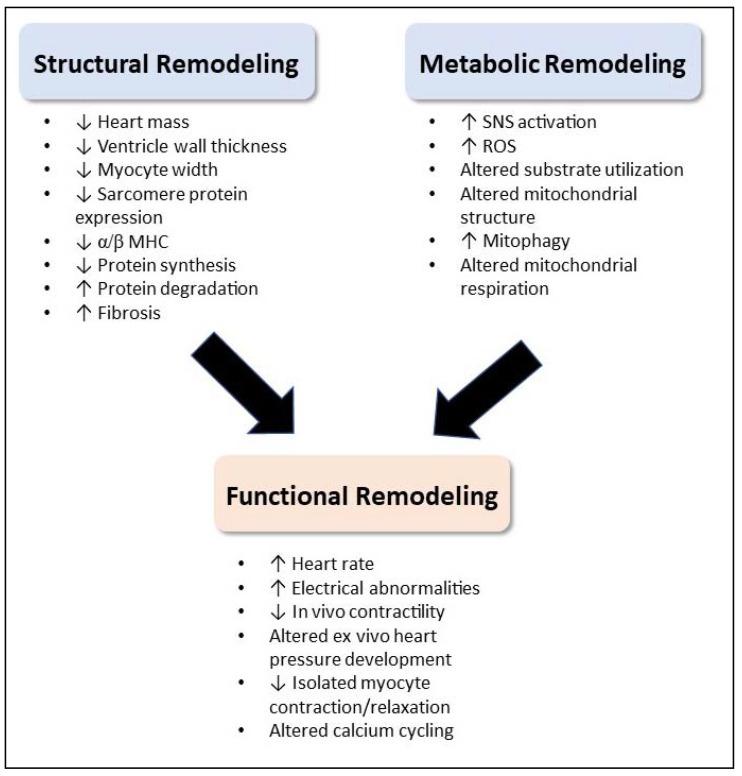
Cancer cachexia is a syndrome of progressive weight loss and muscle wasting occurring in many advanced cancer patients. Cachexia significantly impairs quality of life and increases mortality. Cardiac atrophy and dysfunction have been observed in patients with cachexia, which may contribute to cachexia pathophysiology. However, relative to skeletal muscle, little research has been carried out to understand the mechanisms of cardiomyopathy in cachexia. Here, we review what is known clinically about the cardiac changes occurring in cachexia, followed by further discussion of underlying physiological and molecular mechanisms contributing to cachexia-induced cardiomyopathy. Impaired cardiac contractility and relaxation may be explained by a complex interplay of significant heart muscle atrophy and metabolic remodeling, including mitochondrial dysfunction. Because cardiac muscle has fundamental differences compared to skeletal muscle, understanding cardiac-specific effects of cachexia may bring light to unique therapeutic targets and ultimately improve clinical management for patients with cancer cachexia.
癌症恶病质是一种在许多晚期癌症患者中出现的进行性体重减轻和肌肉消耗综合征。恶病质显著降低生活质量并增加死亡率。在恶病质患者中观察到心脏萎缩和功能障碍,这可能导致恶病质的病理生理学。然而,与骨骼肌相比,对于恶病质中心肌病的机制,几乎没有进行研究。在这里,我们回顾了恶病质中发生的心脏变化的临床知识,然后进一步讨论了导致恶病质诱导性心肌病的潜在生理和分子机制。心脏收缩和舒张功能受损可能是由显著的心肌萎缩和代谢重塑(包括线粒体功能障碍)的复杂相互作用引起的。由于心肌与骨骼肌有根本的不同,了解恶病质对心脏的特定影响可能会为独特的治疗靶点带来曙光,并最终改善癌症恶病质患者的临床管理。


 Zotero 插件