
乳腺癌转移:机制与治疗意义。
Breast Cancer Metastasis: Mechanisms and Therapeutic Implications.
机构信息
Department of Medical and Biological Sciences, The Catholic University of Korea, Bucheon 14662, Korea.
Department of Biotechnology, The Catholic University of Korea, Bucheon 14662, Korea.
出版信息
Int J Mol Sci. 2022 Jun 18;23(12):6806. doi: 10.3390/ijms23126806.
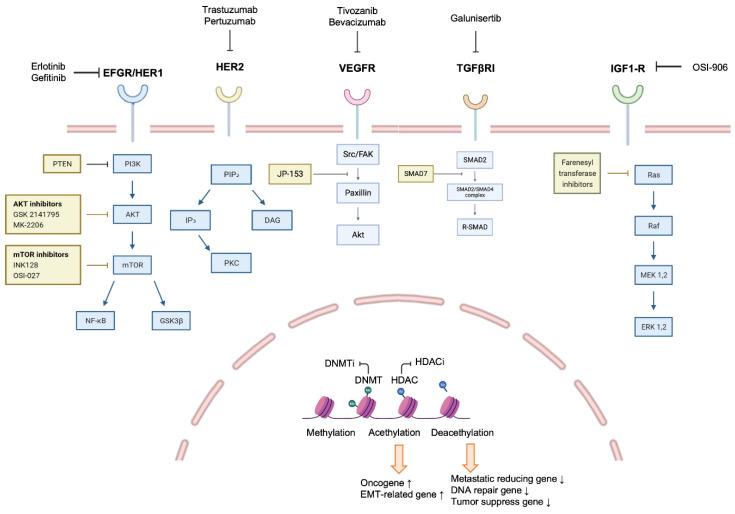
Breast cancer is the most common malignancy in women worldwide. Metastasis is the leading cause of high mortality in most cancers. Although predicting the early stage of breast cancer before metastasis can increase the survival rate, breast cancer is often discovered or diagnosed after metastasis has occurred. In general, breast cancer has a poor prognosis because it starts as a local disease and can spread to lymph nodes or distant organs, contributing to a significant impediment in breast cancer treatment. Metastatic breast cancer cells acquire aggressive characteristics from the tumor microenvironment (TME) through several mechanisms including epithelial-mesenchymal transition (EMT) and epigenetic regulation. Therefore, understanding the nature and mechanism of breast cancer metastasis can facilitate the development of targeted therapeutics focused on metastasis. This review discusses the mechanisms leading to metastasis and the current therapies to improve the early diagnosis and prognosis in patients with metastatic breast cancer.
乳腺癌是全球女性最常见的恶性肿瘤。转移是大多数癌症高死亡率的主要原因。尽管在转移前预测乳腺癌的早期阶段可以提高生存率,但乳腺癌通常在转移发生后才被发现或诊断。一般来说,乳腺癌预后较差,因为它最初是一种局部疾病,可以扩散到淋巴结或远处器官,这对乳腺癌的治疗造成了重大障碍。转移的乳腺癌细胞通过几种机制,包括上皮-间充质转化(EMT)和表观遗传调控,从肿瘤微环境(TME)中获得侵袭性特征。因此,了解乳腺癌转移的性质和机制有助于开发针对转移的靶向治疗。本综述讨论了导致转移的机制以及目前改善转移性乳腺癌患者早期诊断和预后的治疗方法。

 Zotero 插件