
土壤中的草甘膦残留会通过改变叶片质量来改变植物对食草动物的抵抗力。
Glyphosate residues in soil can modify plant resistance to herbivores through changes in leaf quality.
机构信息
Department of Biology, University of Turku, Turku, Finland.
Biodiversity Unit, University of Turku, Turku, Finland.
出版信息
Plant Biol (Stuttg). 2022 Oct;24(6):979-986. doi: 10.1111/plb.13453. Epub 2022 Jul 18.
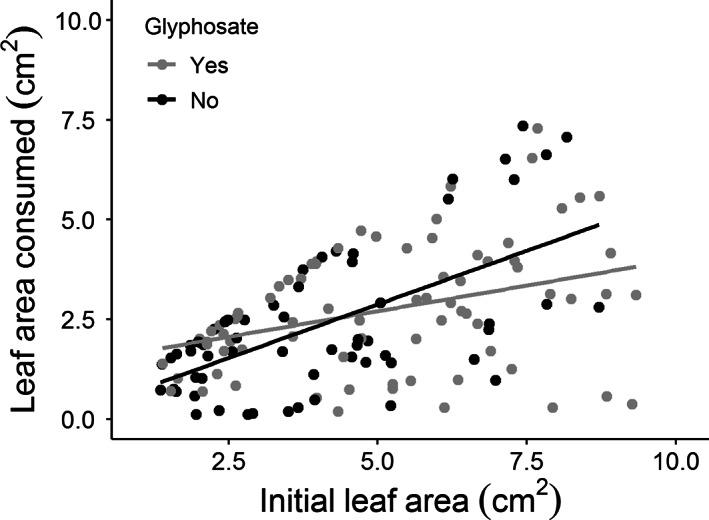
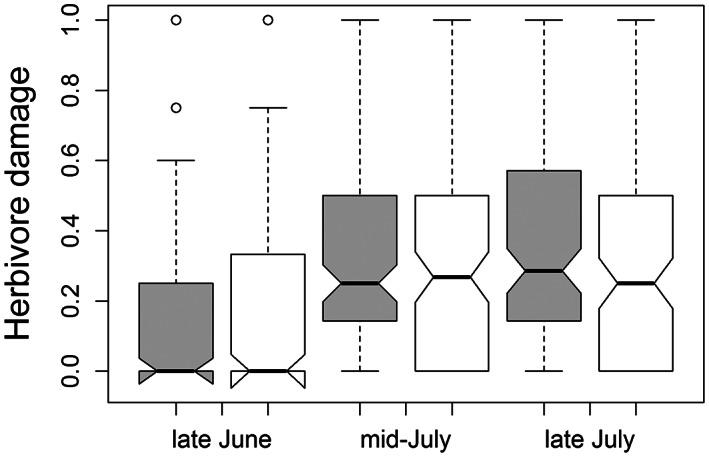
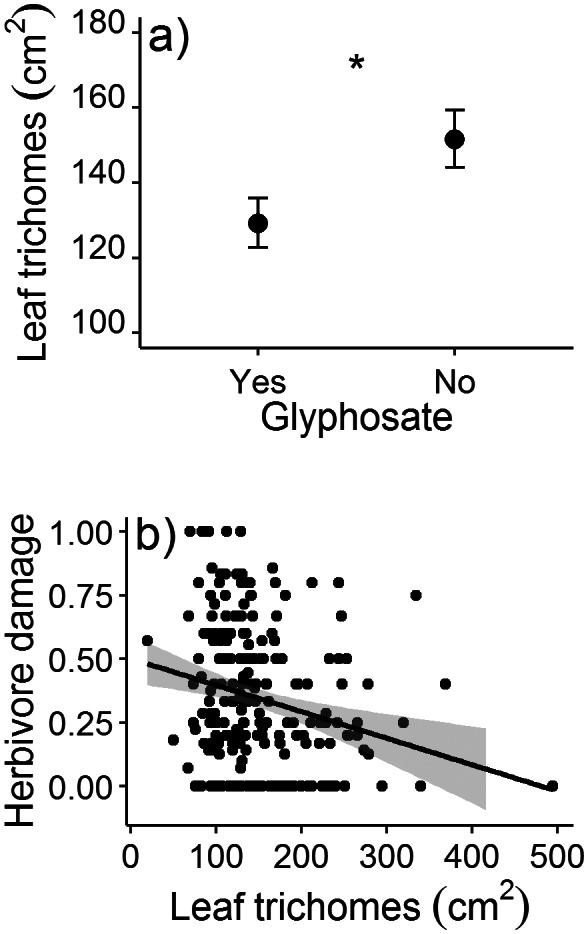
Glyphosate is the most widely used non-selective herbicide in the world. Glyphosate residues in soil can affect plant quality by modifying plant physiology, hormonal pathways and traits, with potential consequences for plants' interactions with herbivores. We explored these indirect effects in the context of plant-herbivore interactions in a perennial, nitrogen-fixing herb. We quantified leaf herbivory for glyphosate-exposed and control plants grown in phosphorus-fertilized and non-fertilized soils, and assessed the impacts of glyphosate treatment on traits related to plant resistance against herbivores (leaf trichome density, leaf mass per area) and performance (aboveground biomass, root:shoot ratio, nodule number, nodule activity). Moreover, we conducted a laboratory feeding experiment to compare the palatability of leaves from glyphosate-exposed and control plants to a generalist mollusc herbivore. Herbivore damage and intensity in situ increased during the growing season regardless of glyphosate or phosphorus treatment. Glyphosate treatment reduced leaf trichome density but had no effect on the other plant traits considered. Herbivore damage was negatively associated with leaf trichome density. The feeding experiment revealed no difference in the feeding probability of mollusc herbivores between glyphosate-exposed and control plants. However, there was an interaction between glyphosate treatment and initial leaf area for leaf consumption by herbivores: leaf consumption increased with increasing leaf area in both groups, but at a lower rate for glyphosate-exposed plants than for control plants. Our results show that glyphosate residues in soil have the potential to indirectly affect aboveground herbivores through changes in leaf quality, which may have mixed consequences for folivore damage.
草甘膦是世界上使用最广泛的非选择性除草剂。土壤中的草甘膦残留会通过改变植物的生理学、激素途径和特性来影响植物的质量,从而对植物与草食动物的相互作用产生潜在影响。我们在一种多年生、固氮草本植物的植物-草食动物相互作用的背景下探索了这些间接影响。我们量化了在磷施肥和非施肥土壤中生长的暴露于草甘膦和对照植物的叶片草食性,评估了草甘膦处理对与植物抗草食动物(叶片表皮毛密度、叶面积比)和性能(地上生物量、根:茎比、根瘤数、根瘤活性)相关的性状的影响。此外,我们进行了一项实验室饲养实验,以比较暴露于草甘膦和对照植物叶片对一种食草软体动物的适口性。无论是否使用草甘膦或磷处理,食草动物的损害和强度在生长季节都在增加。草甘膦处理降低了叶片表皮毛密度,但对其他考虑的植物性状没有影响。食草动物的损害与叶片表皮毛密度呈负相关。饲养实验表明,食草软体动物对暴露于草甘膦和对照植物叶片的取食概率没有差异。然而,食草动物的取食概率与草甘膦处理和初始叶片面积之间存在交互作用:两组叶片的取食量都随叶片面积的增加而增加,但暴露于草甘膦的植物的增加速度低于对照植物。我们的结果表明,土壤中的草甘膦残留有可能通过改变叶片质量间接影响地上草食动物,这可能对食草动物的损害产生混合后果。
 Zotero 插件