
牡荆素通过调节 ROS/ER 应激/NF-B/MAPK 通路缓解乳腺炎。
Vitexin Mitigates -Induced Mastitis via Regulation of ROS/ER Stress/NF-B/MAPK Pathway.
机构信息
Department of Clinical Veterinary Medicine, College of Veterinary Medicine, Huazhong Agricultural University, Wuhan 430070, China.
Department of Clinical Veterinary Medicine, College of Veterinary Medicine, Northeast Agricultural University, Harbin 150030, China.
出版信息
Oxid Med Cell Longev. 2022 Jun 27;2022:7977433. doi: 10.1155/2022/7977433. eCollection 2022.
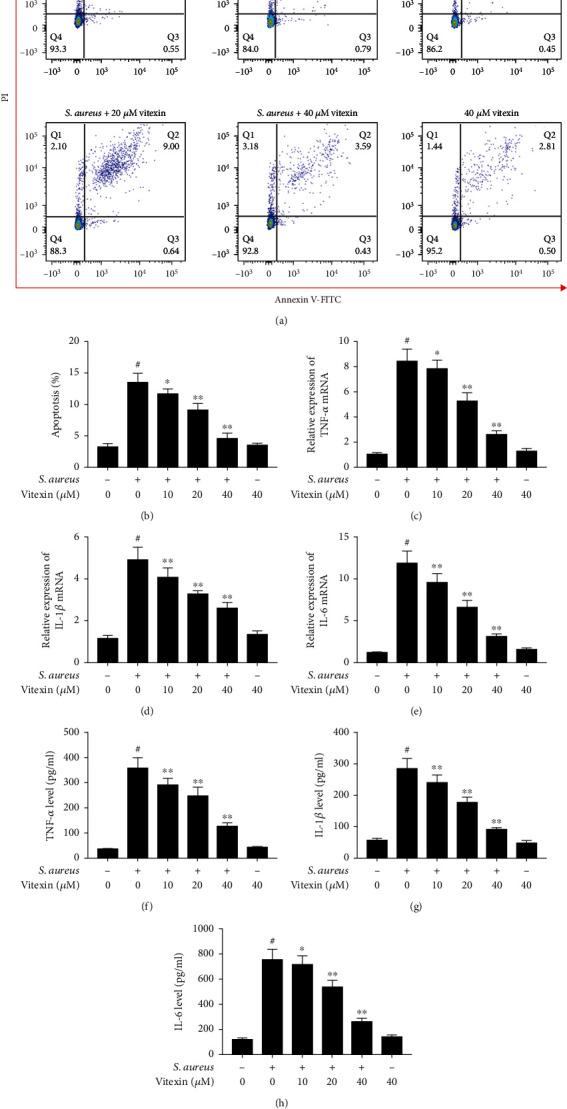
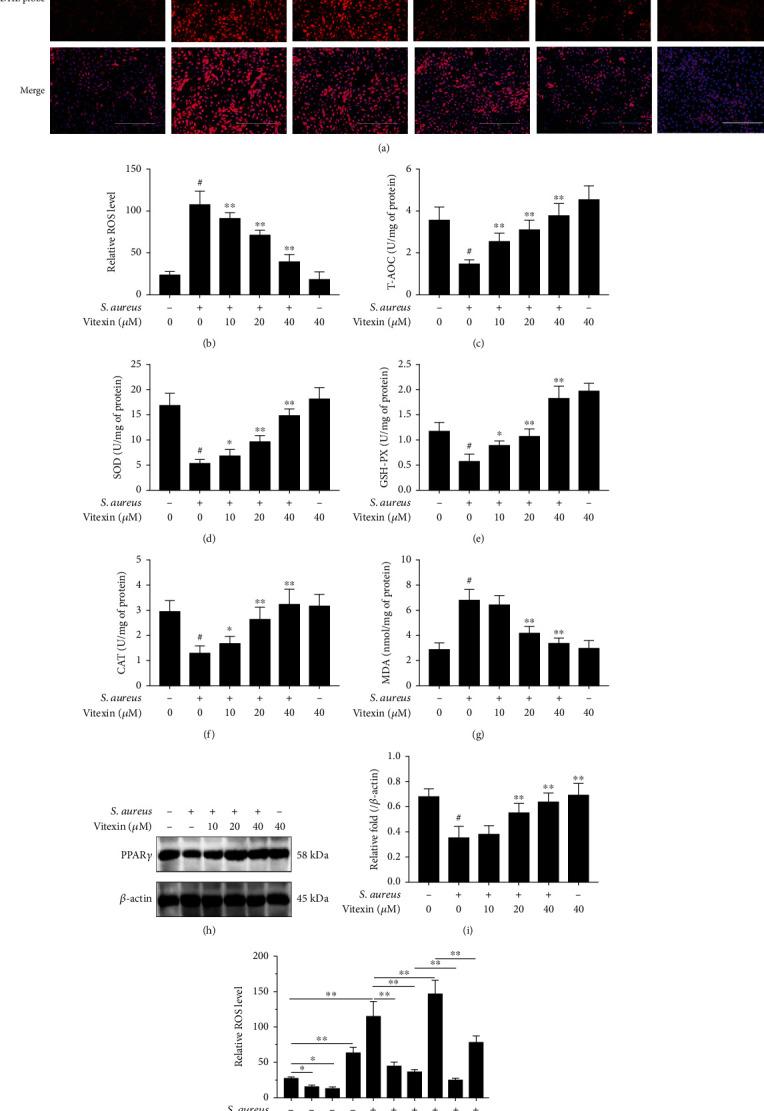
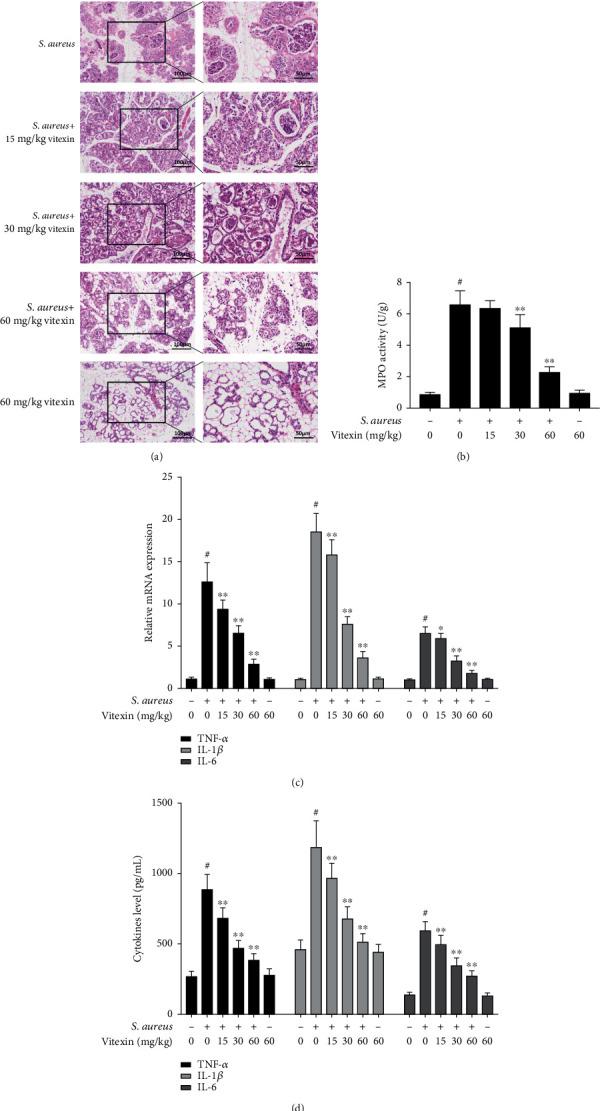
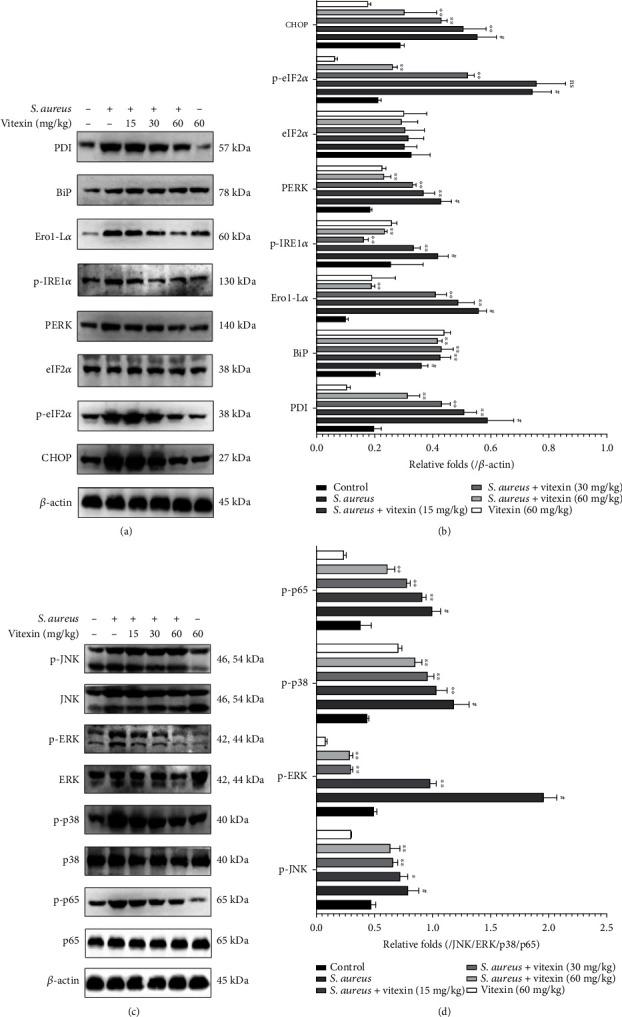
Mastitis, caused by a variety of pathogenic microorganisms, seriously threatens the safety and economic benefits of the dairy industry. Vitexin, a flavone glucoside found in many plant species, has been widely reported to have antioxidant, anti-inflammatory, antiviral, anticancer, neuroprotective, and cardioprotective effects. However, few studies have explored the effect of vitexin on mastitis. This study is aimed at exploring whether the antioxidant and anti-inflammatory functions of vitexin can improve Staphylococcus aureus-induced mastitis and its possible molecular mechanism. The expression profiles of S. aureus-infected bovine mammary epithelial cells and gland tissues from the GEO data set (GSE94056 and GSE139612) were analyzed and found that DEGs were mainly involved in immune signaling pathways, apoptosis, and ER stress through GO and KEGG enrichment. Vitexin blocked the production of ROS and increased the activity of antioxidant enzymes (SOD, GSH-PX, and CAT) via activation of PPAR and . In addition, vitexin reduced the production of inflammatory cytokines (TNF-, IL-1, and IL-6) and inhibited apoptosis in MAC-T cells and mouse mammary tissues infected with Staphylococcus aureus. Moreover, vitexin decreased the expression of PDI, Ero1-L, p-IRE1, PERK, p-eIF2, and CHOP protein but increased BiP in both mammary gland cells and tissues challenged by . Western blot results also found that the phosphorylation levels of JNK, ERK, p38, and p65 were reduced in vitexin-treated tissues and cells. Vitexin inhibited the production of ROS through promoting PPAR, increased the activity of antioxidant enzymes, and reduced inflammatory cytokines and apoptosis by alleviating ER stress and inactivation MAPKs and NF-B signaling pathway. Vitexin maybe have great potential to be a preventive and therapeutic agent for mastitis.
乳腺炎是由多种病原微生物引起的,严重威胁着奶牛养殖业的安全和经济效益。牡荆素是一种在许多植物物种中发现的类黄酮糖苷,已被广泛报道具有抗氧化、抗炎、抗病毒、抗癌、神经保护和心脏保护作用。然而,很少有研究探讨牡荆素对乳腺炎的影响。本研究旨在探讨牡荆素的抗氧化和抗炎功能是否可以改善金黄色葡萄球菌诱导的乳腺炎及其可能的分子机制。通过对 GEO 数据集(GSE94056 和 GSE139612)中金黄色葡萄球菌感染的奶牛乳腺上皮细胞和乳腺组织的表达谱进行分析,发现 DEGs 主要通过 GO 和 KEGG 富集参与免疫信号通路、细胞凋亡和内质网应激。牡荆素通过激活 PPAR 和 ,阻断 ROS 的产生,并增加抗氧化酶(SOD、GSH-PX 和 CAT)的活性。此外,牡荆素降低了金黄色葡萄球菌感染的 MAC-T 细胞和小鼠乳腺组织中炎症细胞因子(TNF-、IL-1 和 IL-6)的产生并抑制了细胞凋亡。此外,牡荆素降低了 PDI、Ero1-L、p-IRE1、PERK、p-eIF2 和 CHOP 蛋白在乳腺细胞和组织中的表达,但增加了 BiP 的表达。Western blot 结果还发现,在牡荆素处理的组织和细胞中,JNK、ERK、p38 和 p65 的磷酸化水平降低。牡荆素通过促进 PPAR 抑制 ROS 的产生,增加抗氧化酶的活性,减轻内质网应激和失活 MAPKs 和 NF-B 信号通路,从而减少炎症细胞因子和细胞凋亡。牡荆素可能具有成为乳腺炎预防和治疗剂的巨大潜力。




 Zotero 插件