
VEGF/VEGFR 靶向治疗与非小细胞肺癌的免疫治疗:靶向肿瘤微环境。
VEGF/VEGFR-Targeted Therapy and Immunotherapy in Non-small Cell Lung Cancer: Targeting the Tumor Microenvironment.
机构信息
Laboratory of Molecular Pharmacology, Department of Pharmacology, School of Pharmacy, Southwest Medical University, Luzhou, Sichuan 646000, China.
Cell Therapy & Cell Drugs of Luzhou Key Laboratory, Luzhou, Sichuan 646000, China.
出版信息
Int J Biol Sci. 2022 May 29;18(9):3845-3858. doi: 10.7150/ijbs.70958. eCollection 2022.
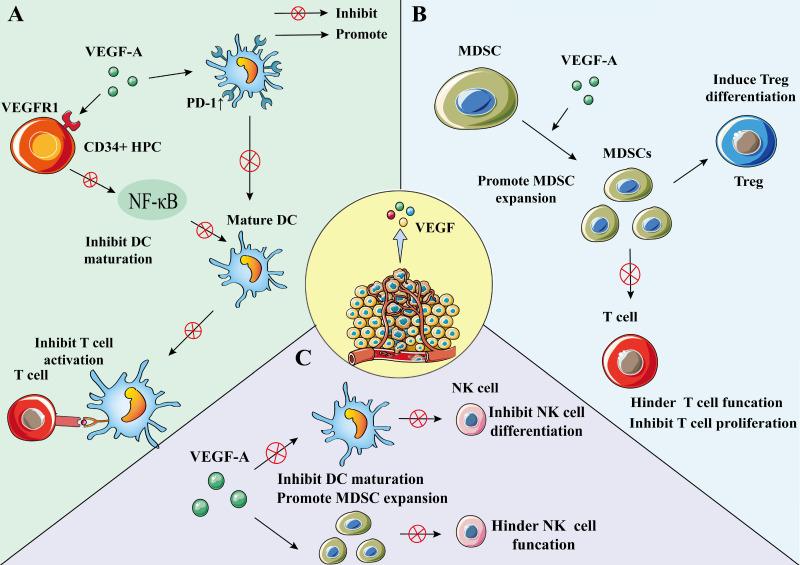
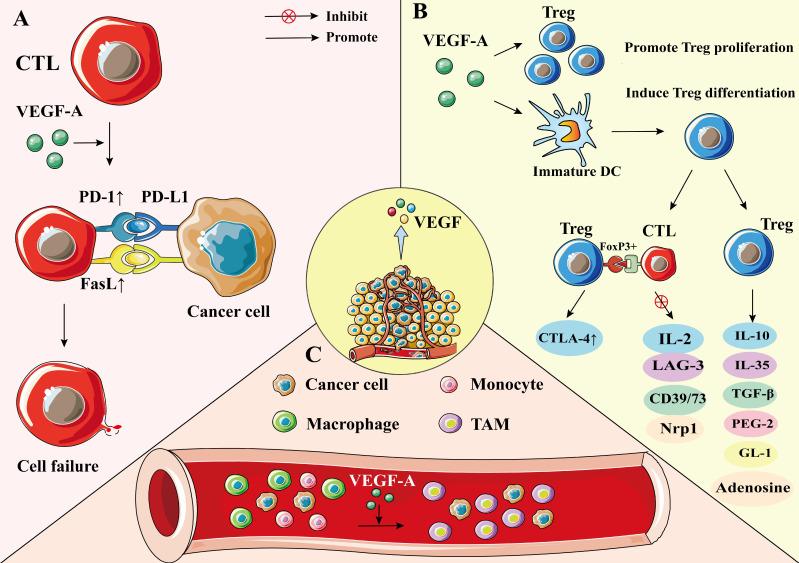
Non-small cell lung cancer (NSCLC) is the leading cause of death by cancer worldwide. Despite developments in therapeutic approaches for the past few decades, the 5-year survival rate of patients with NSCLC remains low. NSCLC tumor is a complex, heterogeneous microenvironment, comprising blood vessels, cancer cells, immune cells, and stroma cells. Vascular endothelial growth factors (VEGFs) are a major mediator to induce tumor microvasculature and are associated with the progression, recurrence, and metastasis of NSCLC. Current treatment medicines targeting VEGF/VEGF receptor (VEGFR) pathway, including neutralizing antibodies to VEGF or VEGFR and receptor tyrosine kinase inhibitors, have shown good treatment efficacy in patients with NSCLC. VEGF is not only an important angiogenic factor but also an immunomodulator of tumor microenvironment (TME). VEGFs can suppress antigen presentation, stimulate activity of regulatory T (Treg) cells, and tumor-associated macrophages, which in turn promote an immune suppressive microenvironment in NSCLC. The present review focuses on the angiogenic and non-angiogenic functions of VEGF in NSCLC, especially the interaction between VEGF and the cellular components of the TME. Additionally, we discuss recent preclinical and clinical studies to explore VEGF/VEGFR-targeted compounds and immunotherapy as novel approaches targeting the TME for the treatment of NSCLC.
非小细胞肺癌(NSCLC)是全球癌症死亡的主要原因。尽管在过去几十年中治疗方法有所发展,但 NSCLC 患者的 5 年生存率仍然较低。NSCLC 肿瘤是一个复杂的、异质的微环境,包括血管、癌细胞、免疫细胞和基质细胞。血管内皮生长因子(VEGF)是诱导肿瘤微血管形成的主要介质,与 NSCLC 的进展、复发和转移有关。目前针对 VEGF/VEGF 受体(VEGFR)通路的治疗药物,包括针对 VEGF 或 VEGFR 的中和抗体和受体酪氨酸激酶抑制剂,在 NSCLC 患者中显示出良好的治疗效果。VEGF 不仅是一种重要的血管生成因子,也是肿瘤微环境(TME)的免疫调节剂。VEGFs 可以抑制抗原呈递,刺激调节性 T(Treg)细胞和肿瘤相关巨噬细胞的活性,从而促进 NSCLC 中免疫抑制的微环境。本综述重点关注 VEGF 在 NSCLC 中的血管生成和非血管生成功能,特别是 VEGF 与 TME 中细胞成分的相互作用。此外,我们还讨论了最近的临床前和临床研究,以探索 VEGF/VEGFR 靶向化合物和免疫疗法作为针对 TME 的治疗 NSCLC 的新方法。

 Zotero 插件