
守护口腔和鼻咽星系:IgA 与预防 SARS-CoV-2 感染
Guardians of the oral and nasopharyngeal galaxy: IgA and protection against SARS-CoV-2 infection.
机构信息
Department of Immunology, University of Toronto, Toronto, Ontario, Canada.
Department of Biological Engineering, Massachusetts Institute of Technology, Cambridge, Massachusetts, USA.
出版信息
Immunol Rev. 2022 Aug;309(1):75-85. doi: 10.1111/imr.13118. Epub 2022 Jul 11.
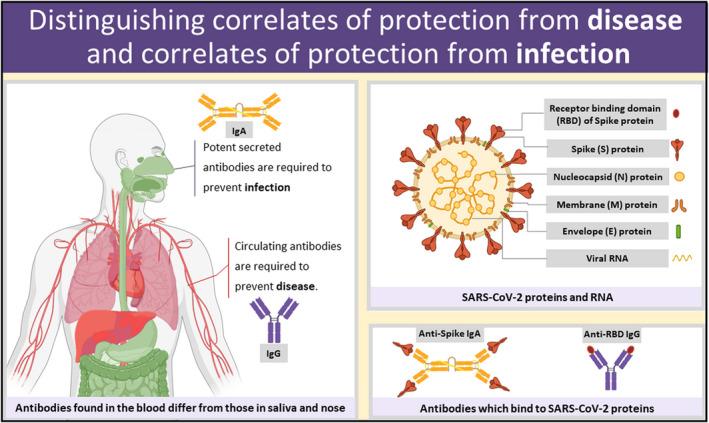
In early 2020, a global emergency was upon us in the form of the coronavirus disease 2019 (COVID-19) pandemic. While horrific in its health, social and economic devastation, one silver lining to this crisis has been a rapid mobilization of cross-institute, and even cross-country teams that shared common goals of learning as much as we could as quickly as possible about the novel severe acute respiratory syndrome coronavirus 2 (SARS-CoV-2) and how the immune system would respond to both the virus and COVID-19 vaccines. Many of these teams were formed by women who quickly realized that the classical model of "publish first at all costs" was maladaptive for the circumstances and needed to be supplanted by a more collaborative solution-focused approach. This review is an example of a collaboration that unfolded in separate countries, first Canada and the United States, and then also Israel. Not only did the collaboration allow us to cross-validate our results using different hands/techniques/samples, but it also took advantage of different vaccine types and schedules that were rolled out in our respective home countries. The result of this collaboration was a new understanding of how mucosal immunity to SARS-CoV-2 infection vs COVID-19 vaccination can be measured using saliva as a biofluid, what types of vaccines are best able to induce (limited) mucosal immunity, and what are potential correlates of protection against breakthrough infection. In this review, we will share what we have learned about the mucosal immune response to SARS-CoV-2 and to COVID-19 vaccines and provide a perspective on what may be required for next-generation pan-sarbecoronavirus vaccine approaches.
2020 年初,我们面临着一场全球性的紧急事件,即 2019 年冠状病毒病(COVID-19)大流行。这场危机在其对健康、社会和经济造成的破坏方面令人恐惧,但也有一线希望,那就是迅速动员了跨机构、甚至跨国的团队,这些团队有着共同的目标,即尽快了解新型严重急性呼吸综合征冠状病毒 2(SARS-CoV-2)以及免疫系统对病毒和 COVID-19 疫苗的反应。这些团队中的许多都是由女性组成的,她们很快意识到,“不惜一切代价先发表”的经典模式不适应这种情况,需要用更具协作性的以解决问题为重点的方法来取代。这篇综述就是在不同国家(首先是加拿大和美国,然后是以色列)分别展开合作的一个例子。这种合作不仅使我们能够使用不同的技术/样本对结果进行交叉验证,而且还利用了在各自国家推出的不同类型和时间表的疫苗。这种合作的结果是,我们对 SARS-CoV-2 感染与 COVID-19 疫苗接种的粘膜免疫有了新的认识,可以使用唾液作为生物体液来测量,哪些类型的疫苗最能诱导(有限的)粘膜免疫,以及针对突破性感染的潜在保护相关性是什么。在这篇综述中,我们将分享我们对 SARS-CoV-2 和 COVID-19 疫苗的粘膜免疫反应的了解,并就下一代泛沙贝冠状病毒疫苗方法可能需要什么提供一些看法。

 Zotero 插件