
在组学时代连接衰老生物学和炎症。
Connecting aging biology and inflammation in the omics era.
机构信息
Intramural Research Program of the National Institute on Aging, NIH, Baltimore, Maryland, USA.
Biomedical Research Institute, Faculty of Medicine and Life Sciences, Hasselt University, Diepenbeek, Belgium.
出版信息
J Clin Invest. 2022 Jul 15;132(14). doi: 10.1172/JCI158448.
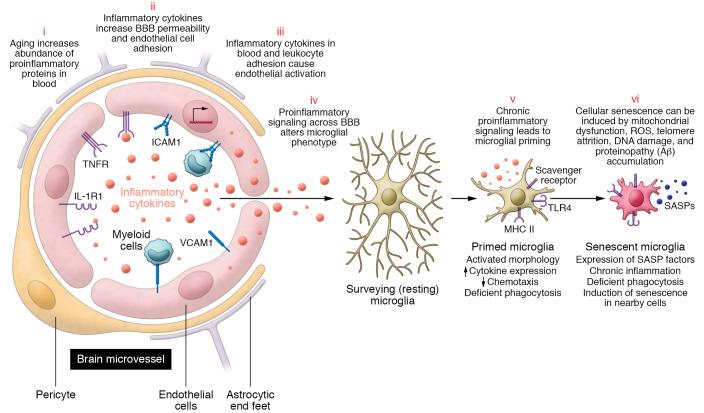
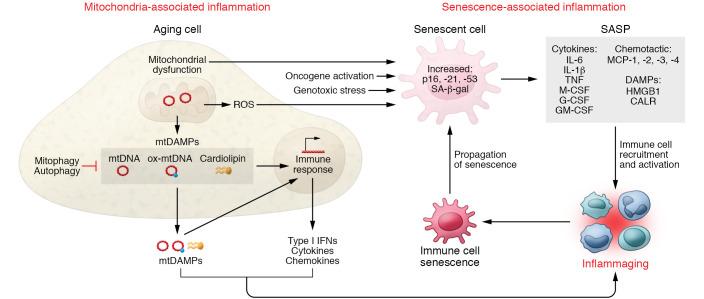
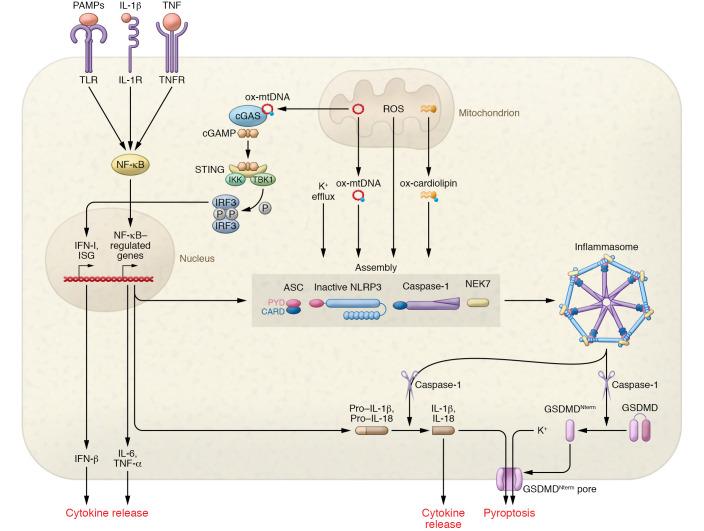
Aging is characterized by the accumulation of damage to macromolecules and cell architecture that triggers a proinflammatory state in blood and solid tissues, termed inflammaging. Inflammaging has been implicated in the pathogenesis of many age-associated chronic diseases as well as loss of physical and cognitive function. The search for mechanisms that underlie inflammaging focused initially on the hallmarks of aging, but it is rapidly expanding in multiple directions. Here, we discuss the threads connecting cellular senescence and mitochondrial dysfunction to impaired mitophagy and DNA damage, which may act as a hub for inflammaging. We explore the emerging multi-omics efforts that aspire to define the complexity of inflammaging - and identify molecular signatures and novel targets for interventions aimed at counteracting excessive inflammation and its deleterious consequences while preserving the physiological immune response. Finally, we review the emerging evidence that inflammation is involved in brain aging and neurodegenerative diseases. Our goal is to broaden the research agenda for inflammaging with an eye on new therapeutic opportunities.
衰老是由大分子和细胞结构损伤的积累引起的,这种损伤会在血液和实体组织中引发炎症状态,称为炎症衰老。炎症衰老与许多与年龄相关的慢性疾病以及身体和认知功能的丧失有关。寻找炎症衰老的机制最初集中在衰老的特征上,但它正在迅速向多个方向扩展。在这里,我们讨论了将细胞衰老和线粒体功能障碍与受损的线粒体自噬和 DNA 损伤联系起来的线索,这些线索可能是炎症衰老的枢纽。我们探讨了新兴的多组学研究,旨在定义炎症衰老的复杂性,并确定分子特征和新的干预靶点,以对抗过度炎症及其有害后果,同时保持生理免疫反应。最后,我们回顾了炎症参与大脑衰老和神经退行性疾病的新证据。我们的目标是拓宽炎症衰老的研究议程,着眼于新的治疗机会。
 Zotero 插件