
印度东、东北部各州门户的西孟加拉邦在多轮大流行浪潮中,SARS-CoV-2 谱系分布迥异。
Contrasting Distribution of SARS-CoV-2 Lineages across Multiple Rounds of Pandemic Waves in West Bengal, the Gateway of East and North-East States of India.
机构信息
National Institute of Biomedical Genomicsgrid.410872.8, Kalyani, West Bengal, India.
School of Tropical Medicine, Kolkata, West Bengal, India.
出版信息
Microbiol Spectr. 2022 Aug 31;10(4):e0091422. doi: 10.1128/spectrum.00914-22. Epub 2022 Jul 19.
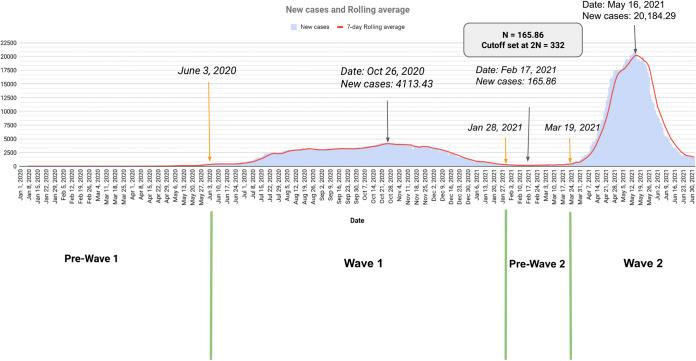
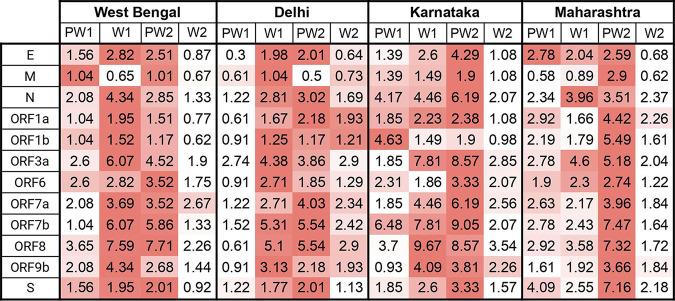
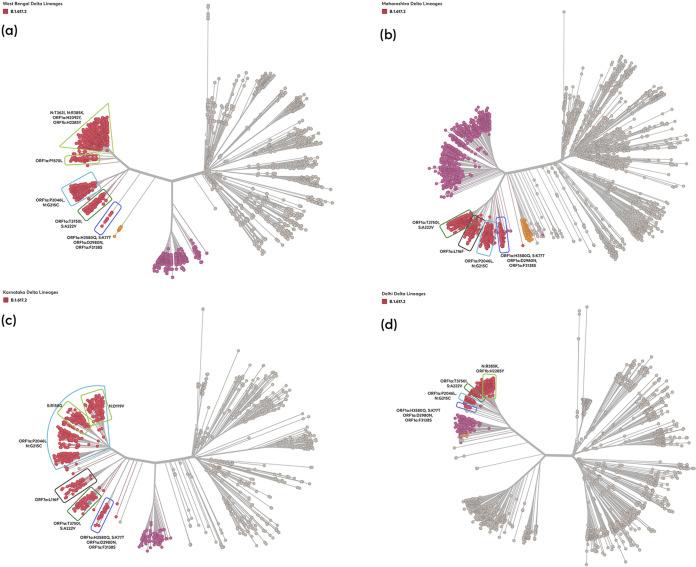
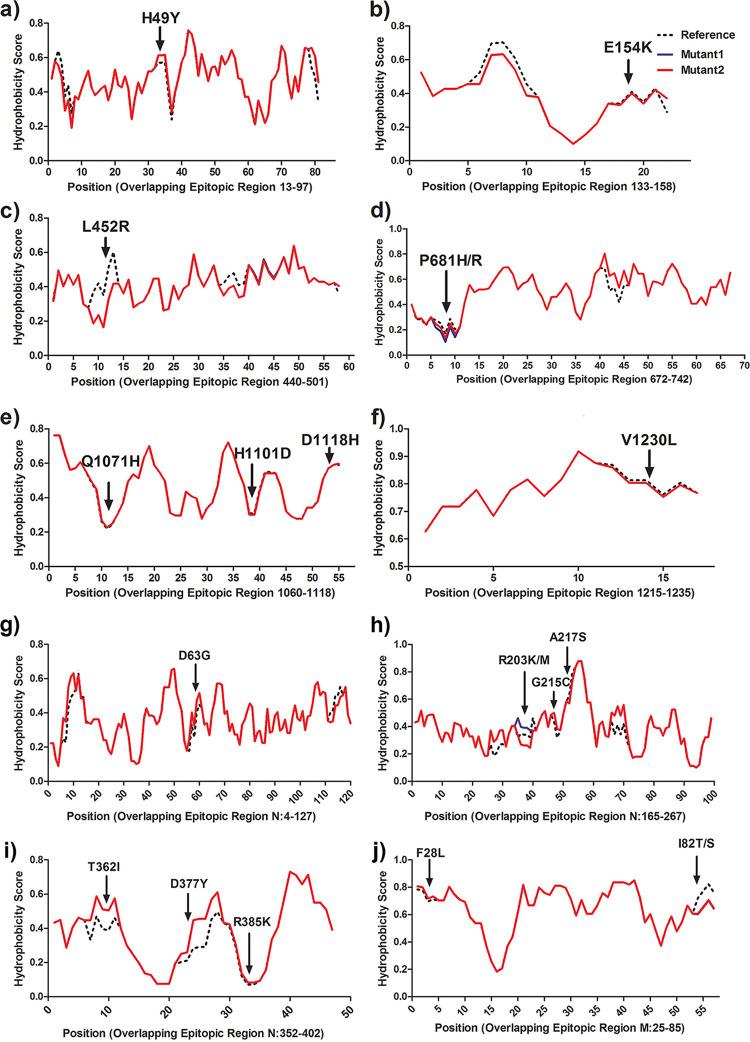
The evolution of viral variants and their impact on viral transmission have been an area of considerable importance in this pandemic of severe acute respiratory syndrome coronavirus 2 (SARS-CoV-2). We analyzed the viral variants in different phases of the pandemic in West Bengal, a state in India that is important geographically, and compared the variants with other states like Delhi, Maharashtra, and Karnataka, located in other regions of the country. We have identified 57 pango-lineages in 3,198 SARS-CoV-2 genomes, alteration in their distribution, as well as contrasting profiles of amino acid mutational dynamics across different waves in different states. The evolving characteristics of Delta (B.1.617.2) sublineages and alterations in hydrophobicity profiles of the viral proteins caused by these mutations were also studied. Additionally, implications of predictive host miRNA binding/unbinding to emerging spike or nucleocapsid mutations were highlighted. Our results throw considerable light on interesting aspects of the viral genomic variation and provide valuable information for improved understanding of wave-defining mutations in unfolding the pandemic. Multiple waves of infection were observed in many states in India during the coronavirus disease 2019 (COVID19) pandemic. Fine-scale evolution of major SARS-CoV-2 lineages and sublineages during four wave-window categories: Pre-Wave 1, Wave 1, Pre-Wave 2, and Wave 2 in four major states of India: Delhi (North), Maharashtra (West), Karnataka (South), and West Bengal (East) was studied using large-scale virus genome sequencing data. Our comprehensive analysis reveals contrasting molecular profiles of the wave-defining mutations and their implications in host miRNA binding/unbinding of the lineages in the major states of India.
病毒变体的进化及其对病毒传播的影响一直是严重急性呼吸系统综合征冠状病毒 2(SARS-CoV-2)大流行期间的一个重要领域。我们分析了印度西孟加拉邦大流行不同阶段的病毒变体,该邦在地理位置上非常重要,并将其变体与其他邦(如德里、马哈拉施特拉邦和卡纳塔克邦)进行了比较,这些邦位于该国其他地区。我们在 3198 个 SARS-CoV-2 基因组中鉴定了 57 个 pangolin 谱系,改变了它们的分布,以及不同州在不同波次中氨基酸突变动态的对比特征。还研究了 Delta(B.1.617.2)亚谱系的演变特征以及这些突变引起的病毒蛋白疏水性特征的改变。此外,还强调了预测宿主 miRNA 结合/不结合新兴刺突或核衣壳突变的影响。我们的研究结果为病毒基因组变异的有趣方面提供了重要信息,并为改进对大流行中定义波次的突变的理解提供了有价值的信息。在 2019 年冠状病毒病(COVID19)大流行期间,印度许多邦都观察到了多波感染。我们使用大规模病毒基因组测序数据,研究了四大印度邦(北部的德里、西部的马哈拉施特拉邦、南部的卡纳塔克邦和东部的西孟加拉邦)四个波次窗口类别(波次 1 前、波次 1、波次 2 前和波次 2)中主要 SARS-CoV-2 谱系和亚谱系的精细进化。我们的综合分析揭示了波次定义突变的对比分子特征及其在印度主要邦中对谱系宿主 miRNA 结合/不结合的影响。

 Zotero 插件